Matt Stoller unveils a startling procedural maneuver: a corporation has filed the most invasive antitrust paperwork imaginable for a deal it hasn't even won yet. This isn't just a story about Hollywood consolidation; it's a forensic look at how legal loopholes and political alignment are being weaponized to bypass the very regulators designed to stop monopolies. For anyone watching the future of media, the question isn't just who owns the studios, but whether the rules of the road still apply.
The Pre-Emptive Strike
Stoller identifies a bizarre anomaly in the bidding war for Warner Bros. Discovery. While Netflix and Paramount fight over the price tag, Paramount has allegedly completed the extensive legal discovery process required for a merger before securing the asset. "The company says it has mostly completed the extensive legal paperwork necessary to acquire WBD," Stoller writes, noting that this suggests "Paramount's people believe the fix is in, on their behalf." This is not standard corporate behavior; it is a calculated gamble that the regulatory clock can be outrun.
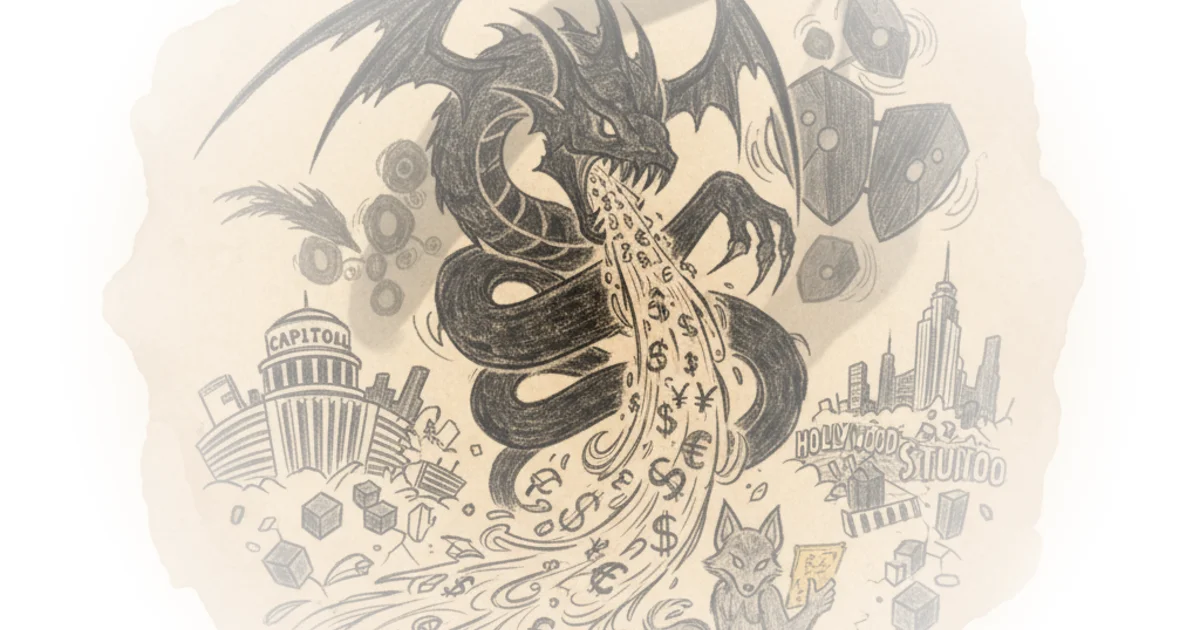
The strategy hinges on the Hart-Scott-Rodino Act, which normally imposes a waiting period to let antitrust enforcers review a deal. Stoller explains that once a deal closes, the incentives shift dramatically: companies stop cooperating and start muddying the waters to make a breakup impossible. "Once a deal closes, there's no more incentive to do anything but delay, as they already have what they want," he argues. By rushing to file and answer "second requests" for information without a signed deal, Paramount is attempting to lock in a regulatory green light before the competition is even settled.
Delrahim knows how this process works, and so he's had Paramount do something unusual for an acquiring party.
The architect of this plan is Makan Delrahim, a former Assistant Attorney General for Antitrust now working as Paramount's lawyer. Stoller points out the conflict of interest and the sheer cynicism of the move. Delrahim previously oversaw the approval of the Sprint-T-Mobile merger despite state objections, a precedent that makes his current role deeply concerning. "He is also likely banking on enforcers being unable/unwilling to comb through all of their documents and put a case together on time," Stoller notes. The argument here is that the legal system is being gamed by those who know its weaknesses better than the enforcers do.
The Political Calculus
The piece goes beyond legal technicalities to examine the political ecosystem that enables this consolidation. Stoller argues that the merger is not just an economic event but a political transaction. The new owners, the Ellison family, have already demonstrated a willingness to align with the current administration's preferences, citing the firing of Stephen Colbert as evidence of "obvious attempts to please" the executive branch. "Then this Monday night, Colbert, in his last few months on the job, claimed that CBS, which is owned by Paramount, would not allow him to interview a Democratic Senate candidate," Stoller writes. This behavior, he contends, transforms the merger from a market event into a "censorship machine."
The implication is that the administration's antitrust division will likely look the other way. Stoller contrasts this with a potential Netflix acquisition, which would face fierce opposition from European regulators and the current administration's hostility toward big tech. A Paramount deal, however, benefits from a specific alignment of interests. "A Netflix acquisition brings Trump enforcers and anti-big tech Europeans into play, while a Paramount acquisition likely puts them on the sidelines," he observes. The risk here is that the government's enforcement priorities are no longer based on market competition but on political loyalty.
Critics might argue that state attorneys general, particularly from Democratic states, could still intervene to block the deal. However, Stoller dismisses this as a long shot. State officials lack the resources and experience to challenge a $90 billion merger on their own, especially when the federal government has already signaled approval. "State enforcement lawyers are not experienced at challenging mergers, especially big ones, they rely on the DOJ to do that for them," he explains. Without federal backing, the states are left fighting a rearguard action against a fait accompli.
Otherwise, we're living in a censorship machine.
The Human Cost of Consolidation
While the legal maneuvering is complex, the real-world consequences are stark. Stoller draws a parallel to the Disney-Fox merger, where the number of released movies dropped by 44%. "The same thing will happen here, especially considering how many people Paramount is likely to fire," he warns. This is not merely a reduction in output; it is a reduction in cultural diversity and employment for thousands of creatives. The article references the Clayton Antitrust Act of 1914, reminding readers that these laws were designed specifically to prevent the kind of market concentration that stifles innovation and harms workers.
The piece also highlights the broader implications for democracy. When a few conglomerates control the flow of information and entertainment, the public square shrinks. Stoller argues that the current trajectory is a direct threat to the health of the media ecosystem. "We should repeal the Telecom Act of 1996 and break up these conglomerates, restoring vertical separation between distribution and production of video content," he asserts. The failure to act now will make future corrections nearly impossible, as the merged entity will have the resources to fight any legal challenge for years.
Bottom Line
Stoller's most compelling insight is that the battle for Hollywood is being won in the legal filing room, not the boardroom, by exploiting a regulatory system that is already understaffed and politically compromised. The argument is strongest in its detailed breakdown of the Hart-Scott-Rodino process, revealing how a "rush job" on compliance can effectively neutralize antitrust scrutiny. However, the piece's reliance on the assumption that the administration will definitely approve the deal leaves some room for doubt, as legal outcomes can be unpredictable. The reader should watch closely for the next fifteen days: if the federal government fails to act, the consolidation of two major media giants may become a reality before the public even realizes the game has started.