There are moments when the most consequential force in politics is not what people believe but what they won't tell a stranger on the phone. Brian Beutler's piece pulls back the curtain on a distortion mechanism that has warped American political perception for more than a decade: the quiet, compounding effect of people simply refusing to answer.
The Mathematics of Silence
Beutler opens with a principle familiar to anyone who has studied survey methodology but too rarely applied to political analysis. When entire categories of voters withdraw from the polling ecosystem, the remaining sample tilts. It does not mean opinions have shifted. It means the willingness to express those opinions has.
As Beutler puts it, "It wasn't the case that millions of voters who'd planned to vote for Obama became persuaded by the debate to switch their allegiances. It was that Obama supporters became demoralized, Romney supporters became energized, and the combination had a statistically meaningful effect on who was willing to accept calls from pollsters."
The 2012 presidential contest provides the textbook case. After the first debate, headline polls briefly showed a narrow lead for the Republican challenger. Panic rippled through Democratic circles. But the underlying electorate had not moved. One side went quiet; the other grew louder. The silence was mistaken for surrender.
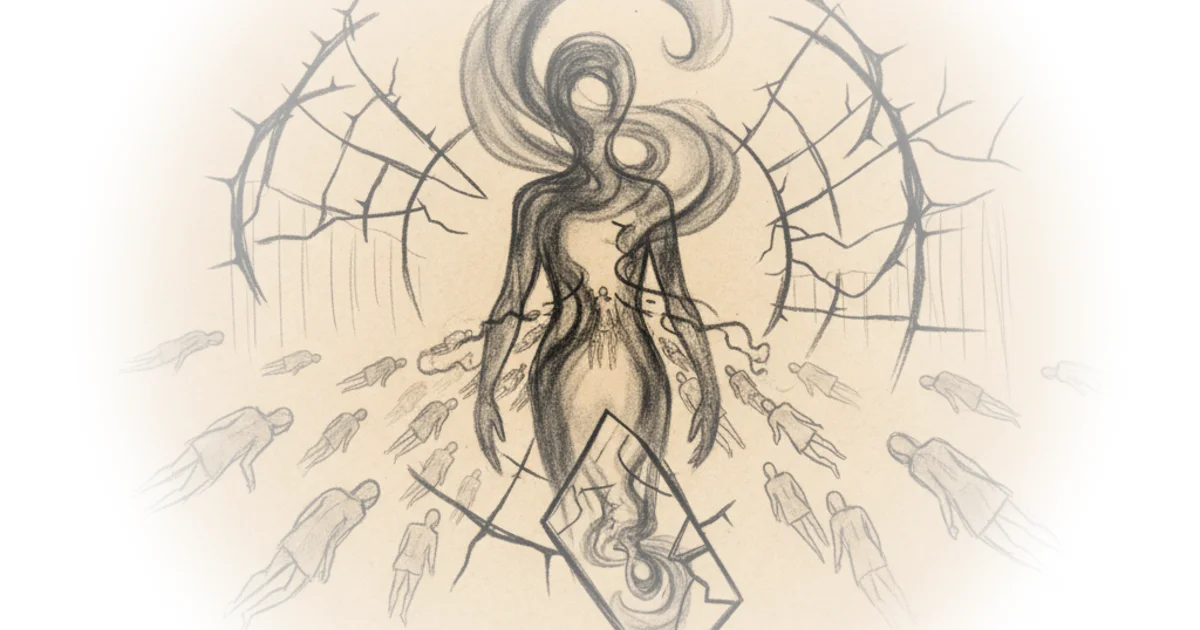
Beutler argues that a similar dynamic, amplified far beyond the polling apparatus, shaped the entire cultural landscape after the 2016 general election. The widespread belief that the victor had captured the culture as well as the Electoral College was, in his view, a kind of collective hallucination — reverse-engineered from an outcome rather than observed in the wild.
A Tape, a Spiral, and the Illusion of Consensus
The piece touches on a critical inflection point in the fall of 2016: the publication of a leaked backstage recording featuring the Republican nominee in a vulgar conversation about women. The tape cratered his standing in public surveys. But Beutler suggests the damage was disproportionately psychological. His base did not abandon him — they simply stopped telling pollsters they supported him. The gap between private allegiance and public admission widened into a chasm.
"For most of October 2016, it really seemed like he was cooked," Beutler writes. "That widespread assumption wasn't an inert factoid. It affected behavior on a national scale."
The consequences rippled outward. Would the FBI director have re-entered the race narrative if the polls had shown a dead heat instead of a double-digit deficit? Would undecided voters in three decisive states have stayed home, convinced the outcome was already settled? The cascade is unknowable, but the mechanism is not. When people believe a conclusion has been reached, they stop fighting for it.
"We were all like Obama voters after the passing embarrassment of that debate," Beutler notes. "And so we let too much bad stuff go unanswered."
What "Winning the Culture" Actually Means
Beutler steps back to define culture in deliberately inclusive terms: the sum of what people consume, share, and use to signal who they are. Opera and ultimate fighting both count. The question is not whether one side produces more sophisticated art but whether the cultural center of gravity has shifted.
The conventional wisdom, he argues, held that the victor's coalition had seized the culture. Influencers leaned right. Podcast audiences skewed young and skeptical of institutions. The fragmentation of the monoculture meant no single megastar could anchor the left the way a Taylor Swift endorsement once might have. Meanwhile, a daily avalanche of sympathetic content flowed through platforms the opposition had largely abandoned.
But Beutler pushes back on this narrative. The appearance of cultural dominance was itself a product of the same distortion mechanism that warped the polls.
"He certainly won the election, but he may have done so in a way that warped our sense of what the public meant to convey about itself and its values. By creating and feeding a kind of cultural nonresponse."
One social media platform, acquired by the victor's wealthiest backer, became an especially potent engine of distortion. White nationalist voices were elevated far beyond their actual demographic weight. Liberals spending significant time there absorbed a demoralizing — and false — impression of how far the country had shifted. The platform's warped environment became mistaken for the country's.
Critics might note that Beutler understates the genuine cultural shifts that did occur during this period. The erosion of trust in mainstream media, the rise of alternative information ecosystems, and the realignment of working-class voters across racial lines are not merely perceptual artifacts. They reflect substantive changes in how millions of Americans receive and process information.
The Reckoning and the Warning
The essay turns to more recent developments. Approval ratings have collapsed. Members of the president's own party have begun speaking out. A major televised halftime performance — featuring an artist from a demographic the movement has routinely marginalized — reminded the public that broad-appeal cultural moments still exist and can dwarf the output of partisan podcasting networks.
"The decent and tolerant majority has found its footing," Beutler writes. "Trump is enduringly unpopular, but we can also see that his sliver of the culture is just that: a sliver."
But the closing note is anything but triumphant. The movement is described as "relentless, like an invasive species." Its control of social media platforms has not disappeared — it has merely become more visible, and therefore more contestable. The danger, Beutler warns, is not that the opposition has won but that it might convince itself victory is inevitable.
"God forbid that if, in doing so, the president regains an increment of popularity or outperforms expectations in one more election. The last of our confidence will be sapped. Our state of nonresponse will return for the long haul."
"He certainly won the election, but he may have done so in a way that warped our sense of what the public meant to convey about itself and its values."
Bottom Line
Beutler's essay is a corrective to a decade of cultural fatalism. The real story of the last several years is not that one side captured the American imagination but that silence was mistaken for consent — and that breaking the silence is the first step toward recovery. The warning embedded in the analysis matters as much as the diagnosis: complacency is the trap, not the prize.