This piece from Reason delivers a stinging critique of one of the Supreme Court's most confusing legal standards: the "reasonable expectation of privacy" test. While recent headlines celebrate a victory for digital privacy in Chatrie v. United States, the editors argue that this win is built on a foundation so shaky it threatens to collapse under its own contradictions. For busy professionals navigating an era of ubiquitous surveillance, understanding why the Court's logic is "unworkable" isn't just academic—it's essential to knowing where your digital rights actually stand.
The Illusion of Privacy in a Digital Age
The article opens by highlighting the recent decision in Chatrie, where the Court ruled that police need a warrant to access cellphone location data. Justice Elena Kagan wrote for the majority, stating, "An individual has a reasonable expectation of privacy in records about his cell phone's location, and police intrude on that constitutionally protected interest when they demand the information." On the surface, this sounds like a triumph for civil liberties. However, Reason points out the deep irony: the Court reached this conclusion by ignoring its own "third-party doctrine," which historically says you lose privacy rights once you share data with anyone else, including banks or phone companies.
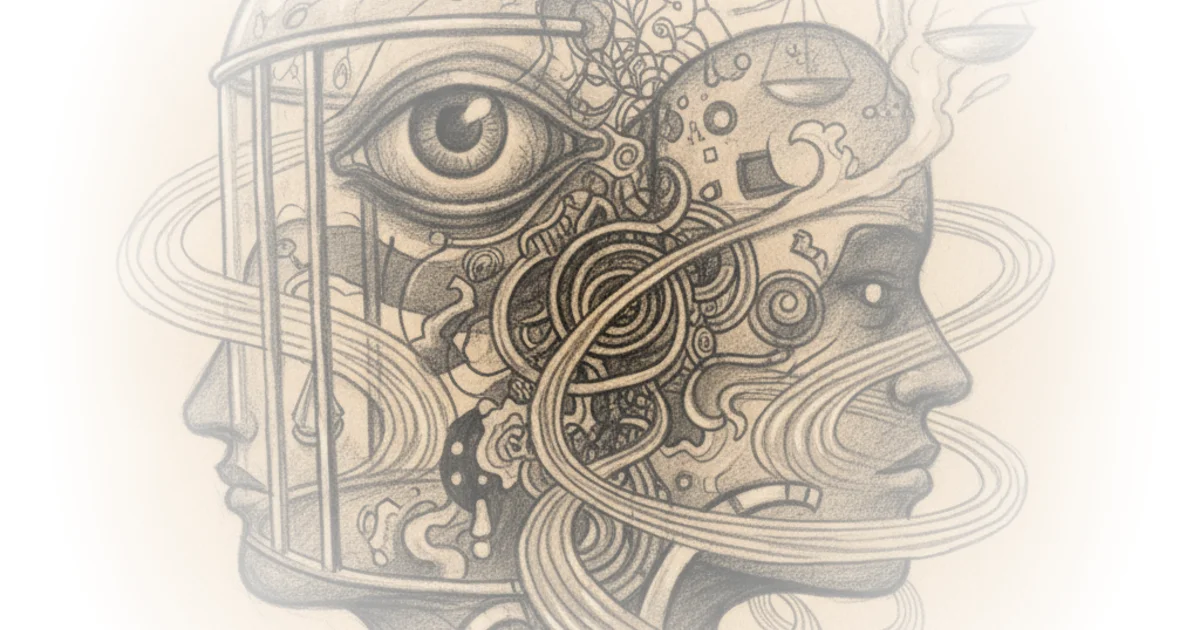
The piece notes that Justice Neil Gorsuch agreed with the outcome but dismantled the logic used to get there. He argued that the current test "has no basis in the Constitution's text or history" and has proven unworkable because courts have never clearly defined what makes an expectation of privacy "reasonable." This is a crucial distinction. The editors suggest that relying on a standard as vague as "reasonableness" gives judges too much discretion, turning constitutional protections into a game of intuition rather than law.
We know a 'reasonable expectation of privacy' (and an exception to the third party doctrine) when we see it.
This quote from Gorsuch, cited by Reason, perfectly captures the absurdity of the current legal landscape. The article argues that this malleability allows the Court to pick and choose which invasions of privacy are "unreasonable" based on public sentiment rather than constitutional principle. While some might argue that a flexible standard allows the law to adapt to new technologies, the piece contends it actually creates a patchwork where rights exist only until the Court decides they don't.
A History of Shrinking Rights
To understand why the current situation is so precarious, the commentary traces the lineage back to Katz v. United States in 1967. The editors recount how Charles Katz, a bookie who ran his business from a public phone booth, successfully argued that the FBI's warrantless wiretapping violated his rights. Justice Potter Stewart wrote for the majority, declaring that "the underpinnings of Olmstead and Goldman have been so eroded by our subsequent decisions that the 'trespass' doctrine there enunciated can no longer be regarded as controlling."
This shift from physical trespass to a privacy expectation was meant to expand protections. Yet, Reason argues it quickly became a tool for restriction. The piece details how the Court has since used this test to justify warrantless searches of trash (California v. Greenwood), aerial surveillance of backyards (California v. Ciraolo), and even the use of drug-sniffing dogs without probable cause. In Greenwood, the Court reasoned that "society" is not prepared to accept an expectation of privacy in garbage bags left at the curb because they are accessible to "animals, children, scavengers, snoops, and other members of the public."
The editors note that this logic is deeply flawed when applied to modern life. If you leave your trash on the curb, you might not expect a neighbor to read it, but should you lose all Fourth Amendment protection because a stranger could? The piece suggests the Court's definition of "reasonable" has become a mechanism to strip away rights in favor of police convenience.
A person traveling in an automobile on public thoroughfares has no reasonable expectation of privacy in his movements from one place to another.
This quote, from the 1983 United States v. Knotts decision, illustrates the dangerous precedent that movement in public is inherently unprivate. Reason argues this view is increasingly obsolete in a world where GPS tracking creates a comprehensive map of a person's life, far exceeding what any single human observer could see. Critics might note that the Court has struggled to balance individual privacy with the need for effective law enforcement, but the editors maintain that the current approach sacrifices the latter principle entirely.
The Third-Party Trap and the Path Forward
The commentary then dives into the "third-party doctrine," rooted in United States v. Miller (1976), where the Court ruled that bank records held no privacy protection because they were voluntarily shared with a third party. Reason points out the absurdity of applying this 1970s logic to modern digital life, where sharing data with a service provider is often mandatory for participation in society.
In Chatrie, the Court wisely avoided applying this doctrine to location data, but the editors warn that the underlying principle remains intact. Justice Gorsuch proposed a better path: treating digital records as "effects" or personal property under the Fourth Amendment. This approach would be less malleable than the current test. The piece argues that while it is unclear exactly how a property-rights framework would work in every context, it offers a more stable foundation than the shifting sands of "reasonable expectation."
The editors also highlight the historical distortion behind the "open fields" doctrine, noting that Justice Oliver Wendell Holmes Jr. relied on a misreading of Blackstone to justify warrantless searches of private land. This sets a precedent where the Court has repeatedly carved out exceptions to privacy rights, often under the guise of common law traditions that don't actually exist.
Bottom Line
Reason's analysis is a powerful reminder that recent victories for digital privacy are fragile, resting on a legal standard that the Supreme Court itself admits is broken. The strongest part of this argument is its exposure of the "reasonable expectation" test as a subjective tool that has consistently eroded civil liberties in favor of state power. Its biggest vulnerability lies in the uncertainty of Gorsuch's property-based alternative, which remains untested across the full spectrum of surveillance technologies. Readers should watch closely to see if the Court can move beyond its own confusing precedents or if it will continue to retreat into a doctrine that says we have no privacy simply because technology makes it hard to keep secrets.