The Comedy-Politics Pipeline: How Stand-Up Became the New Public Square
The Comedian as Political Barometer
John Marco has spent decades performing at clubs across America. And in that time, he's learned something unexpected: audiences aren't just laughing anymore—they're signaling where they stand politically.
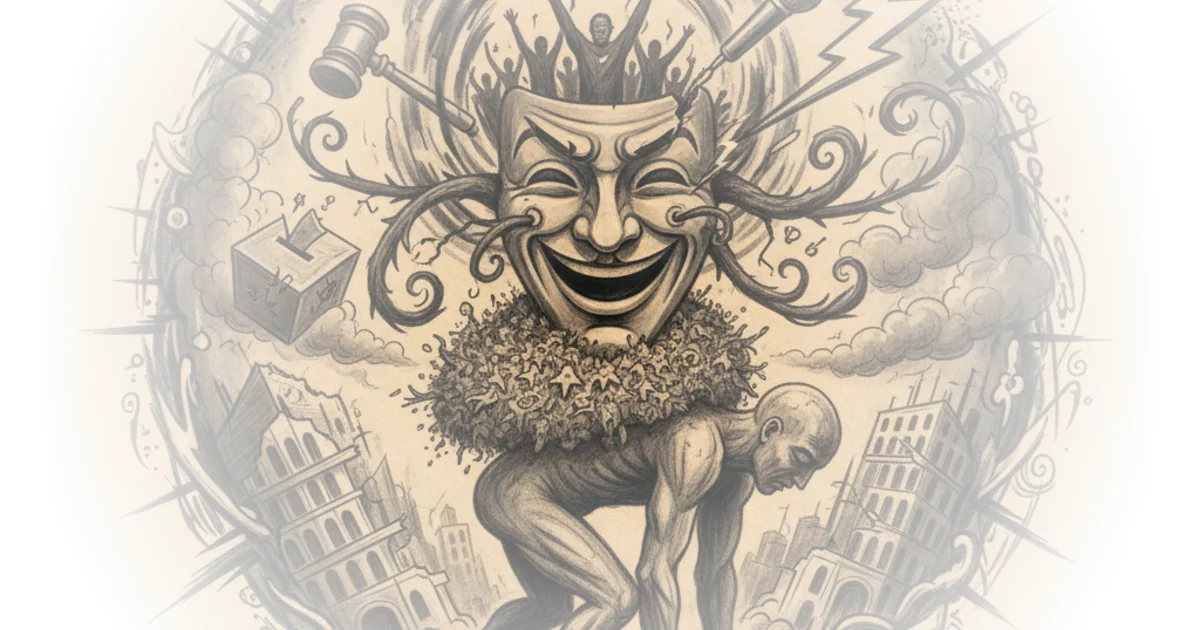
"Comedians are polling in real time," Marco told host Joshua Cinderella on the Downside Podcast. "We're polling in the most biased circumstances. polls are now useless because your audience is already self-selected."
The shift happened gradually, then all at once. Before Donald Trump's first electoral victory, comedians touring nationally would encounter a mixed sample of city crowds—not just their fans. They could gauge political temperature through applause and laughter. Now, Marco argues, the audience has become its own echo chamber.
"Pre-Trump's first win, some comedians would express that they're on the road when they were actually getting a mixed sample size of whatever city," Marco said. "They could see, oh, they're polling. And now we all poll in the most biased circumstances."
The Void Left by Legacy Media
The reason comedy hosts have become political influencers isn't complicated: traditional news became unbearable.
"Mainstream news is so dreadful," Marco said. "It is packaged poorly. The way politics was discussed just became gross and corrupt—the sound bites, the battles, the satellite interviews—it's all more entertainment-based, more wrestling, more combative. In a way that I think it became indecipherable from as comedy."
When cable news and network broadcasts grew stale, audiences sought alternatives. They found them in podcasts hosted by comedians—notably Joe Rogan, whose show has become one of the most influential platforms in American discourse. The format works because it feels authentic, unscripted, and willing to challenge taboos that legacy media won't touch.
"People are bored and they listen to comedy," Marco observed. "That's all they listen to. If medicine comes in there, that's their only intake of medicine."
Comedy as Permission Space
Marco uses a revealing concept: comedians serve as what he calls a "permission space"—a social arena where the rules of polite discourse can be bent or broken.
"You can say a kind of edgy joke. You can slip things under that are not allowed elsewhere," Marco explained. "Our legacy media has erected all these taboos around certain things like vaccines—we don't have to hesitate because we're definitely going to get demonetized talking about it."
This phenomenon explains why figures like Charlie Kirk can make jokes about getting shot at a furry convention and receive thunderous applause. The audience, Marco suggests, is performing approval in real time—and comedians are reading those signals.
"When I told it to people who are friends of mine but not fans, they go, 'I can't believe that.' And I go, 'Well, you better believe it because that's the temperature check on the country right now.'"
The Skepticism Trap
The most troubling aspect isn't just that audiences have migrated to comedy podcasts—it's that they've started trusting comedians more than institutions.
"What's always so shocking and frustrating about people who would listen to Joe Rogan is, how did you then go trust this one guy who's pitching a product? How did you look at RFK Jr. and go, but he's got my best interest at the heart? That's the part that's really hard for me to wrap my head around."
Marco points to a cascading loss of institutional credibility: when news outlets flip-flop on whether eggs or milk are healthy, audiences stop trusting anything. The result is a vacuum that comedians and podcast hosts fill with personality and entertainment value.
"You have to make things entertaining so they tune into that too," Marco said. "You can try to talk to the Joe Rogan of the world and be like, 'What the hell are you doing?' But he's just some guy that a bunch of people just listen to."
The Political Identity Problem
One phenomenon Marco identifies is "negative polarization"—where people accidentally back themselves into political positions based on who criticizes them.
"Sometimes where people kind of accidentally back themselves up into a position where like, oh, leftwing people are retweeting me and saying negative things. So now I think I'm a right-winger. And then some big right-wing institution is like, 'Oh, we'll pay for your next special.' And then people kind of find themselves in these camps almost by accident."
This dynamic explains why comedian podcasts have grown so influential: audiences aren't just consuming entertainment—they're forming political identities through audience participation and social reinforcement.
"That's the temperature check on the country right now. Comedians certainly get a temperature check."
Bottom Line
The comedy-politics merger isn't a bug in American discourse—it's a feature that fills a void created by institutional failure. Marco's insight is that comedians have become unwilling translators between audiences and traditional authority. The danger isn't that people listen to comedians; it's that they've stopped listening to anything else.
Marco's biggest vulnerability: he describes the problem without offering solutions, falling back on education as the answer while admitting "I don't know these things. I'm a comedian." The piece works because it names something happening in real time—but it ends where the conversation begins, not where it resolves.