This piece from Big Biology does not merely report on a shift in scientific priorities; it documents a systemic unraveling of the American research enterprise. By aggregating nearly 1,400 firsthand accounts, the editors move beyond political rhetoric to present a forensic audit of how policy uncertainty is actively dismantling long-term data collection and severing critical public health partnerships.
The Architecture of Silence
The core of the argument rests on the tangible, bureaucratic mechanisms used to suppress scientific inquiry. Big Biology reports that federal scientists received a "banned word list" that prohibited the use of terms such as "climate change, climate science, clean energy, solar power, affordable home, low income housing, runoff, microplastics, water pollution, and safe drinking water." This is not a subtle shift in tone; it is a direct erasure of vocabulary required to describe reality. The piece argues that these restrictions are not just annoying hurdles but "bringing much of the scientific machinery in the United States to a halt."
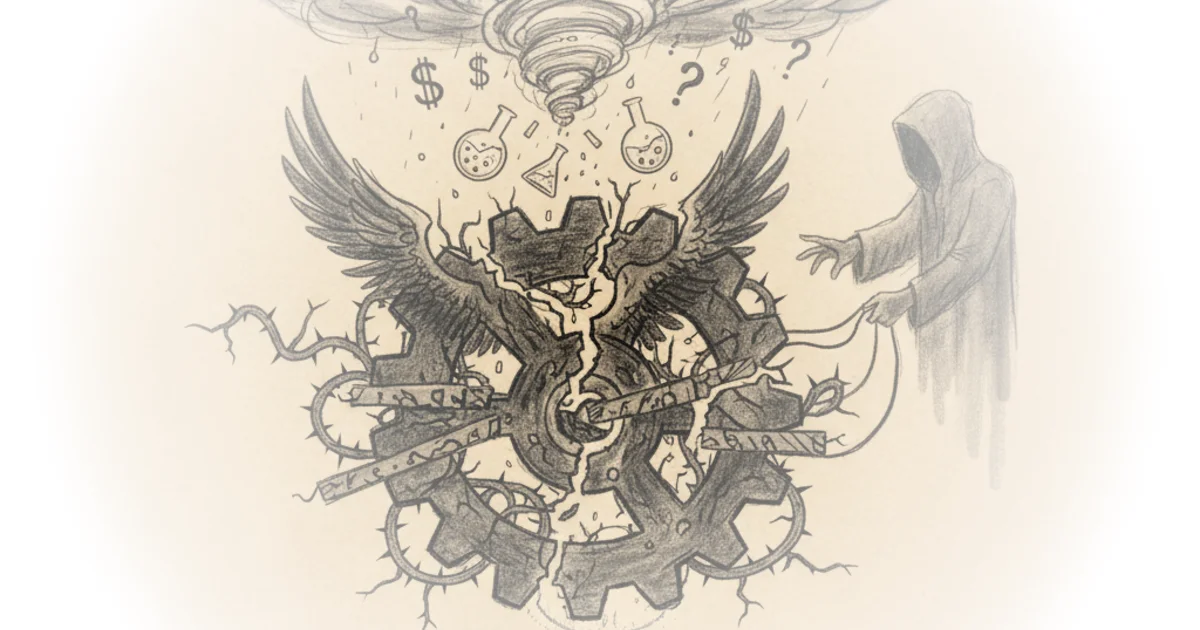
The commentary here is vital because it highlights the speed of the decline. The editors note that the rate of these actions is so rapid that tracking their full impact has become a challenge in itself. Dr. Katie Lotterhos, an associate professor at Northeastern University and the survey coordinator, frames the data collection as a historical necessity. "I see [the survey] as a snapshot in time that in 5 years or 10 years, we can look back to and say we have this evidence that things changed dramatically at this time point," Lotterhos explains. This perspective transforms the survey from a simple complaint box into a legal and historical record, a strategic move to ensure future accountability.
"The goal of the survey was more to give people a platform to share their stories... I wanted to provide them with a voice when they didn't feel comfortable speaking out themselves."
The Human Cost of Uncertainty
While funding cuts are often discussed in abstract budgetary terms, the piece forces the reader to confront the human and operational consequences. The coverage details how administrative freezes have stopped urgent work, citing a wildlife researcher whose team was "stopped in our tracks" despite having the expertise to respond to a disease threatening the pork industry. The researcher notes, "In many ways, this harm is irreparable." This is a stark admission that some scientific interventions have narrow windows of opportunity; missing them due to political gridlock results in permanent loss.
The ripple effects extend to the next generation of scientists. The article describes a "severe narrowing of the job market" where departments are hiring only one graduate student or rescinding offers entirely due to the threat of future cuts. A prospective graduate student included in the piece articulates the resulting anxiety: "Is this my only shot at making it to graduate school? If I don't get in this year, will I have to wait until a more science-friendly administration is in office for another chance?" This personal narrative underscores that the damage is not just to current projects but to the pipeline of future expertise. Critics might argue that scientific resilience has always required navigating political headwinds, yet the sheer breadth of the banned terminology and the speed of the funding freezes suggest a departure from historical norms of bureaucratic friction.
The Fragility of Neutrality
Perhaps the most damaging impact described is the loss of institutional memory. The piece highlights the disappearance of senior federal partners whose "decades of experience in biodiversity monitoring and coastal protection had no replacement." One participant observed that these partnerships derive their effectiveness from "political neutrality," and their abrupt loss means projects are now "being advised with markedly less experience." This reframes the issue from a partisan dispute to a failure of governance; when the executive branch removes nonpartisan experts, the quality of decision-making for the entire society degrades.
Big Biology emphasizes that the solution lies not in grand gestures but in sustained, quiet advocacy. Lotterhos recommends that the most effective action is a "whisper campaign" rather than a "big press hoopla," urging scientists to share the survey data directly with the staff of their representatives. The piece concludes with a powerful affirmation of the core values at stake: "Having the freedom to exercise values like objectivity and rigor, the freedom to describe natural phenomena with the correct terminology, the freedom to question and debate what we believe to be true."
"These freedoms that we need for science to operate and to advance knowledge. And they're not freedoms for scientists alone, either, they're fundamental requirements for a society that values truth and the common good."
Bottom Line
The strongest element of this coverage is its shift from abstract policy criticism to concrete, documented evidence of operational paralysis, proving that the threat to science is immediate and measurable. Its greatest vulnerability is the inherent difficulty in reversing the "irreparable" harm already done to long-term ecological monitoring and public health responses. Readers should watch for how state-level governments and private institutions respond to fill the vacuum left by the federal retreat from evidence-based policy.