In an era where religious discourse often defaults to safe platitudes, a 1986 speech by Francine Russell Bennion stands as a radical call to intellectual courage, arguing that true faith requires wrestling with the rawest contradictions of human pain. Wayfare resurrects this forgotten address not merely as a historical artifact, but as a blueprint for a theology that refuses to look away from the suffering of the world. The piece suggests that the most faithful act one can perform is to stop shrouding oneself in a "crazy quilt stitched haphazardly from Old Testament theology" and instead engage in the difficult, personal work of constructing a coherent understanding of God. This is not a comforting message for those seeking easy answers; it is a challenge to the very structure of religious authority.
The Cost of Intellectual Safety
The article contextualizes Bennion's speech within the turbulent 1980s, a time when the Church was actively pushing for doctrinal uniformity and discouraging independent inquiry. Wayfare notes that the ethos of the day stressed "prophetic over intellectual authority, obedience over questioning, faith over doubt." Against this backdrop, Bennion's insistence on personal agency was nothing short of revolutionary. She argued that the existence of suffering alongside a loving God is not a problem to be solved by deferring to leaders, but a reality to be confronted by the individual. The piece highlights her critique of those who avoid this work: "We are a people accustomed also to fragments of scripture out of context... words that say something appropriate to the matter at hand, and ring with clarity and conviction." Bennion warned that while fragments are useful, they often blur when combined, leading to a faith that cannot withstand the weight of real-world tragedy.
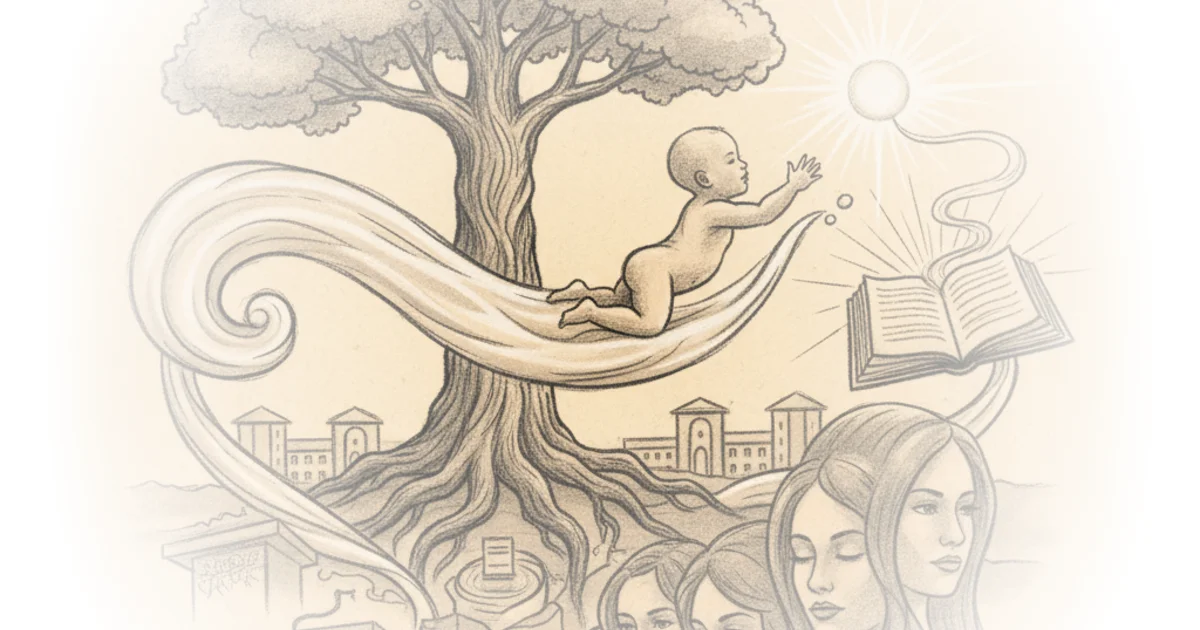
This framing is particularly potent because it reframes the "problem of evil" not as a philosophical puzzle for academics, but as a lived experience for ordinary people. Bennion rejects the sanitized, abstract arguments of philosophers like J.L. Mackie. Instead, she forces her audience to sit with the visceral reality of pain: "the child lying in a gutter in India, the woman crawling across the Ethiopian desert to find a weed to eat... the child sexually abused or scarred for life." By grounding theology in these specific, heartbreaking images, she dismantles the distance between doctrine and human experience. The commentary suggests this approach is essential because "good theology must satisfy both the mind and the heart," a standard that abstract dogma often fails to meet.
Good theology of suffering explains all human suffering, not just the suffering of those who feel they know God's word and are his chosen people.
Critics might argue that demanding such a comprehensive theological framework places an impossible burden on the average believer, potentially leading to crisis of faith for those unable to reconcile such stark contradictions. However, Bennion anticipates this by insisting that theology cannot be "mastered by a few expert scholars" but must be "comfortably carried by ordinary people." The piece argues that her method empowers rather than overwhelms, treating the listener as an agent capable of bearing the weight of truth.
Weaving a New Theology
The article draws a fascinating parallel between Bennion's rhetorical style and the domestic sphere, noting how she uses metaphors of quilting and weaning to describe theological work. This is a deliberate subversion of the male-dominated intellectual tradition. Bennion asks her audience to consider the silence surrounding Jephthah's wife in the biblical narrative, noting, "What of Jephthah's daughter, who isn't even mentioned?" This question, rooted in the same textual tradition as the deep dives on Mormon fundamentalism and women's roles, exposes the gaps in traditional storytelling. By refusing to cite current prophets or male leaders, Bennion models a form of religious independence that was rare for the time. She writes, "I think" and "as I read this passage," taking full responsibility for her conclusions rather than hiding behind institutional authority.
This refusal to defer is the speech's most enduring legacy. Wayfare observes that Bennion "neither hides behind male authority nor defers to it," instead inviting her listeners to become "not listeners but thinkers." She connects this intellectual autonomy to the spiritual goal of becoming like God, suggesting that the process of questioning and synthesizing is itself a divine act. The piece notes that her closing plea for women to "choose well" and "trust ourselves" was particularly significant given the contentious climate of the 1980s, where the boundaries of acceptable thought were being rigidly policed. By weaving together scripture, science, and personal narrative, she demonstrates how to construct a "tighter, stronger theology" that can hold the complexity of modern life.
Bottom Line
Wayfare's revival of Bennion's "Theology of Suffering" offers a compelling argument that faith is not a passive acceptance of doctrine but an active, intellectual engagement with the world's pain. The strongest part of this coverage is its demonstration of how Bennion's rhetorical choices—her vivid imagery and refusal to cite authority—were themselves an enactment of the agency she preached. Its biggest vulnerability lies in the sheer difficulty of the task she sets: asking ordinary believers to synthesize a comprehensive theology in a culture that often rewards conformity. Readers should watch for how this call for intellectual independence resonates in current religious debates, where the tension between institutional loyalty and personal conscience remains as acute as ever.