Briahna Joy Gray spent years inside the Bernie Sanders campaign. Now she's convinced Democrats can't be reformed from within — and she has the receipts to prove it.
The Inside View
Gray served as national press secretary for the Bernie Sanders campaign in 2020. She entered politics after leaving law, driven by a belief that the political establishment was failing to honestly cover movements like Bernie's. Her frustration wasn't just theoretical — it came from watching the Democratic Party systematically neutralize left-wing insurgents from inside its own operations.
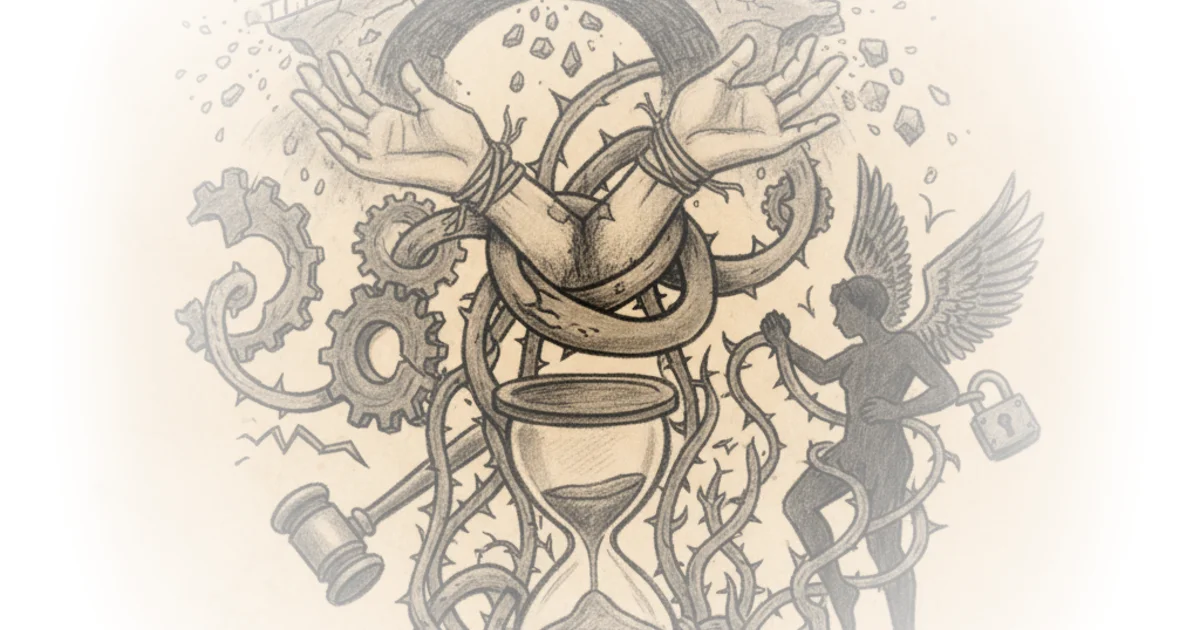
The author observed up close how efficiently the party could organize against progressive candidates. When Justice Democrats candidates won their races, they discovered something unexpected: the party adapted to absorb them rather than be transformed by them.
The Reform That Never Happened
Gray argues that the idea of using traditional political means to reform the Democratic Party — pulling it back to the left — was undermined by what unfolded in 2016 and 2020. She points specifically to AOC and other progressive members who won on promises of representing something different, but quickly bent to party leadership.
The Biden administration offers a telling example. After two years with control of Congress and the White House, the $15 minimum wage got stripped from pandemic relief legislation. Bernie Sanders fought to restore it, but Senate rules required 60 votes rather than 50 — and Chuck Schumer had deliberately changed the threshold to make failure inevitable. The author describes watching Biden on a Zoom call asking for the minimum wage "like Oliver Twist" while committing to prioritize it — then immediately failing to deliver.
This pattern convinced Gray that Democrats in power simply can't do anything meaningful, regardless of who occupies the White House.
Third Parties: The Alternatives That Aren't
The obvious follow-up question is what comes next. Gray acknowledges it's tough. The two-party duopoly dominates American politics. She argues for building alternatives rather than continuing to push against institutional walls that won't budge — but she also admits she's not confident in any existing third party.
Green Party lacks mainstream awareness and gets dismissed as crunchy Sierra Club types. People's Party has faced its own controversies. The DSA, which once represented hope for applying pressure to Democrats from outside the party structure, hasn't delivered on its promises either.
The author notes that building labor power takes decades — labor density declined from 30% to 11% over generations — and suggests third parties face similar generational timelines. Yet she argues it's better to try building something new than to keep losing while trying to reform an inherently resistant institution.
The Lesser-of-Two-Evil Problem
Gray also addresses voting behavior among left-leaning voters, particularly in the 2024 election with ongoing genocide abroad complicating lesser-evil arguments. She notes that within left communities, vote-blue-no-matter-who messaging has lost credibility — especially when mainstream party figures were caught laughing and rolling eyes at pro-Palestine protesters at the Democratic National Convention.
In her own case, voting for Jill Stein in DC was never going to affect any outcome anyway, but she describes being frustrated by how quickly people point fingers about who is responsible for election results. The numbers suggest many voters stayed home rather than vote for Harris, demoralized by options they found ethically troubling.
"When you see over the course of years opportunities that were available to the small number of people who did get elected into Congress who were progressives... the unwillingness to actually be adversarial with the Democratic party demonstrated that the Democratic party changes you — it's not the other way around."
Bottom Line
Gray's strongest argument is structural: she witnessed firsthand how institutional power within the Democratic Party neutralizes reform efforts, and she's seen no evidence it works differently now. Her vulnerability is that proposing third-party alternatives feels more like a wish list than an actionable plan — especially when she acknowledges those alternatives face awareness problems far worse than what Democrats already have. The real tension: building something new takes generations, but Gray argues waiting for reform inside the party has already proven fruitless.