Matthew Clayfield argues that the true genius of MASH* lies not in its cultural footprint, but in its radical, almost painful evolution from a broad farce into a profound meditation on the human cost of war. While most viewers remember the show as a comforting sitcom, Clayfield contends that its most significant achievement was its refusal to stay comfortable, transforming over eleven seasons into a drama that "only gets better, even though its most memorable characters leave before it has really hit its stride."
The Architecture of Tone
Clayfield begins by dismantling the common perception that television is a "congenitally conservative affair," pointing instead to the show's aggressive experimentation with form. He notes that the series was "really three shows masquerading as one," shifting from a bawdy comedy in its early years to a complex drama that occasionally makes you laugh. This structural analysis is compelling because it explains why the show feels so distinct from its contemporaries; it wasn't just changing actors, it was changing its very DNA.
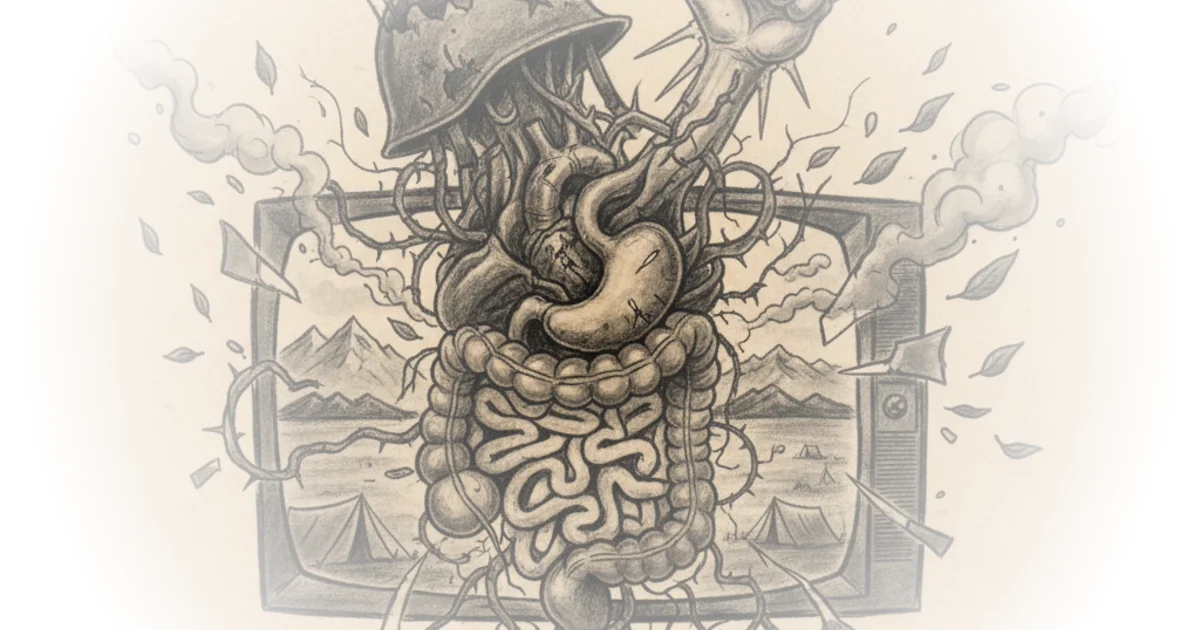
The author highlights specific technical innovations that were startling for network television of the 1970s. "It's quite striking, watching MASH for the first time today, to encounter, say, an episode shot in first-person POV," Clayfield writes, comparing the experience to discovering a hidden door in a familiar room. He points to episodes like 'Point of View' and the dream sequences directed by Alan Alda as evidence that the show was pushing the boundaries of what the medium could do, long before The Sopranos* is often credited with starting that revolution.
I'm not going to make this a history lesson because it's all on the record already. But pub trivia is beside the point.
This refusal to get bogged down in behind-the-scenes gossip serves the argument well. Clayfield acknowledges the cast changes—Wayne Rogers leaving, McLean Stevenson's departure, and the shift away from the character of Frank Burns—but frames them not as production headaches, but as necessary catalysts for the show's deepening emotional resonance. The show got darker as Alda took more control, and the characters became "fully-formed" rather than caricatures. This is a crucial distinction: the show didn't just survive its cast changes; it used them to evolve into something more honest about the trauma of war.
The Weight of Duration
The core of Clayfield's piece is a theory on how time spent with a narrative alters our emotional investment. He describes his own experience of binge-watching the entire series in two months as a form of "voluntary Stockholm syndrome," where the sheer duration of the engagement forces a level of intimacy that weekly viewing cannot replicate. "It's the same way you don't want to finish reading any substantial book with which, by virtue of length, you have spent an awful lot of time, and whose characters have come to feel more real to you than the actual people in your life," he observes.
This perspective reframes the finale, 'Goodbye, Farewell and Amen', not as a mere conclusion, but as a cathartic release of years of accumulated grief. Clayfield notes that the show's power lies in its ability to make the audience care about the small, human moments amidst the chaos: "It matters to me that the guys become nicer to Margaret. It matters to me that Margaret becomes nicer to them." He highlights the final scene where Colonel Potter toasts his dead friends, noting that "Harry Morgan's tears are the real deal in that scene."
You wind up falling for it because it does. You fall for its characters, and through them for its message.
Critics might argue that this intense emotional investment is a byproduct of the modern binge-watching culture rather than the show's inherent quality, suggesting that the original weekly broadcast schedule allowed for a different, perhaps more sustainable, kind of reflection. However, Clayfield's point stands: the cumulative effect of the series length creates a unique emotional architecture where the loss of characters feels like a personal bereavement.
The Ghost of Henry Blake
Perhaps the most poignant section of the commentary is Clayfield's analysis of the character Henry Blake. He argues that the episode 'Abyssinia, Henry' fundamentally changed television by shattering the sitcom safety net. Blake, described as a "dope" who was "not cut out for war," is sent home, only to be killed in the final moments of the episode. Clayfield writes, "This is a happy episode. Blake should never have been in Korea. More than Hawkeye or Klinger... his going home is a blessing to everyone, not least to himself and his wife."
The shock of the ending, filmed without the cast knowing the outcome, serves as a brutal reminder of the randomness of death in war. "Famously, the final scene of 'Abyssinia, Henry' was shot without anyone knowing what was going to happen," Clayfield notes, emphasizing the raw, unscripted nature of the grief that followed. This moment, he suggests, is the pivot point where the show stopped being a comedy about a war and became a drama about the tragedy of war itself.
MAS*H improves. I have a theory for why this happened, but I'll come back to it a little later.
The author's assertion that the show "improves" as it loses its original stars is a bold claim that challenges the conventional wisdom of television longevity. Usually, shows decline as they age; MASH* ascends. Clayfield attributes this to the show's willingness to confront the horror of the conflict, stripping away the laugh track in the operating room and forcing the audience to sit with the silence of death.
Bottom Line
Matthew Clayfield's commentary succeeds in recontextualizing MASH* not as a nostalgic relic, but as a pioneering work of television that dared to prioritize the human cost of war over audience comfort. The piece's greatest strength is its analysis of how duration and tonal shift work in tandem to create a profound emotional impact that transcends the era in which it was made. Its only vulnerability is the assumption that modern binge-watching replicates the same emotional depth as the original weekly ritual, but even this serves to highlight the show's enduring power to make us feel the weight of loss, regardless of how we consume it.