Matt Stoller delivers a scathing indictment of a recent antitrust settlement that, on paper, promises rent relief but in practice may cement the very algorithmic collusion it claims to stop. While the Department of Justice celebrates a "big win for renters," Stoller argues the agreement is a masterclass in regulatory capture, filled with loopholes that allow corporate landlords to continue price-fixing under the guise of compliance. This is not just a story about housing; it is a warning about how private equity and artificial intelligence are reshaping the economy while the law sleeps.
The Algorithmic Conspiracy
The piece begins by grounding the reader in a surprising market shift: rents actually fell in September for the first time in over fifteen years. Stoller attributes this not to natural market forces, but to the unraveling of a specific, artificial constraint. "National average rent fell 0.3% from August," he notes, citing data that shows a "glut of new units is taking longer to absorb than expected." Yet, the real driver, he argues, was the legal pressure mounting against RealPage, a software firm that allegedly acted as the central nervous system for landlord collusion.
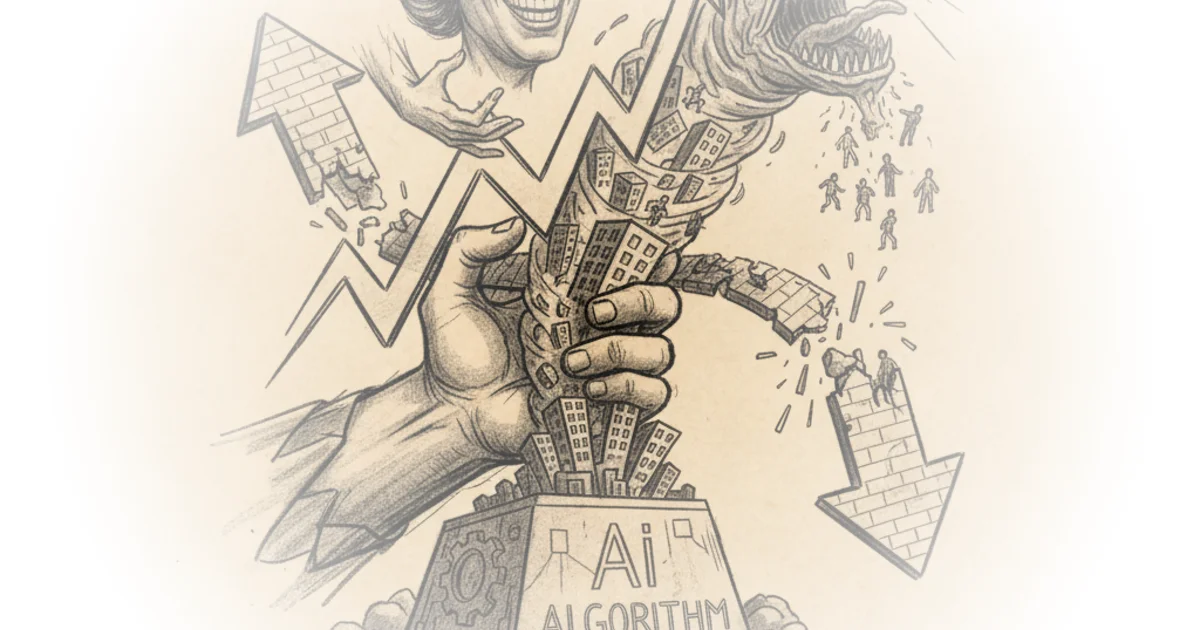
Stoller details how RealPage, owned by private equity giant Thoma Bravo, allegedly used its software to share sensitive data across competitors, effectively creating a cartel. The software didn't just suggest prices; it actively discouraged landlords from lowering rents or offering concessions. Stoller highlights a chilling admission from the industry: "I think it's driving it, quite honestly," referring to the algorithm's role in spiking rents by 18% in some cities during the spring of 2022. The author's framing here is crucial; he moves the conversation from abstract market dynamics to a concrete conspiracy where "if you have idiots undervaluing, it costs the whole system." This quote exposes the mindset of the algorithm's architects: they viewed individual landlords as obstacles to a coordinated price hike.
The historical context Stoller weaves in is vital for understanding the stakes. He draws a parallel to the Sherman Antitrust Act and the history of consent decrees, noting that the DOJ's recent lawsuit included "price-fixing clip-art" to emphasize the blatant nature of the alleged crime. This visual metaphor underscores how far the enforcement has drifted from the aggressive stance of the early 20th century. Critics might argue that software recommendations are merely efficiency tools, but Stoller dismantles this by showing how the software actively prevented employees from deviating from the algorithm's higher price points.
An algorithm in the hands of an oligarch isn't a friend.
The Weakness of the Settlement
The narrative takes a sharp turn when Stoller analyzes the settlement announced by Antitrust Division chief Gail Slater. While Slater proclaimed a victory, Stoller points out the bizarre timing—releasing the news days before Thanksgiving, a classic tactic for burying bad press. More damning is the reaction from RealPage's own legal counsel, Stephen Weissman, who claimed the government had effectively "bless the legality of RealPage's prior and planned product changes." Stoller finds this admission shocking, suggesting the DOJ has legitimized the very behavior it sued to stop.
The core of Stoller's critique lies in the technical details of the settlement. He argues that the "complex behavioral remedies" are riddled with loopholes that make enforcement nearly impossible. For instance, while the deal bans sharing specific data points, it allows RealPage to use "synthetic curves" that can be slightly tweaked to achieve the same result. "If RealPage slightly tweaks the list of prices, or uses last week's curve, then that seems fine," Stoller writes, noting that detecting such violations would be a "time-consuming" nightmare for regulators. The settlement also allows pricing advisors to continue one-on-one conversations with landlords, provided they claim to use only public data—a standard Stoller deems impossible to police in practice.
This section of the commentary is particularly strong because it moves beyond political rhetoric to the granular mechanics of legal loopholes. Stoller argues that the settlement is "asking to be violated" because it preserves the industry's structure while pretending to change it. He notes that the monitor for the settlement lasts only three years, ensuring the agreement expires before any potential shift in political leadership, effectively locking in the status quo. A counterargument worth considering is that any settlement is better than a drawn-out trial that could take years, but Stoller counters that a weak settlement sets a dangerous precedent for other industries, signaling that algorithmic price-fixing is permissible if dressed in enough legal jargon.
The Political Fallout and Personal Attacks
The piece concludes with a personal dimension that reveals the tension within the administration. Stoller recounts a social media exchange where Slater, the Antitrust chief, lashed out at him, calling him a "keyboard warrior" and a "eunuch" after he questioned the division's approach to corporate mergers. Stoller interprets this not just as a personal slight, but as a symptom of an agency contorting itself to align with a specific political ideology rather than the rule of law. "She's also contorting herself to be more MAGA, coming up with attempts at memes to make herself more Trump-y," he observes, suggesting that the pursuit of political loyalty has compromised the division's integrity.
Despite the personal friction, Stoller sees a silver lining in the administration's failure. By endorsing inaction, the executive branch has inadvertently highlighted the dangers of algorithmic collusion to the public. "Today, Americans dislike and distrust AI," Stoller writes, citing polling data that shows a majority feel left behind by generative technology. This public sentiment, he argues, could fuel a new wave of state-level legislation and voter backlash that federal inaction failed to address. The piece ends on a note of historical inevitability, suggesting that the current political moment is merely a prelude to a future where the public demands a restoration of fair commerce.
Bottom Line
Matt Stoller's analysis is a masterful dissection of how regulatory capture operates in the digital age, proving that a settlement can be a victory for monopolists even when framed as a win for consumers. The argument's greatest strength is its technical precision in exposing the loopholes that render the RealPage agreement toothless, while its vulnerability lies in its reliance on future public outrage to correct a federal failure. Readers should watch closely as state attorneys general, who refused to sign the settlement, attempt to fill the void left by a weakened Department of Justice.