In an era where political discourse feels increasingly brittle, Cyril Hédoin offers a sobering reminder: the entire edifice of liberal democracy rests on a fragile, modern invention called public reason, and it is currently unraveling. This isn't just another plea for civility; it is a structural analysis arguing that political violence is not merely a symptom of bad actors, but the definitive signal that the shared logic required to govern a free society has collapsed. For busy observers trying to make sense of rising tensions, Hédoin provides a crucial lens that shifts the blame from partisan personality clashes to a fundamental breakdown in how we justify authority to one another.
The Architecture of Restraint
Hédoin begins by grounding the concept in the work of John Rawls, defining public reason not as a vague ideal but as a strict requirement: "moral and political rules should be justifiable or acceptable to all persons over whom those rules are assumed to have authority." This framing is powerful because it strips away the excuse that one's side is simply "right" while the other is "wrong." Instead, it posits that legitimacy comes from the ability to explain your position in terms others can accept, even if they disagree.
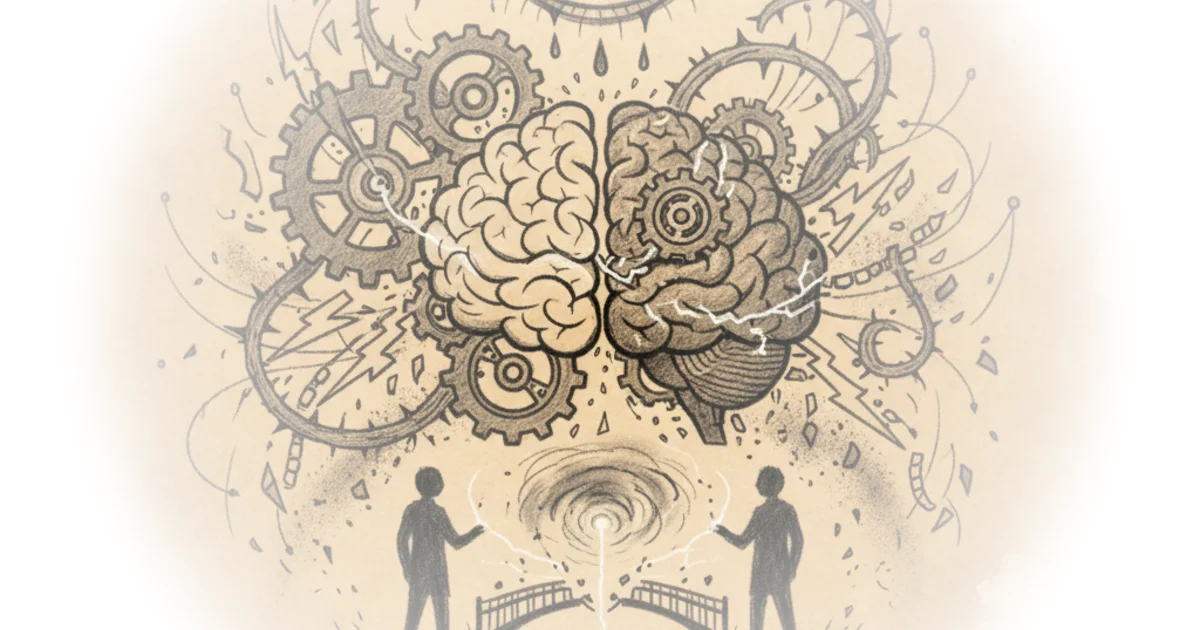
The author argues that this creates a "duty of civility" for political actors. As Hédoin writes, "It expresses at once a willingness to listen to others' arguments, a restraint from bringing views and demands that we know others cannot accept, general sincerity in the search for a consensus or at least a compromise, and – of course – the rejection of any form of violence to coerce others into submitting to one's views." This is a high bar, one that many modern campaigns fail to clear. The commentary here is sharp: when officials threaten to jail opponents or appeal exclusively to sectarian religious reasons, they aren't just being rude; they are actively dismantling the mechanism that keeps the peace.
Political violence is the ultimate transgression of the idea of public reason. Its use signals that we have given up on the idea of convincing others by bringing reasons.
This distinction is vital. It reframes violence not as a tactical escalation but as a philosophical surrender. When a group resorts to force, they are admitting they cannot win the argument on the merits. Hédoin notes that this behavior is self-undermining: "sectarian and threatening behavior is unlikely to lead to the adoption of rules that everybody has reasons to accept… except for the fear of being punished for not doing so!" The resulting order is not stability; it is the silence of the gun.
The Fragility of the Peace
The essay takes a darker turn when addressing the conditions under which this system fails. Hédoin acknowledges that public reason is an ideal that is never fully realized. We live in a "grey zone" where views are intelligible but contested. The danger arises when the reciprocity breaks down. "You will stick to it only if you believe that others are doing so," Hédoin warns. This is the core vulnerability of liberal societies: the system relies on a mutual belief in good faith that, once lost, is incredibly difficult to regain.
The author points to the psychological feedback loop of fear. If citizens believe their opponents are willing to use violence, they feel justified in abandoning the rules themselves. "The anticipation of political violence not only triggers political violence, but also encourages people to adopt illiberal moral and political views, views that themselves reinforce the support for political violence." This creates a downward spiral where the fear of the other side's aggression becomes the self-fulfilling prophecy of that very aggression.
Critics might argue that this focus on "reason" ignores the reality that some political goals are inherently exclusionary and cannot be justified to everyone, regardless of how politely they are presented. If a movement seeks to strip a group of their rights, no amount of public reason will make that acceptable to the victims. Hédoin anticipates this by noting that violence can be triggered when one side holds "unacceptable views" that infringe on the freedom of others, suggesting that the breakdown isn't always a failure of communication but sometimes a failure of values.
Beyond the Left-Right Divide
Addressing the current climate in the United States, Hédoin challenges the narrative that political violence is the exclusive domain of one ideology. He references claims by Vice-President J.D. Vance that data shows the left is more prone to violence, but counters that "data suggest a more complicated picture." The evidence indicates that support for violence is often a reaction to who the victim is, rather than a fixed ideological trait.
The most damning insight Hédoin offers is about perception. "Individuals in each political camp highly overestimate the support for political violence by people from the other political camp." This mutual misperception fuels the paranoia that drives the cycle of violence. The author suggests that the dividing line isn't between progressives and conservatives, but between those who view others as "individually valuable moral beings" and those who see them merely as opponents to be defeated.
It is easy to forget that we are living in exceptional times. Political violence has been the norm for human societies for centuries and even millennia, until some of them found the right circumstances and the appropriate institutions to turn it into something abnormal.
This historical perspective is the essay's most sobering element. It reminds us that peace is not the default state of humanity; it is a rare achievement that requires constant maintenance. The "exceptionalism" of public reason means it can be lost as quickly as it was gained. Hédoin concludes that recognizing this fragility should lead to a unified condemnation of violence, regardless of the perpetrator or the cause.
Bottom Line
Hédoin's strongest contribution is the reframing of political violence as a systemic failure of justification rather than a mere breakdown of order, offering a clear diagnostic tool for understanding current instability. However, the argument's reliance on a shared belief in reciprocity leaves it vulnerable in a landscape where bad-faith actors may never intend to play by the rules. The reader must watch for whether institutions can rebuild the trust required to stop the downward spiral before the "exceptional" peace becomes the exception no more.