Justin E. H. Smith delivers a startling diagnosis of the modern attention economy: we are not suffering from a lack of content, but from a fetishization of the aesthetic trappings of thinking rather than the act itself. While the piece serves as a prelude to a subscription model, its true value lies in its scathing critique of how digital platforms flatten complex intellectual history into consumable signifiers. For the busy professional seeking depth, this is a rare moment where the medium is dissected with the same rigor usually reserved for the message.
The Architecture of Distraction
Smith argues that the current digital landscape, particularly platforms like Substack, has devolved into a performance of productivity rather than a vehicle for it. He observes that these spaces have become less about essays and more about the "fetishization of the accoutrements and practices —fountain-pens, typewriters, cozy writing nooks, 30-day first-draft 'challenges'— that are associated skeuomorphically with the writing lifestyle." This is a sharp invocation of the concept of skeuomorphism, a design principle where digital objects mimic their physical predecessors to feel familiar, much like the early digital interfaces that looked like leather-bound desks. Smith suggests this mimicry has gone too far, replacing substance with style.
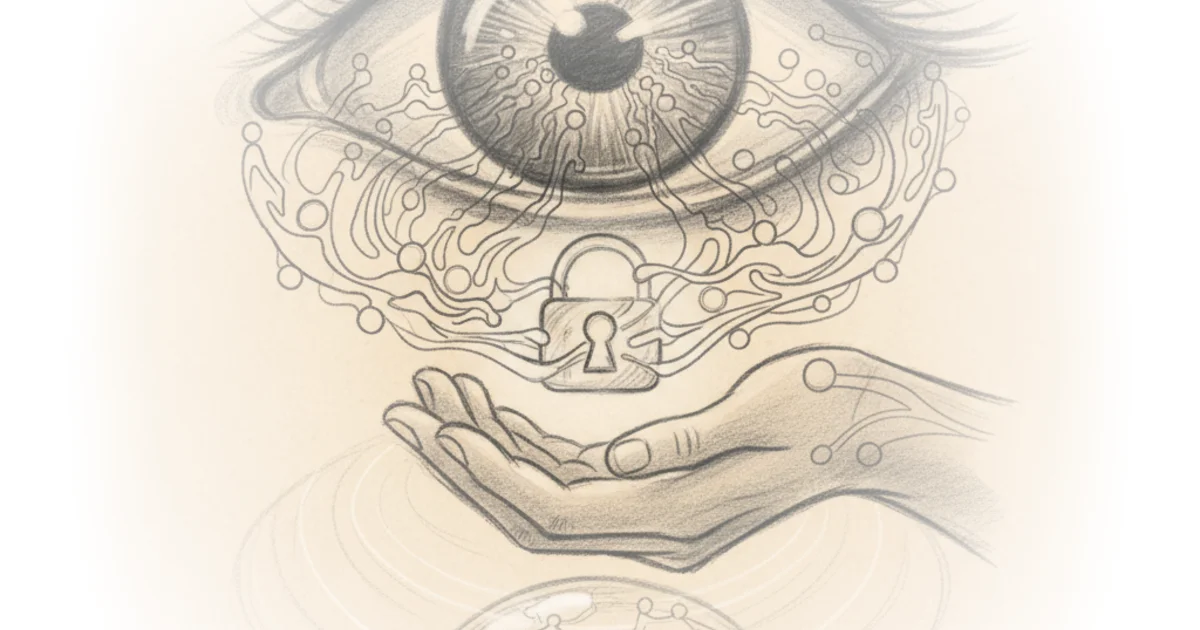
He extends this critique to the broader culture of online discourse, noting that the "symbolic commerce is now carried out in the form not of essays, but of tweet-length platitudes, and accompanying stock-photo visual aesthetics." The author is not merely complaining about brevity; he is identifying a structural shift where the idea of writing has replaced the work of writing. This framing is effective because it moves beyond the usual lament about attention spans to pinpoint the specific mechanics of how platforms incentivize shallow engagement.
"The only Hinternet experience worth having at all is the one made possible by a paid subscription. Everything else is loitering in the parking-lot."
Critics might argue that this binary distinction between paid depth and free superficiality ignores the vibrant, high-quality discourse that often flourishes in open, ad-supported spaces. However, Smith's point is less about the economics of access and more about the curation of attention. He posits that the free tier encourages a passive consumption of "signifiers associated with the writing life," whereas the paid model demands an active engagement with the text itself.
The Universal Mirror and the Infinite Catalog
The core of Smith's project is an ambitious, almost absurd, attempt to catalog the entirety of human knowledge and imagination. He describes The Hinternet's mission as a desire "to give at least passing mention to every entity, event, fact, and state of affairs that has any claim to existence, occurrence, or truth." This is not a dry academic exercise; it is a philosophical stance that treats the trivial and the profound with equal weight. To illustrate this, he lists a dizzying array of topics covered over five years, ranging from "Steamboat Willie" and "Paleolithic menstrual-trackers" to "Thomas Edison's Black Maria studio."
The reference to Edison's Black Maria, the world's first film studio built in 1893, is particularly apt here. Just as Edison's studio captured the mundane movements of vaudeville performers to create a new medium, Smith seeks to capture the mundane movements of history and culture to create a new kind of intellectual mirror. He argues that the only way to truly understand the world is to refuse to prioritize one narrative over another, even if that narrative is the "culture wars."
"You do not really want to see an end to the culture wars; for there is a way out of them, and you're free to take it at any time."
This is perhaps the most provocative claim in the piece. Smith suggests that the public's appetite for conflict is not a bug but a feature of the current discourse ecosystem. He writes that readers prefer "straightforward political take-mongering, anchored to the news-cycle," because it provides a false sense of harmony and shared reality. By refusing to participate in this cycle, Smith positions his work as a radical alternative, one that offers "an infinite universe of entities, processes, facts, states of affairs, that need to be chronicled, interpreted, riffed upon, decomposed and recombined without end."
The Personal and the Philosophical
Beyond the critique of media, Smith weaves in a deeply personal reflection on sobriety and the nature of self-help. He admits that his own recovery from alcoholism was the catalyst for finding his authentic voice, moving from "crippling self-hatred" to a place where he could "start speaking in my own voice, in public." This personal narrative serves to ground his high-minded philosophical claims in human reality. He challenges the dismissal of self-help as a genre, suggesting that even the most rigorous philosophical works, like Spinoza's Ethics, are ultimately guides to happiness.
"What is Spinoza's Ethics, for example, if not: follow along with my demonstration of the fundamental structure of reality, in order then to be happy?"
Smith's argument here is that the separation between "high culture" and "self-help" is artificial. He posits that the ultimate goal of all writing, regardless of its genre, is to help the reader navigate their existence. This is a compelling reframing that elevates the genre of self-help while simultaneously democratizing the canon of philosophy. However, one might argue that this conflation risks oversimplifying the rigorous, often uncomfortable demands of philosophical inquiry, which do not always promise happiness as a direct outcome.
Bottom Line
Justin E. H. Smith's commentary is a masterclass in intellectual independence, refusing to bow to the algorithms that dictate modern discourse. Its strongest asset is the refusal to distinguish between the "important" and the "trivial," treating the entire universe of human experience as worthy of attention. The piece's greatest vulnerability lies in its potential elitism; by framing free content as mere "loitering," it risks alienating the very readers it hopes to convert. Yet, for those willing to engage with a text that demands more than a quick scroll, the reward is a rare glimpse of a mind that refuses to be categorized.
"You do not really want to see an end to the culture wars; for there is a way out of them, and you're free to take it at any time."
The ultimate takeaway is that the path to genuine understanding requires stepping off the treadmill of reactive news and into the vast, quiet space of curiosity. Smith does not offer a solution to the world's problems, but he offers a method for seeing them clearly: by looking at everything, and nothing, with equal intensity.