Freddie deBoer delivers a devastatingly intimate account of how the pandemic did not just pause life, but accelerated a personal collapse that was already in motion. While much of the public discourse fixated on viral transmission rates or political compliance, deBoer argues that the true tragedy of 2020 was the way institutional indifference and economic precarity conspired to isolate the vulnerable. This is not a story about a virus; it is a story about the failure of the social contract when it meets a human being in crisis.
The Illusion of Institutional Care
The piece opens by dismantling the myth that progressive institutions are inherently safe havens for the disabled. deBoer recounts his dismissal from Brooklyn College, noting that despite his disclosure of medication side effects and a request for accommodation, the administration moved quickly to terminate him. He writes, "They had said 'You betcha!' and then they were drawing up my dismissal paperwork." This stark contradiction between performative inclusivity and actual practice is the article's first major blow. deBoer argues that the college, like many such entities, lacked the self-awareness to see its own hypocrisy. The author's refusal to pursue a legal case, despite having a strong argument under the Americans with Disabilities Act, speaks to a profound sense of unworthiness cultivated by systemic neglect. "I did not feel that I deserved to be represented, not in a court of law or anywhere else," he admits. This admission is chilling; it suggests that the most damaging effect of institutional failure is not the loss of a job, but the erosion of the self.
Critics might argue that deBoer's self-blame is misplaced and that the focus should remain entirely on the employer's liability. However, the power of the narrative lies in its psychological realism: when systems fail you repeatedly, the instinct is often to internalize the failure rather than fight the machine.
The Geography of Isolation
As the lockdown deepened, deBoer uses the physical landscape of New York City to map his internal desolation. The article vividly describes the eerie silence of a shuttered Manhattan, a setting that feels more like a dystopian novel than a real city. He observes, "Manhattan during lockdown was some Vanilla Sky shit; Times Square had strong I Am Legend vibes." Yet, he immediately undercuts the romanticism of this imagery, noting that the silence wasn't actually silent, but filled with an "alien auditory emptiness." This distinction is crucial. The author refuses to let the reader settle into a nostalgic view of the pandemic; instead, he forces us to confront the uncanny valley of a city that stopped breathing.
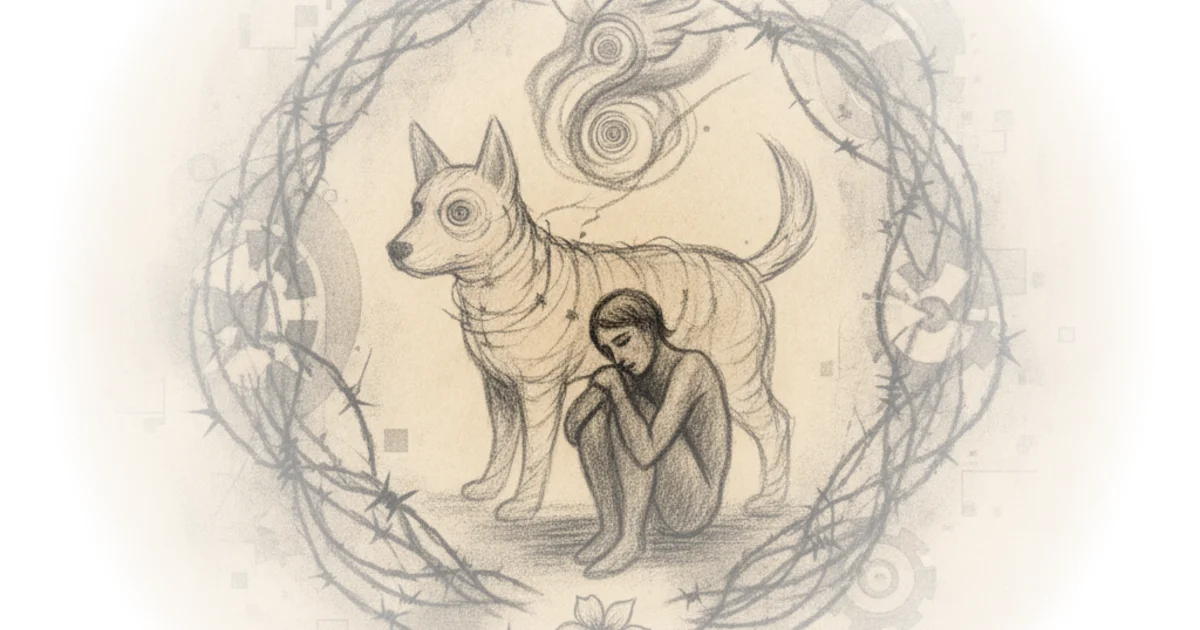
The narrative then shifts to his dog, Miles, whose suffering becomes a mirror for deBoer's own. The dog, who had survived a stroke years prior, was now facing cancer. The logistics of care during a lockdown, combined with the author's poverty, created a cruel bottleneck. "I had been taking him to the vet every week for months in Indiana, and I took him to a vet in Crown Heights now. That vet was in walking distance because it had to be," deBoer explains. This detail underscores the theme of reasonable accommodation—a concept often discussed in policy but rarely felt in the grit of daily survival. The inability to afford advanced treatment for Miles was not just a financial failure; it was a structural one, where the safety net had holes large enough to swallow a beloved life.
"He bopped along with his usual spirit and relearned how to walk and he gradually got stronger and I was struck many times by the simple dignity of a creature who would never think to say 'Why me?'"
This passage is the emotional anchor of the piece. By contrasting the dog's silent endurance with the human tendency to despair, deBoer highlights a tragic irony: the animal possessed more dignity in its suffering than the humans around it. The author's description of the euthanasia scene is unflinching. He describes sitting on the linoleum floor, breathing into an N95 mask, while the dog looked back in confusion. "The drugs confused him and he kept looking back behind him, kept repetitively craning his head around to look behind him," he writes. The rawness of this moment strips away any political abstraction, leaving only the universal pain of loss.
The Weight of Compounding Tragedy
The article's most profound insight is how these events piled on top of one another, creating a cascade of loss that felt inescapable. deBoer lists the timeline with a brutal efficiency: getting Covid, losing his job, the death of a friend, and the death of his dog, all while battling his own mental health. "Within the span of a couple of months, I had gotten Covid, I had lost my job, my beloved friend Nick had died and no one had been able to see him, and now my Miles was gone," he states. This accumulation of grief is framed not as a series of bad luck, but as a systemic outcome. The lockdown did not cause the job loss or the illness, but it removed the buffers that might have allowed for recovery.
The author reflects on the "social death" that accompanies such isolation, where the loss of community makes the loss of a single life feel like the end of the world. He notes that while he had been working to control his bipolar disorder, "nothing else in my life had gotten the slightest bit better." This highlights the disconnect between individual resilience and structural support. You can be stable, medicated, and sober, but if the world around you is collapsing, stability is a fragile thing.
Bottom Line
Freddie deBoer's essay succeeds because it refuses to treat the pandemic as a singular event, instead showing it as a magnifying glass that exposed the fractures in our social and economic foundations. The strongest part of the argument is the linkage between institutional ableism and personal despair, proving that policy failures are felt most acutely in the quiet moments of private grief. The piece's vulnerability lies in its overwhelming sense of hopelessness, which, while authentic to the author's experience, offers little roadmap for repair. Readers should watch for how this narrative of compounding tragedy reshapes our understanding of what constitutes a "successful" public health response—one that protects not just bodies, but the fragile networks of care that hold us together.