In a genre often dominated by policy debates or heroic triumphs, Rohin Francis offers a rare, unvarnished look at the quiet, crushing weight of medical failure. He reframes the doctor's experience not as a series of victories, but as a lifelong pilgrimage to a "small Cemetery" carried within, where the dead are remembered not as statistics, but as the specific cost of human limitation.
The Architecture of Grief
Francis opens not with a grand theory, but with the visceral reality of a 4:00 a.m. call on a freezing night. He describes the internal negotiation required to leave a warm bed, noting that the motivation comes from a desire to help patients return to their own families. "I try to use all that as motivation... if I can do something to increase their chances of them doing that then not only should I want to go but I should feel privileged to be in that position," he writes. This reframing of duty as privilege is a powerful psychological tool, yet Francis immediately undercuts the romanticism by admitting, "nobody wants to get out of bed on a cold night."
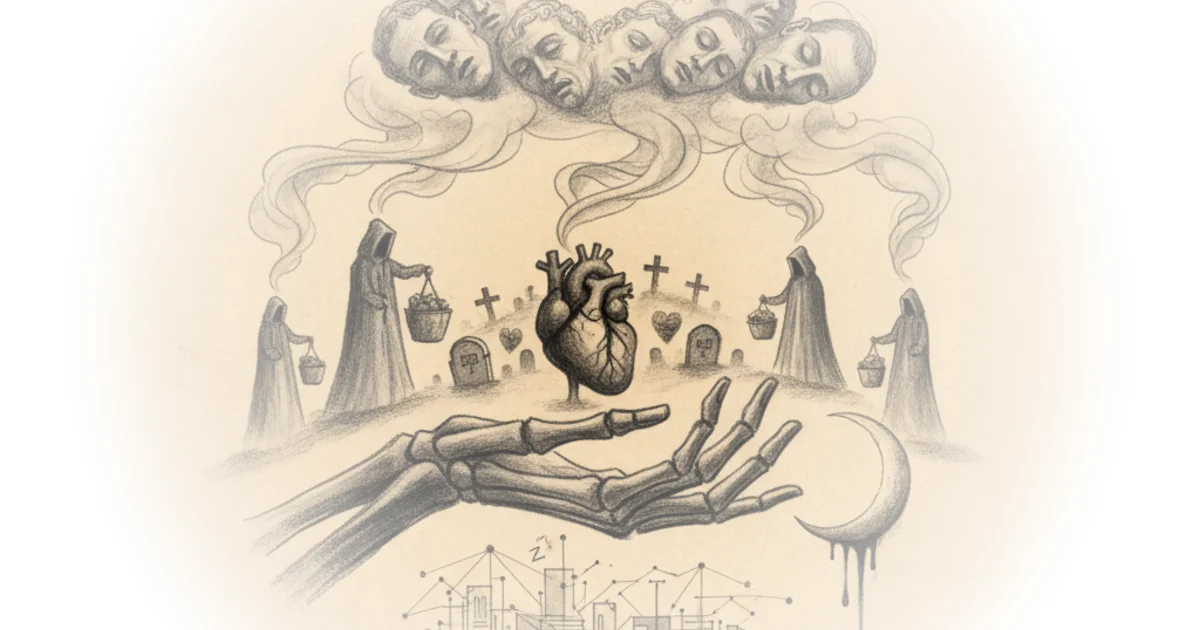
The piece's central metaphor arrives via a translation nuance. Francis cites French surgeon René Leriche, who described the surgeon's internal burden as a "small Cemetery." However, Francis points out that the original French word, cimetière, is often mistranslated to imply a place of "failure." He argues this is a critical distinction. "Failure implies that the doctor made a mistake which of course happens but thankfully it is rare however all doctors have in successes where we are not successful in spite of our efforts," he explains. This shift from error to unavoidable tragedy is the essay's intellectual anchor. It challenges the public's tendency to conflate bad outcomes with medical negligence, suggesting that the true burden of the profession is the inability to save everyone, regardless of skill.
"Sometimes the best is not enough."
Francis illustrates this with a harrowing case of a young patient who was initially told to give up hope. He and a team of specialists fought to keep the patient alive long enough for a rare, high-risk procedure. He describes the delicate dance of managing family expectations: "it is utterly cruel to to get someone's or their fam's hopes up only for them to be disappointed so we'll always prefer to be seen as pessimistic and proved wrong." The patient's family, desperate for any lifeline, thanked him for not giving up, even as he privately knew the odds were slim. The tragedy is compounded by the outcome: the patient died hours after the handover. Francis reflects on the lingering doubt that follows such events, wondering if his words or actions could have altered the course, even as he acknowledges the futility of such rumination.
The Erosion of Resilience
The commentary shifts from individual grief to a broader crisis of morale within the medical community. Francis, who describes himself as mentally robust and capable of managing stress, observes a disturbing trend among younger colleagues. "I see how low morale is now among resident doctors... every single resident doctor in our team called in sick," he notes. He attributes this surge in sick leave not just to the flu, but to the cumulative toll of mental health struggles.
He warns against the caricature of the "cold detached unfeeling doctor" often seen in television dramas, arguing that such emotional detachment is a trap. "if one takes it too far and loses all Humanity or emotion... then actually motivating yourself to get out of bed at 4:00 a.m. on an icy morning is all that much harder," Francis argues. The argument is that empathy is not a liability to be managed, but the very fuel that sustains the profession. Without the capacity to feel the weight of the "Cemetery," the drive to serve evaporates.
Critics might note that Francis's defense of the profession's emotional toll risks romanticizing burnout, suggesting that suffering is an inherent, necessary badge of honor rather than a systemic failure of healthcare infrastructure. While his point about the necessity of empathy is sound, the sheer volume of sick leave he describes suggests that the current system may be asking too much of even the most resilient individuals.
The Paradox of Purpose
Despite the darkness, Francis refuses to abandon the profession. He acknowledges the "mountains of BS to navigate and endure" but insists that the ability to save a life offers a "deep sense of purpose" that is hard to replicate. He describes the unique duality of his field: "the rewards can be instantaneous and dramatic such as stopping a massive heart attack... but the risks and complications can be just as dramatically catastrophic and immediate."
He concludes with a moment of dark humor about the awkward overlap between night and day shifts, a small, humanizing detail that grounds the high-stakes narrative. "the worst possible thing has happened there's nothing worse than finishing a grueling night Shi was that grueling um and seeing the day shift people coming on Fresh faed it's disgusting," he jokes. This levity serves as a reminder that behind the "Cemetery" and the trauma, doctors are still people trying to find their way home.
"Every surgeon carries within himself a small Cemetery where he goes from time to time to pray."
Bottom Line
Francis's most potent contribution is his redefinition of medical failure, distinguishing between preventable error and the inevitable tragedy of mortality, a nuance often lost in public discourse. However, the piece's vulnerability lies in its reliance on individual resilience; it offers a profound personal coping mechanism but stops short of addressing the systemic pressures that are driving a generation of doctors to the brink of collapse. Readers should watch for how this internal "Cemetery" evolves as the healthcare system continues to strain under the weight of understaffing and burnout.