Devin Stone transforms a 1957 Iowa farmhouse tragedy into a gripping legal thriller that exposes the terrifying gap between our instinct for property protection and the law's limits on violence. This piece stands out not for its narrative flair alone, but for its surgical dissection of why a homeowner's "castle" cannot legally become a death trap for a trespasser, even one who is undeniably guilty of a crime.
The Castle and the Trap
Stone opens by establishing the emotional stakes: the Brinys are victims of a decade-long campaign of theft against their inherited home. He paints a vivid picture of their frustration, noting how "the harsh midwestern winters strip the paint off the boards" while looters strip the house of its heirlooms. The narrative builds sympathy for Edward Briny, a man pushed to the edge who decides to take matters into his own hands. Stone writes, "A desperate plan takes shape in his mind... he secures the shotgun to the foot of the iron bed with wire and runs another wire from the trigger to the bedroom doorknob." This visual is chilling, yet Stone frames it as a logical, albeit extreme, response to a system that failed to protect the property.
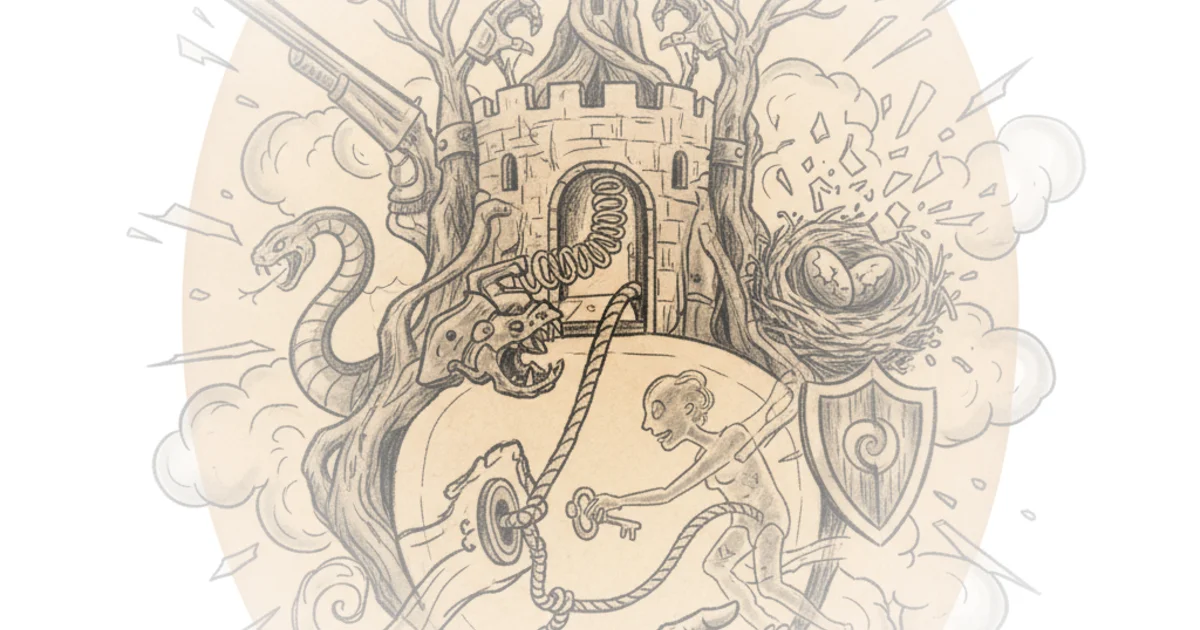
The commentary here is effective because it forces the reader to sit with the homeowner's perspective before introducing the legal counterweight. Stone acknowledges the Brinys' desperation, suggesting that their actions were born of a belief that "the punishment fit the crime" was a question the courts would answer in their favor. However, this framing risks oversimplifying the legal reality that the law does not operate on a simple "eye for an eye" basis when it comes to lethal force.
"The key to deciding this case is the oldest legal question on the books: does the punishment fit the crime?"
The Legal Reckoning
The pivot of the piece occurs when the injured thief, Marvin Katco, sues the Brinys. Stone brilliantly captures the absurdity of the situation: "that's right, the thief sued the homeowner." The core legal argument presented by the Brinys' counsel, as recounted by Stone, is that the trap was a mere deterrent and that Katco "had no right to even set foot on the briny's land." Stone paraphrases the defense's stance that the injury was a result of Katco's own "bad decisions," comparing it to a thief cutting himself on broken glass.
This argument, while emotionally satisfying for the property owner, is where Stone introduces the critical legal nuance. The Iowa Supreme Court had to decide if deadly force is reasonable for property protection in an unoccupied home. Stone highlights the flaw in the Brinys' logic: the trap was indiscriminate. As the court's reasoning is presented, "any reasonable person knows the terrible damage a shotgun can do at point-blank range." The court recognized that a trap cannot distinguish between a violent burglar, a lost child, or a firefighter responding to a call.
Stone notes that the Brinys' own actions admitted the lethality of their device. "The fact that the brineys lowered the aim of the gun is an admission of that fact," he writes, pointing out that they adjusted the weapon to hit the abdomen rather than the head, proving they intended to maim. This detail is crucial; it dismantles the defense's claim that the trap was merely a scare tactic. The evidence suggests a calculated intent to cause grievous bodily harm, which the law generally forbids when the threat to human life is not immediate.
Critics might note that the court's decision creates a perverse incentive: it effectively tells burglars that they can enter a home with impunity regarding physical safety, provided they don't encounter a resident. Stone addresses this by highlighting the court's distinction between a home invasion where a resident is present versus an empty house. The law permits deadly force to protect life, not just property.
The Human Cost
The piece concludes by returning to the human toll, stripping away the legal abstractions. Stone describes Katco's suffering: "he needs three to four weeks of care before the hospital can discharge him... he will walk with a limp for the rest of his life." The narrative emphasizes that while Katco committed a crime, the Brinys' response was disproportionate. Stone writes, "The brineys were out for blood and they got it. Now it's on their hands." This phrasing shifts the moral weight from the thief's crime to the homeowner's excessive retaliation.
The argument here is that the legal system must draw a hard line against private justice. Stone explains that allowing spring guns would mean "homeowners throughout the country rigging firearms to shoot anyone at any time." The court's decision reinforces that the right to protect property does not extend to the right to kill or maim a trespasser in the absence of an immediate threat to human life.
"We may not like the reason mr catko was there but his status as a trespasser shouldn't justify homeowners throughout the country rigging firearms to shoot anyone at any time."
Bottom Line
Stone's commentary succeeds by humanizing both the victim of the crime and the victim of the trap, forcing the reader to confront the uncomfortable reality that the law sometimes prioritizes the sanctity of life over the sanctity of property. The strongest part of the argument is the exposure of the trap's indiscriminate nature, which legally invalidates the homeowner's claim of reasonable force. The piece's biggest vulnerability is the lingering emotional sympathy for the Brinys, which Stone skillfully manages but cannot fully erase, reminding us that the law is often a cold counterweight to human desperation.