More Perfect Union exposes a startling contradiction at the heart of America's green energy transition: the very minerals required to power a sustainable future are being extracted through a process that threatens to poison the communities and sacred lands they claim to save. This is not a story about distant environmentalism; it is a visceral account of how corporate lobbying, legislative shortcuts, and the promise of fleeting jobs are being used to bypass decades of local resistance in a rural Arizona town.
The Cost of Green Energy
The piece anchors its argument in the physical reality of the proposed mine, using a 3D model to illustrate the sheer scale of destruction. More Perfect Union writes, "That's the size of the ore body that's going to be pulled out from underground... you're telling me that this mountain that we're looking at is the volume of stuff they want to pull out of that?" This visual comparison immediately grounds the abstract concept of "mining" in a tangible, terrifying reality for the reader.
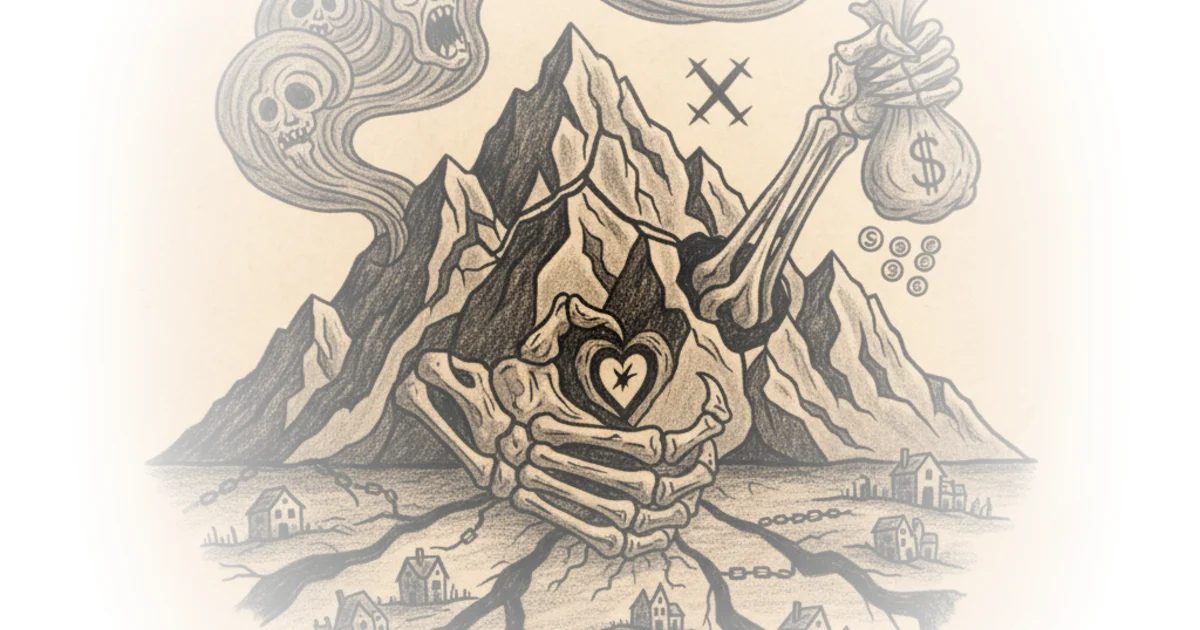
The coverage details how Resolution Copper, a joint venture between global giants BHP and Rio Tinto, plans to use "block cave mining." This method involves collapsing a massive section of the earth from below, creating a subsidence crater over a mile wide. The author notes that this is an experimental technique at this scale, raising questions about long-term stability. The environmental stakes are framed not just as ecological, but as a direct threat to public health. As More Perfect Union puts it, "more than 90% of the extracted rock will be left over as toxic waste or tailings... these are the tails right here from the old smelter that black rock drive around the area long enough and you'll start to see these mountains of tailings everywhere." The commentary effectively links the local history of cancer clusters in nearby towns to the potential future of Superior, making the risk feel immediate and personal rather than theoretical.
"You're living in a corporate world and you're destroying everything and do you want to be a part of that?"
Critics might argue that the green energy transition requires difficult trade-offs and that the copper is essential for electrification. However, the piece counters this by highlighting the sheer volume of water required—250 billion gallons—in a region already suffering a 23-year drought. This reframes the debate from "jobs versus nature" to "survival versus corporate profit," a distinction that resonates deeply with the local context.
The Legislative Backdoor
The most damning section of the report focuses on how the project bypassed standard democratic oversight. More Perfect Union reveals that the land swap enabling the mine was not passed through a dedicated mining bill, but was "slipped in to an 1100 page must pass bill to fund the US military" in 2014. The author identifies the key political actors, noting that the amendment was added by Senator John McCain and Senator Jeff Flake, both of whom had financial ties to the mining companies involved.
The narrative suggests that the legislative process was effectively hijacked. "Why are you going to listen to people like us when you got you know resolution copper who is handing out money to make the legislation go in their Direction," asks a local resident, a sentiment the author validates through the timeline of campaign contributions. The piece argues that this was a coordinated effort to override local consent. "The land exchange was a very much a long time coming... this is an arranged marriage," the author observes, capturing the feeling of powerlessness among the residents of Superior.
The coverage also highlights the fragility of the economic promises made by the corporation. While Resolution Copper pledges 1,500 jobs, the author points out that the proposed mining method is highly automated. "One of the cost-saving benefits of block cave mining is that it's done mostly by robots," the text explains, noting that these robots can be operated remotely. This undermines the central argument for the mine's economic necessity. As More Perfect Union writes, "they promise the jobs are going to last for 40 years... oh I've heard that twice." This repetition of broken promises serves as a powerful rhetorical device, connecting the current situation to the town's traumatic history of boom-and-bust cycles.
Who Decides the Future?
The piece elevates the conflict from a local dispute to a constitutional and spiritual crisis, centering the voices of the San Carlos Apache Tribe. The author emphasizes that for the Apache, Oak Flat is not just land, but a cornerstone of their religion and identity. "When we take things like this away our people will die with it," states Winsler Noi, the former chairman of the tribe. The coverage effectively argues that the project violates the tribe's constitutional right to practice their religion, a claim now being litigated in the Supreme Court.
More Perfect Union broadens the scope by noting that the fight has evolved: "It was an Apache fight and it became a Native American fight, then became a state fight, then became a country fight, now it's a world fight because it comes to survival." This framing challenges the reader to see the issue as a universal test of whether corporate interests can override indigenous rights and environmental safety in the name of progress. The author concludes that the story is about "who gets to decide the future of a place when a ton of money is discovered a little over a mile underground."
Bottom Line
More Perfect Union's strongest asset is its ability to connect the abstract machinery of green energy policy to the visceral reality of a town facing extinction. The piece successfully argues that the current path to a sustainable economy is being paved with corruption and broken promises. Its biggest vulnerability lies in the lack of a clear, immediate political solution, as the legal battle drags on and the mine remains in limbo. The reader is left with a stark warning: building wind turbines and solar panels won't be enough if the system that produces them continues to sacrifice the vulnerable for the sake of profit.