More Perfect Union exposes a quiet but potentially seismic shift in American energy: the attempt by a global private equity titan to seize control of a public utility, not for grid reliability, but to fuel a massive, profit-driven data center boom. The piece is notable not just for its investigation into an $11.5 billion deal, but for its on-the-ground reporting that connects Wall Street's balance sheets directly to the struggle of families in New Mexico who cannot afford to keep their lights on.
The Profit Motive vs. Public Trust
The author's central thesis is stark: private equity firms are uniquely ill-suited to manage essential public services because their fiduciary duty is to investors, not ratepayers. More Perfect Union writes, "Private equity's bottom line is making profits for investors. Their interests are not for the New Mexican people." This framing cuts through the corporate rhetoric of "modernization" to ask a fundamental question that regulators often dodge: why does a public utility have to turn a profit at all?
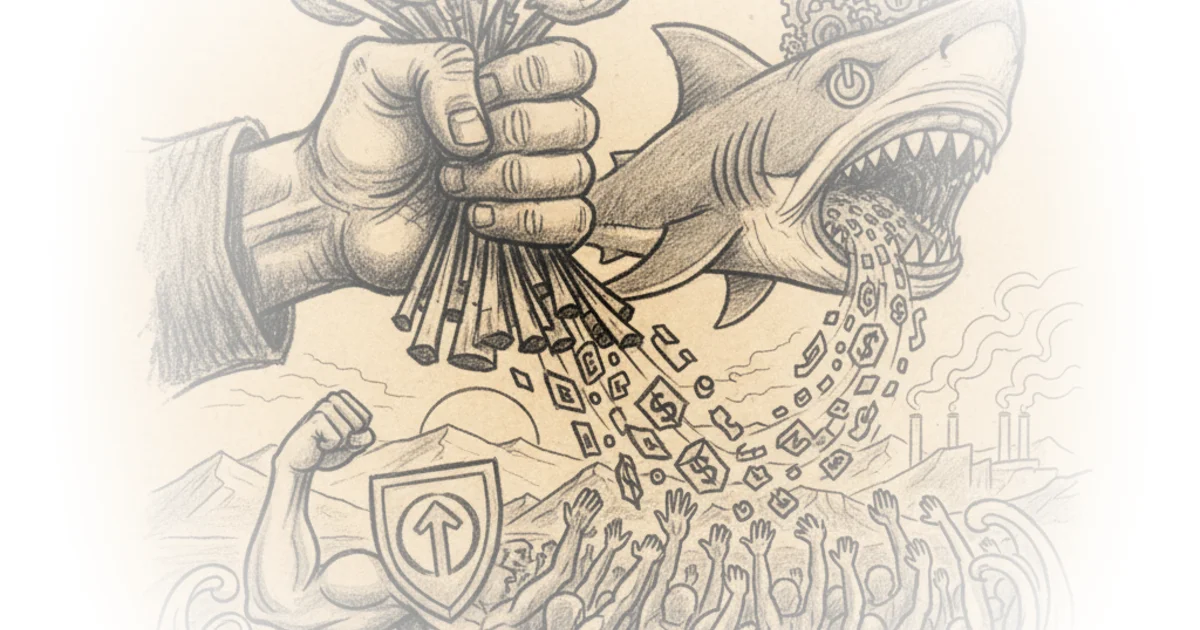
The coverage highlights the structural conflict of interest when a firm like Blackstone, which also owns the world's largest data center operator, QTS, acquires the utility that will power those centers. The author argues this creates a perverse incentive to inflate costs. "Blackstone will use its control of PNM to extract additional profits from rate payers by passing on the costs that data centers create," the piece notes. This is a compelling argument because it moves beyond abstract financial theory to the tangible reality of a utility monopoly being leveraged to subsidize a private tech empire.
Critics might argue that private capital is necessary to fund the massive grid upgrades required for the AI revolution, a point the article addresses by citing experts who claim Wall Street lending is often more expensive and less stable than public financing. The author reinforces this by noting, "The fact is you have less access to capital once you're a part of of private equity," suggesting the deal may actually starve the grid of funds rather than fill it.
The Erosion of Accountability
Perhaps the most alarming aspect of the coverage is the political maneuvering that has stripped communities of their voice. The author details how the governor recently shifted the Public Regulation Commission from an elected body to an appointed one, effectively insulating the decision-makers from the voters they are supposed to serve. "There are executives in the Blackstone Tower that have never stepped foot in New Mexico. So, why should they be the ones to decide the energy future for almost 2 million people?" More Perfect Union asks, capturing the deep sense of disenfranchisement felt by locals.
The piece shines a light on the opacity of the process, noting that the application filed by Blackstone and the utility is the "most secretive that I've ever seen," with dozens of critical documents sealed from public view. This lack of transparency is presented as a deliberate tactic to avoid scrutiny. As the author puts it, "All the information that we really need to know, they've put that under seal." This evidence is powerful because it suggests the deal is being rushed through a process designed to prevent the public from understanding the full financial implications.
Decisions made in Manhattan skyscrapers do not stay in New York. Touchstone has made billions off of New Mexico while our people live in some of the highest rates of poverty anywhere in the country.
The narrative effectively contrasts the wealth of the corporation with the poverty of the community, citing that 40% of customers live below the poverty line and nearly 40,000 households are behind on bills. The human cost is not an abstract statistic but a daily reality for families choosing between food and electricity.
A Path Forward
Despite the grim outlook, the commentary highlights a concrete alternative proposed by former regulators: the state could use its permanent funds to buy a majority stake in the utility itself. "The state of New Mexico has 66 billion dollars in state permanent funds that they could invest to buy a majority stake in PNM," the author explains. This proposal reframes the debate from "private vs. public" to "speculative investment vs. public ownership," offering a viable path to keep rates low and accountability high.
The piece concludes by emphasizing the resilience of local organizers who are refusing to accept the status quo. "We want an environmentally sound, affordable, and democratic energy system, not a disempowering corporate takeover of our essential utilities," the author quotes from community leaders. This final note serves as a reminder that while the regulatory machinery may be stacked against the public, the political will to resist remains potent.
Bottom Line
More Perfect Union delivers a rigorous, deeply reported indictment of the private equity model applied to public infrastructure, successfully linking high-level financial strategy to the daily survival of New Mexican families. Its strongest asset is the exposure of the conflict of interest between Blackstone's data center holdings and its utility ambitions, though it leaves the reader wondering if the appointed regulatory commission will have the courage to reject a deal backed by such immense financial power. The story demands that readers watch the upcoming regulatory hearings not as bureaucratic formalities, but as a decisive battle for the future of public ownership.