This piece from Wayfare reframes a familiar biblical narrative not as a story of ancient sacrifice, but as a radical blueprint for modern parental surrender. It challenges the contemporary obsession with controlling every outcome in a child's life by arguing that true faith requires trusting God to be the ultimate architect of their destiny.
The Economics of Surrender
The article begins by dismantling the assumption that Hannah's desperation was born from social pressure or economic insecurity. Wayfare notes that "Hannah was actually in an enviable position," citing her husband's devotion and the fact that she received a double portion of sacrificial meat, a sign of high status. The piece argues that this context is crucial: when she weeps for a child, it is not to secure her standing or silence a rival wife who delights in "provok[ing] her sore." Instead, the motivation shifts from self-preservation to divine purpose.
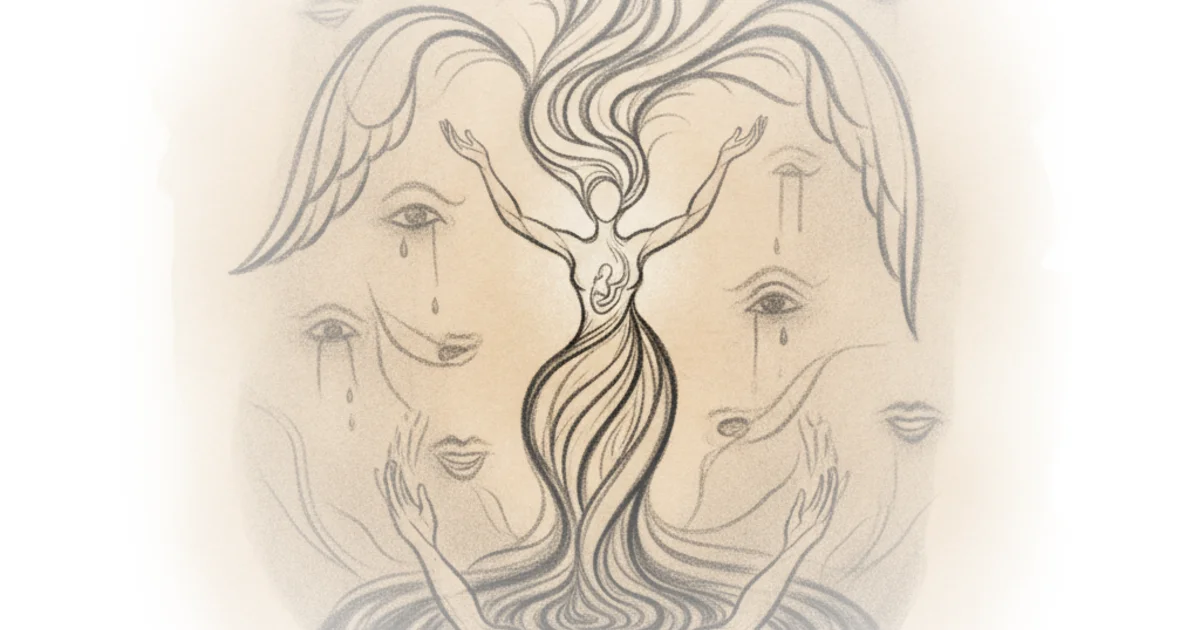
This distinction is vital because it redefines the nature of the vow. The article highlights the specific phrasing in 1 Samuel 1:11, where Hannah promises to "give [a son] unto the Lord all the days of his life." Wayfare points out that while modern translations often use words like "dedicate," the King James Version's choice of "lent" implies a temporary borrowing. The editors argue this linguistic nuance suggests a profound trust: she is allowing God to "borrow" her child, confident in His ability to return him or use him for greater ends.
Child-rearing, in her mind, is an opportunity to contribute to God's higher purposes.
Critics might note that the concept of a mother permanently giving up custody to a temple system feels alien and potentially dangerous to modern sensibilities. However, the piece navigates this by focusing on the internal state of the parent rather than the institutional mechanism. It suggests that Hannah's peace stems not from the arrangement itself, but from her "knowledge of who God is and all that he can do for his children." This aligns with the historical context of Shiloh, the biblical city where Samuel served; while the priesthood there was later corrupted by Eli's sons, the narrative insists Hannah's faith transcended the visible flaws of the institution.
The Architecture of Faith
As the commentary moves from ancient history to personal application, it draws a parallel between Hannah's psalm and the modern parent's anxiety. Wayfare observes that "mortality is more than Plato's cave," where we only see shadows; instead, worship is an act of submission because God can thrust us toward heights our finite minds cannot imagine. The piece leans heavily on Doctrine and Covenants 93:19 to argue that understanding who God is allows parents to believe they, too, can "receive of his fullness."
The argument gains depth when it introduces the fear inherent in surrender. The editors ask, "What does dedicating a child to the Lord look like now?" They acknowledge the visceral reality of parenting: the "goose eggs" on a toddler's head and the looming threats of bullying or depression. Yet, they posit that Hannah's strength came from her conviction that God is a being of limitless capacity. As she states in 1 Samuel 2:8, He lifts the beggar to set them among princes.
There is something unspeakably precious about knowing that God can send angels to my child in those pivotal, urgent moments.
To bridge the gap between ancient text and modern literature, Wayfare brings in Marilynne Robinson's Gilead. The piece cites the narrator John Ames, who writes letters to his son before dying, realizing that "any father... must finally give his child up to the wilderness and trust to the providence of God." This literary connection reinforces the idea that faith is not about removing obstacles, but trusting that angels will be present within them. The article suggests that fully surrendering one's will may actually enable these divine interventions, just as Samuel remained "God-fearing" despite the corruption around him.
The Archer and the Bow
The final section of the piece shifts to a metaphorical framework using Kahlil Gibran's The Prophet. Wayfare describes God as an archer and parents as bows, noting that the bow must bend with "gladness" even though it cannot see the target. This imagery reframes parental suffering not as a failure of protection, but as a necessary tension for launching the child toward their destiny.
The editors argue that this requires a significant yield: "we cannot see the 'mark of the infinite' as God does." The piece concludes by suggesting that Hannah's story offers a specific comfort to parents who fear they are losing control. It is not about wiping away tears or preventing every fall, but trusting that God can fashion a life the parent could never design alone.
Let your bending in the archer's hand be for gladness; For even as He loves the arrow that flies, so He loves also the bow that is stable.
A counterargument worth considering is whether this theological framing risks absolving parents of their responsibility to actively protect and guide their children through tangible means. The piece acknowledges the difficulty but maintains that the "horn" or power Hannah sings about comes specifically from the act of trust, not just action.
Bottom Line
Wayfare's strongest move is reframing parental anxiety as a spiritual opportunity rather than a failure of faith, using the specific linguistic shift from "lend" to "dedicate" to anchor its argument. Its biggest vulnerability lies in assuming that all readers share a theological framework where divine intervention is a guaranteed safety net for difficult choices. The piece succeeds not by solving the problem of suffering, but by offering a compelling vision of how to endure it with hope.