The Tribal Mind Behind Political Beliefs
Michael Huemer's essay cuts through the comfortable assumption that political ideologies function as genuine systems of thought. What begins as a philosophical inquiry into belief formation becomes something sharper: an indictment of how most people actually use ideology as tribal signaling rather than truth-seeking. The piece matters because it challenges readers to examine whether their own convictions stem from evidence or from psychological comfort.
Personality Over Principles
Michael Huemer writes, "Over a period of years, I realized that, for the rest of the world, it wasn't really about ideas and understanding the world." This observation anchors the entire argument. The author spent years assuming ideologies were attempts to comprehend reality, that believers would abandon positions when evidence contradicted them. What he discovered instead was that ideological adherence operates on entirely different mechanics.
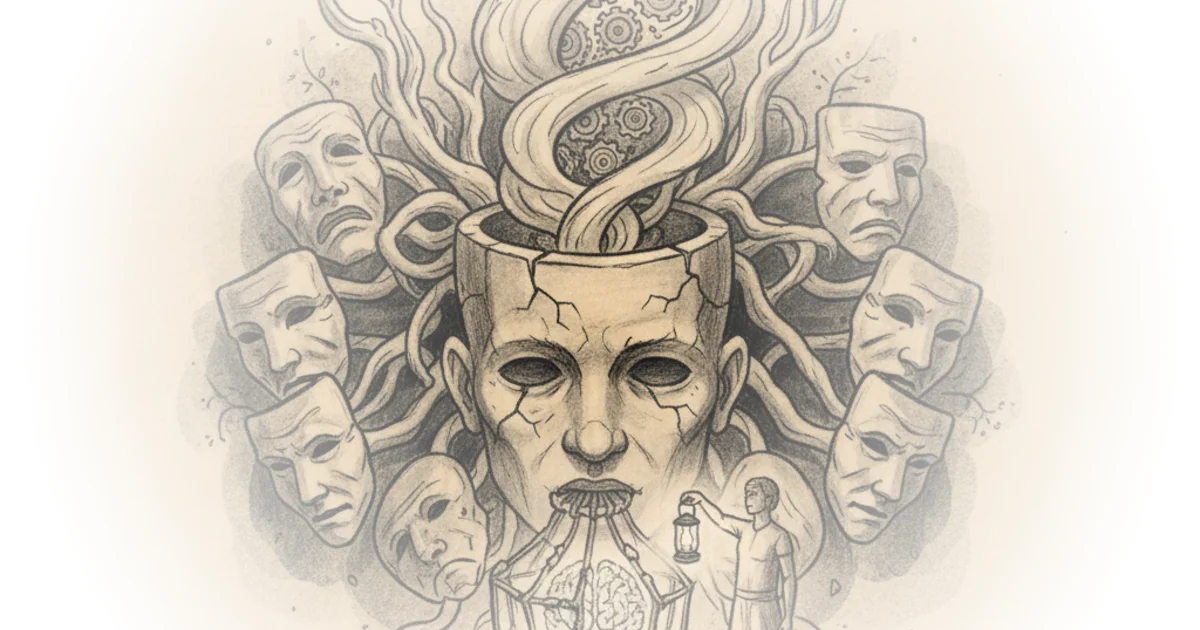
As Michael Huemer puts it, "They don't support group G because of idea I; they support I because it's the idea associated with G." The causal arrow points backward from what intellectuals assume. People select their tribe first, then adopt whatever propositions that tribe currently holds. The ideas themselves are secondary artifacts.
Research on the "big five" personality traits shows conservatives score higher in conscientiousness while liberals score higher in openness, agreeableness, and neuroticism. Michael Huemer notes this correlation exists "because the personality traits are affecting people's beliefs." People pick ideologies that fit their psychological style rather than evaluating competing frameworks on intellectual grounds.
"You decide that fetuses don't have rights because the fetus-rights position is associated with the other tribe, and you don't want to be disloyal to your own side by embracing one of the other side's positions."
The Heritability Question
The essay cites studies finding political orientation has a heritability estimate of 0.53, far exceeding environmental influences. Michael Huemer writes, "That's kind of weird, isn't it -- who knew that you could genetically transmit political beliefs?" The answer: you don't transmit beliefs directly. You transmit personality traits, and those traits shape which ideological packages feel comfortable to adopt.
This genetic component raises uncomfortable questions about rationality itself. If half the variation in political orientation stems from inherited personality, then evidence and argumentation play a smaller role than most believers assume. Michael Huemer observes, "We don't need beliefs that make us feel comfortable. We need beliefs that correspond to reality, if we want to actually solve any social problems."
Critics might note that heritability studies measure variation within populations, not fixed determination across individuals. Environmental shifts, education, and genuine exposure to counterarguments can still reshape convictions. The genetic component explains baseline tendencies, not immutable fate.
Outrage as Selection Mechanism
Michael Huemer writes, "People like to feel righteous outrage, and we pick our ideology according to the thing we most enjoy being outraged about." Each ideological package offers its own specialized outrage menu. Libertarians find abuse of power everywhere. Populists see foreign threats and domestic betrayal. Social justice advocates detect oppression in every interaction.
The ideology then confirms that the chosen outrage is omnipresent. Michael Huemer puts it plainly: "Ideologies say: Our opponents are constantly winning and implementing their evil ideas!" This creates a self-reinforcing loop where outrage selects the ideology, and the ideology manufactures more outrage.
The Scam Vulnerability
The most cutting section addresses how ideology makes people easily deceived. Michael Huemer writes, "To scam an ideologue: tell them a story that fits their narrative about society and plays into their stereotypes." He cites the Duke Lacrosse case and the Rolling Stone campus rape story as examples where false narratives spread rapidly because they fit preexisting ideological templates.
The Duke case assumed guilt because the accused were white men and the alleged victim was a black woman. Faculty members rushed to judgment before facts emerged. Michael Huemer notes that "people believed the false stories because they fit ideological stereotypes." The same mechanism operates across all ideological camps when convenient narratives appear.
His recommendation: "Identify your ideology's distinctive narrative. Make room in your belief system for the possibility of people trying to take advantage of your beliefs for personal gain." Even if pattern X harms group Y frequently, not every story fitting that pattern is true.
When Parties Shift, Believers Don't
The essay's strongest evidence comes from observing how conservative positions transformed after 2016 without losing their adherents. Michael Huemer writes, "The whole time when I was growing up, the Republicans were anti-Russia hawks. The more Republican you were, the more you hated the Russians. That continued right up until 2016, when the Republicans suddenly realized that it would be good to establish good relations with Russia, etc."
The party also abandoned "family values" rhetoric and moral character requirements for leaders. Michael Huemer cites John McCain correcting supporters who attacked Obama's character, and Reagan and Bush Sr. defending immigration as essential. "No Republican today would do that," he observes.
As Michael Huemer puts it, "If people actually cared about ideas, a party couldn't just radically shift its positions and still have pretty much the same people supporting them and the same people opposing them." The masses didn't care about the reversal because their commitment was tribal, not intellectual. Elites like George Will left the party when positions shifted. The masses stayed because "professing an ideology is just like waving a 'hurray for my side' flag—and who cares if they change the design of the flag?"
Critics might argue this characterization overlooks genuine policy reasoning behind position shifts. Changing geopolitical circumstances, new electoral coalitions, and evolving strategic calculations can legitimately alter party positions without abandoning core principles entirely.
The Rare Objective Person
Michael Huemer suggests political knowledge is possible but rare. He proposes a test: how well do your political beliefs match your personality profile? If you match the typical traits of your ideological camp, you've probably done "the awful thing" he complains about. But if you don't match, "you might be among the few objective people."
He offers an example: "If you meet a right-wing person who is a vegan, then that person might actually be rational, unlike most of humanity. They might actually be looking at reasons and evidence. Most right-wing people refuse to think about veganism, because being concerned about animals just doesn't fit their personality."
The final lesson advocates tolerance: "The reason they disagree with you probably isn't that they're evil or they love to ignore facts. The reason is probably that they have a somewhat different personality profile from you, which was largely genetically programmed into them, just as your personality profile was genetically programmed into you."
Bottom Line
Michael Huemer's argument exposes uncomfortable truths about how ideology functions in practice. Most political belief operates as tribal identity and personality expression rather than evidence-based reasoning. The piece's weakness lies in its sweeping generalizations that leave little room for genuine intellectual conviction. Yet its core insight stands: when parties reverse positions without losing adherents, and when false stories spread because they fit ideological templates, something deeper than idea-evaluation is driving belief. Readers who recognize their own ideological vulnerabilities may actually become more rational. Those who dismiss the argument as attacking their tribe prove it correct.