Phillips P. O'Brien cuts through the noise of tactical skirmishes to argue that the only path to ending this war lies in the systematic, relentless degradation of Russia's fuel infrastructure. While public attention often fixates on flashy drone strikes or political maneuvering in Washington, O'Brien presents a stark, data-driven case: the war machine runs on oil, and the campaign to sever that lifeline is finally showing signs of breaking the Russian economy. This is not a story about morale or territory; it is a cold calculation about how to drain the financial fuel from an invading force before the coming winter turns the conflict into a humanitarian catastrophe.
The Economics of Attrition
O'Brien's central thesis is that Ukraine must shift from sporadic, high-profile attacks to a sustained campaign targeting refineries, pipelines, and ports. He argues that the strategic value of these strikes is often misunderstood by those looking for immediate, dramatic results. "The key thing was that it called for focus in airpower and argued that signalling (showing capabilities) is usually a failure and that the best way to use airpower is to deconstruct strategic systems which underpin warfighting," O'Brien writes. This reframing is crucial; it moves the conversation away from the spectacle of a burning refinery to the long-term arithmetic of repair cycles and supply shortages.
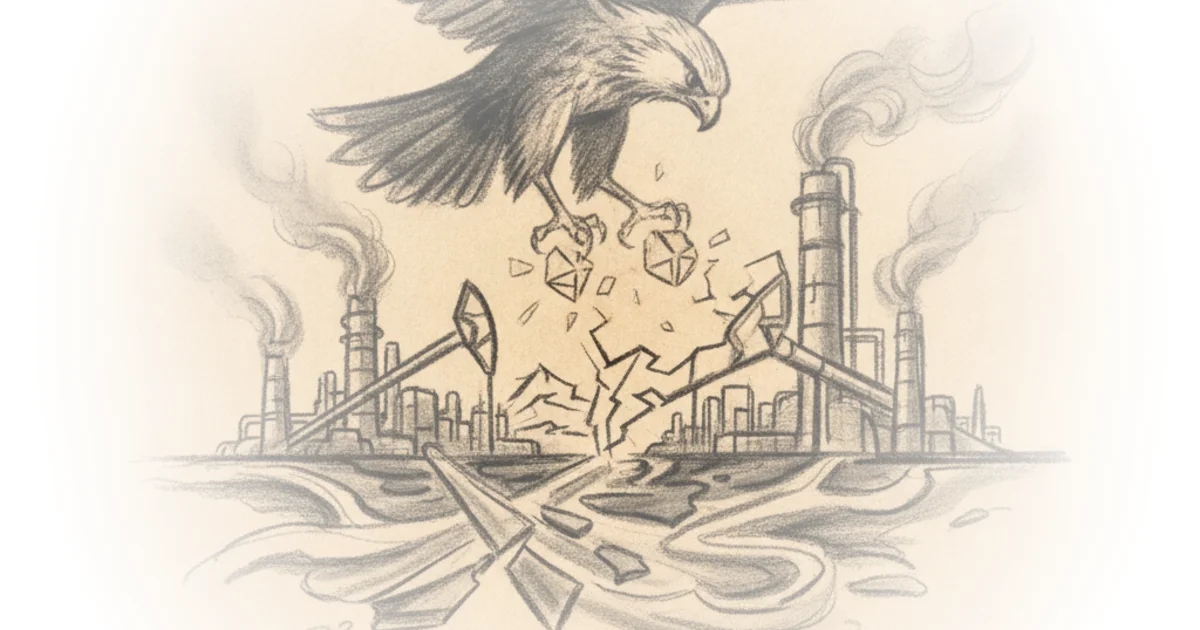
The author emphasizes that a single strike is easily absorbed by a large economy, but repeated attacks on the same targets prevent recovery. "Ukraine has to keep this up for a while and attack (and re-attack) numerous facilities for this to work. It is not easy," he notes. The evidence suggests a shift is finally occurring. After a frustrating period of inconsistency, recent data indicates that Russian refineries are facing a "buckling of the system" where the ability to repair damage is collapsing under the weight of repeated strikes. O'Brien points to the work of Mikhail Khodorkovsky, the former oil magnate, who describes a Russian strategy of "constant, short term repairs, or patching" that is reaching its breaking point.
"Russia without the ability to raise money by exporting fuel is not only not a great power, it is not a medium economic power. It is an economic basket case."
This economic pressure is already visible in the form of domestic rationing and a forced shift in trade dynamics. Russia is now exporting crude oil while importing refined fuels at a premium, effectively burning cash to keep its military running. While critics might argue that high global oil prices, buoyed by tensions elsewhere in the Middle East, provide a cushion for Moscow, O'Brien contends that the refining bottleneck is the true choke point. If the campaign expands to include port infrastructure, the financial cushion evaporates, leaving the Kremlin with a "death spiral" of revenue loss.
The Cost of Political Delays
The commentary takes a sharp turn to address the political dynamics surrounding US support, specifically focusing on the delayed deployment of Starlink technology for military targeting. O'Brien characterizes the summer's speculation about new US aid as a dangerous illusion that has bought time for the aggressor. "The real winner from all this, Vladimir Putin, got more time," he asserts, linking the diplomatic stagnation directly to the escalation of violence on the ground.
The human cost of this delay is not abstract. With Ukraine reportedly running low on Patriot interceptors, the defense against ballistic missiles has crumbled. O'Brien highlights the grim statistics from July 2026: "In July alone, Russia killed at least 437 civilians and injured 2,610 across Ukraine — the highest monthly civilian toll since May 2022." These numbers are not just data points; they represent a deliberate strategy by the Russian command to exploit the gap in air defenses. The author argues that the hope for a sudden shift in US policy was a "deadly, pro-Putin maneuver" that distracted from the urgent need to execute the fuel campaign and secure defensive capabilities.
The situation is compounded by the looming winter, which O'Brien identifies as the critical window for Russian aggression. "Putin has no desire whatsoever to sit down at the negotiating table now, and after winter begins and until it ends, that is, at least until mid-March, he will have even less motivation," quotes O'Brien from Serhii Kyslytsia, a senior Ukrainian official. The fear is that a defenseless Ukraine will face a bombardment far worse than the previous winter, with the explicit goal of breaking the population's will to resist. The delay in granting Starlink access to target a new Russian satellite system, which would have improved Russian strike accuracy, is framed as a catastrophic failure of strategic foresight.
"It is not harmless optimism to act like Trump might help Ukraine, it is falling for a deadly, pro-Putin maneuver that is and will increasingly lead to Ukrainian suffering."
O'Brien's framing here is severe: the political theater of potential aid is actively harming Ukraine by delaying necessary military preparations. He notes that while Ukrainians may have been wrong about the immediate need for Starlink to hit the satellite facility—having successfully attacked it anyway—the broader lesson is clear. "The Ukrainians must stop investing any hope and effort in getting Trump to support them," he concludes, urging a pivot to self-reliance and European support.
Bottom Line
Phillips P. O'Brien delivers a sobering, evidence-based verdict: the path to victory lies in the unglamorous, grinding work of destroying Russia's oil infrastructure, not in waiting for political miracles. The argument's greatest strength is its refusal to separate military strategy from economic reality, showing how targeted strikes can induce a systemic collapse. However, the piece's most painful vulnerability is the human toll exacted by the very political delays it critiques; the window to prevent a winter of mass civilian casualties may already be closing. The reader must watch for whether Ukraine can sustain the tempo of refinery attacks before the Russian economy adapts or the winter offensive begins.