Johnny Chang's latest dispatch cuts through the hype to reveal a stark reality: the federal government is no longer asking if artificial intelligence belongs in K-12 classrooms, but how to accelerate its integration before the nation falls behind globally. While the executive order signed this week establishes a White House Task Force and a "Presidential AI Challenge," Chang's analysis suggests the real story isn't the policy itself, but the urgent, often unprepared scramble by educators to balance technological utility with ethical integrity. This is not a futuristic speculation; it is a field report from the front lines of a pedagogical shift that is happening faster than most school districts can legislate.
The Policy Push and the Human Gap
Chang frames the recent executive order not merely as a bureaucratic milestone, but as a signal of "bipartisan concern about American students potentially falling behind other nations." The administration's move to create public-private partnerships and expand AI-related apprenticeships is designed to fast-track workforce readiness. However, Chang wisely pivots from the macro-politics to the micro-reality of the classroom, noting that "educators have a role to play in teaching students how to use AI effectively and ethically, as well as when to avoid using it altogether." This distinction is crucial; the policy provides the infrastructure, but the teachers must provide the moral compass.
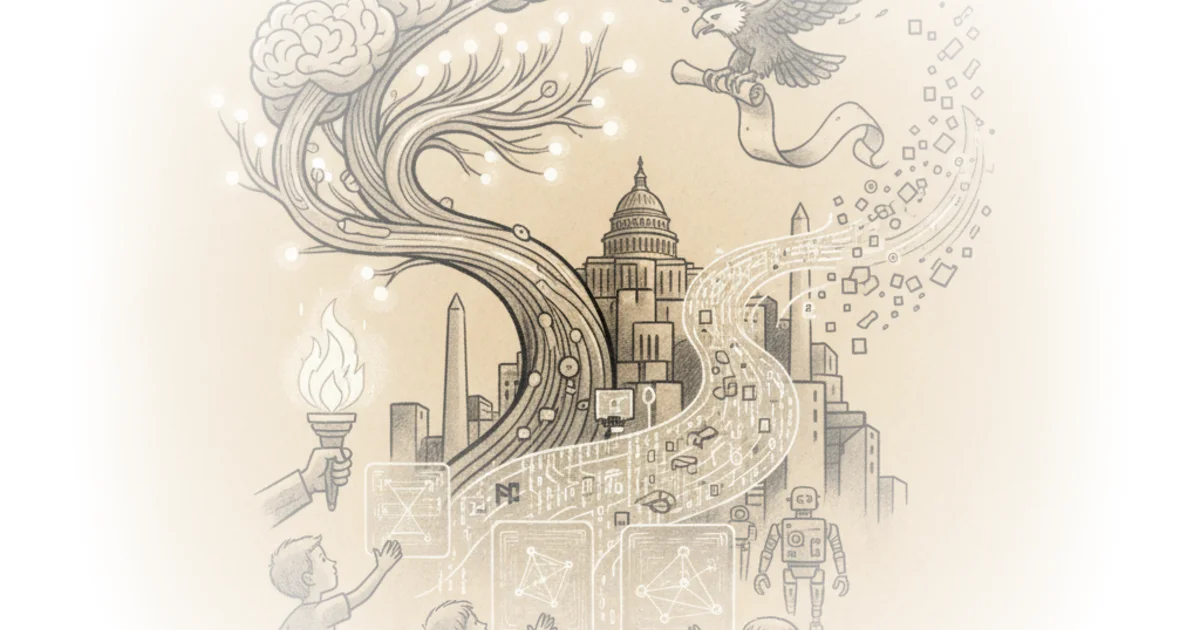
The author highlights a critical tension: the speed of technological adoption versus the speed of pedagogical adaptation. Chang writes, "This can be hard to do when we're still figuring out what roles AI might usefully play in our teaching and scholarship!" The piece effectively argues that the goal shouldn't be policing students, but rather "partnering with students in this AI revolution." This reframing is a necessary corrective to the panic often seen in school boards. Yet, critics might note that without significant funding for teacher training, the burden of this "partnership" will fall disproportionately on under-resourced schools, potentially widening the digital divide the administration claims to want to close.
"Today's students are not just preparing for careers. They are preparing to shape the future."
The Art of the Prompt and the Ethics of Image
The newsletter delves into the viral "Studio Ghibli" trend, using it as a case study for the ethical quagmires facing young creators. Chang points out that while tools like GPT-4o allow students to "easily create illustrations... that enhance their projects," the technology relies on "massive datasets that include copyrighted artwork or content scraped without permission." The piece brings a necessary human element to this debate by citing Hayao Miyazaki's famous critique of AI animation as "an insult to life itself." This quote serves as a powerful counterweight to the techno-optimism, grounding the discussion in the value of human intent and labor.
Chang's coverage of the trade-offs is balanced. He acknowledges that "students no longer need years of experience" to produce high-quality visuals, which democratizes creativity. However, he immediately follows this with the warning that we must "consider the data these models are trained on." The argument here is that efficiency cannot come at the cost of consent. The piece suggests that the classroom is the ideal place to navigate this, turning the act of prompting into a lesson in critical thinking. As Chang notes, the process of refining a prompt—asking "What color is the dog? How many eyes does it have?"—forces students to articulate their vision with precision, a skill that is arguably more valuable than the final image.
Pedagogy, Bias, and the Risk of Automation
Perhaps the most sobering section of Chang's analysis addresses the hidden biases embedded in AI tools themselves. Citing recent research, Chang reports that "AI-generated lesson plans often favor teacher-centered classrooms with limited classroom dialogue, emphasizing rote learning and instruction over deeper, student-driven discussion." This is a damning finding for a technology often sold as a tool for personalization. If the default output of an AI is a rigid, lecture-based curriculum, then the tool is actively working against modern educational goals of student agency.
The commentary on the limitations of automated education is equally sharp. Chang references research suggesting that while AI can teach "learning that" (facts), it struggles with "learning how" (skills) like critical thinking and argument construction. The author writes, "Teachers serve as essential role models, demonstrating commitment to disciplinary ideals... and showing students why the material matters." This underscores a fundamental truth: education is a social and relational act that cannot be fully outsourced to algorithms. A counterargument worth considering is that in a world of teacher shortages, AI might be the only way to maintain basic instructional quality, even if it lacks the "soul" of human mentorship. However, Chang's framing suggests that relying on AI for core pedagogy risks creating "bullshit universities" where the social and intellectual rigor of education is eroded.
The Voice of the Educator
To ground these abstract concerns, Chang interviews Gayle Nicholls-Ali, an art educator who captures the visceral challenge of competing with AI's engagement. Nicholls-Ali observes that for students, technology is like "drinking water," while teachers struggle to "compete with that" constant, moving screen. "How do I become as exciting as that phone?" she asks. This question cuts to the heart of the crisis in attention and engagement. Yet, Nicholls-Ali also sees a path forward, describing how prompt engineering can help students who "sit there and look around" to "kickstart their imagination."
The interview reveals that the future of art education isn't about rejecting AI, but about distinguishing between the cold efficiency of the machine and the emotional depth of the human. Nicholls-Ali notes that while AI artists may produce work faster, "AI work is going to be colder, less informed with emotion, feeling, and experience." This distinction offers a hopeful conclusion: the human element remains the differentiator. The challenge for schools is to teach students not just how to use the tool, but how to infuse their work with the very humanity the tool lacks.
"Teachers serve as essential role models, demonstrating commitment to disciplinary ideals... and showing students why the material matters."
Bottom Line
Johnny Chang's analysis succeeds by refusing to treat AI as a monolithic savior or villain, instead presenting it as a complex force that requires deliberate, human-guided integration. The piece's strongest asset is its grounding in the daily realities of teachers who are already navigating these waters, rather than relying solely on policy mandates. Its biggest vulnerability lies in the assumption that all educators have the time and resources to master prompt engineering and ethical frameworks simultaneously. As the administration pushes for rapid adoption, the gap between policy ambition and classroom capacity will likely be the next major flashpoint. Readers should watch for how schools respond to the new federal task force: will they use it to deepen critical thinking, or simply to automate the status quo?