Sarah Kendzior delivers a harrowing account of a future where the news cycle is not merely broken, but weaponized to erase truth and commodify death. Set against the backdrop of a fictionalized 2025, the piece argues that the murder of a prominent conservative figure has become a tool for state censorship, effectively silencing the very investigation into a massive pedophile network that had briefly united the American public. This is not a standard political critique; it is a warning about the total collapse of the information ecosystem, where the distinction between news and propaganda has vanished, and the sanctity of human life is the first casualty.
The Death of News and the Rise of Speculation
Kendzior frames the current media landscape as a void filled by "speculation, propaganda in oligarch-run newspapers, dark money posts disguised as articles." She argues that the public is no longer receiving facts but is instead fed a diet of rumors and algorithmic suppression. The author notes that the rumor of a specific former leader's demise was sparked by a "hand bruise and a dream," yet it dominated the discourse for weeks. This illustrates her central thesis: the news cycle has become detached from reality, driven by the desires of the powerful rather than the needs of the informed citizen.
The piece suggests that this environment is fertile ground for conspiracy theories to take root, not because the public is gullible, but because the official narrative is so opaque. Kendzior writes, "There is no longer 'news' in the US: only speculation, propaganda in oligarch-run newspapers, dark money posts disguised as articles, the occasional well-researched but paywalled piece, and independent reporting blocked by algorithms." This framing is effective because it shifts the blame from the consumer's inability to discern truth to the structural dismantling of the information supply chain. However, critics might argue that this view overlooks the role of social media algorithms in amplifying extreme content regardless of the source, suggesting the problem is not just state-run propaganda but a broader technological failure.
"At this sick, sad point in our national history, Jeffrey Epstein may be the only thing holding Americans together. That our unity rests on shared loathing of a billionaire pedophile and his network of wealthy accomplices is an indictment of the United States itself."
The Weaponization of Tragedy
The narrative takes a darker turn as Kendzior describes the murder of a conservative pundit, an event she claims was used by the administration to "slander innocent Americans and curb free speech and assembly." She posits that the administration sought to create a new "Before and After" moment, similar to 9/11, to justify a crackdown on dissent. The author highlights the irony that the very figures who had been pushing for an investigation into the Epstein network were silenced, effectively burying the truth once again. Kendzior observes, "The state seeks to denote a demarcation: September 10, 2025, the new Most Important Day."
This section of the commentary is particularly potent in its description of how violence is consumed. Kendzior argues that the murder was livestreamed, turning a human death into a "deathstream with no way to turn it off." She writes, "People used to carry snuff in their pockets; now they carry around snuff films." This metaphor is chilling and forces the reader to confront the desensitization of the modern era. The author suggests that the video of the killing has been stripped of its humanity and repurposed as political ammunition, marketed as "martyrdom" to prove every worst assumption.
A counterargument worth considering is whether the administration's reaction to such an event would truly be so calculated, or if the chaos of a violent act would simply overwhelm any attempt at immediate political maneuvering. Yet, Kendzior's point stands: the response to the violence is often more telling than the violence itself, and in this scenario, the response is a coordinated effort to control the narrative.
The Human Cost of the Narrative War
Amidst the political maneuvering, Kendzior refuses to let the human cost of these events fade into the background. She focuses on the two children who lost their father, noting that they "will have to live in the eternal shadow of his murder on replay." This personalizes the abstract political struggle, reminding the reader that behind every "turning point" in history are real families shattered by violence. The author writes, "Whatever one thought of Kirk, he did not deserve to be murdered, nor does he deserve to be dehumanized in a way that has become common in American culture."
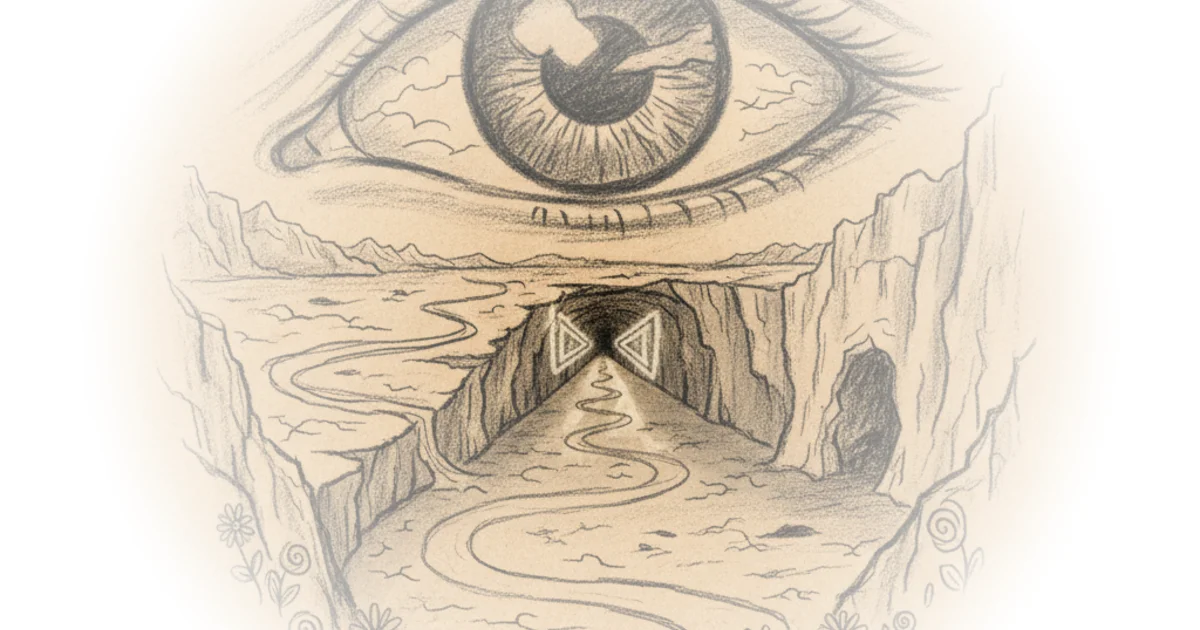
Kendzior's argument here is that the defining feature of the 21st century is a "disregard for the sanctity of human life." She connects the dots between the violence in the Middle East, the domestic political violence, and the systemic cover-ups of sexual abuse, suggesting a unified thread of disregard for human dignity. She notes that the administration's actions have created a "chilling effect" where people are afraid to tell the truth. The author concludes that we must "retrace our steps and crawl backward, hoping I would make it to where I began, and travel the same path with new vision." This call to action is a plea to reclaim history before it is erased by the state's spin.
"We must do the same with history, before it is erased."
Bottom Line
Sarah Kendzior's most compelling argument is that the erosion of truth is not a passive process but an active strategy used by the powerful to maintain control, with the murder of a public figure serving as the catalyst for a new era of censorship. The piece's greatest vulnerability lies in its reliance on a fictionalized future to make its point, which may lead some readers to dismiss the warnings as speculative fiction rather than a plausible trajectory. However, the emotional weight of the human cost and the sharp critique of the media's complicity make this a vital read for anyone concerned about the future of democracy and the sanctity of human life.