The Accidental Artist Who Chose Softness
Sheila Hicks, speaking from her Paris studio in this Louisiana Channel interview, presents a portrait of an artist who refuses the label. At 90-plus years old, she describes a career built not on ambition or theory but on a series of open windows — literal and metaphorical — through which she climbed whenever circumstance offered the chance. The result is one of the most distinctive bodies of work in contemporary art: monumental textile sculptures that blur the boundaries between craft, fine art, and architecture. Yet Hicks herself seems almost allergic to framing it that way.
Thinking as Production
The interview opens with a striking conflation of thought and labor. Hicks rejects the idea that sitting still is idle time. For her, thinking is inseparable from making, and the distinction between the two is an invention of people who do not understand creative work.
Some people think I'm working but they don't realize I'm thinking. You lose a lot of time thinking. Might as well be producing or making something while you're thinking.
This is more than a quip about multitasking. It reveals a philosophy in which the hand and the mind are not sequential but simultaneous. Hicks does not sketch a concept and then execute it. She works with thread and color while her mind ranges across the problems of the day. The implication is that the physical act of making — crossing threads, choosing colors — is itself a form of cognition, one unavailable to someone merely sitting and staring at a wall.
There is a counterpoint worth raising here. The contemporary art world has spent decades valorizing the conceptual over the manual, treating the idea as the art and the fabrication as mere labor. Hicks quietly inverts this hierarchy. She does not claim to have grand ideas that she then realizes in fiber. She claims to think through fiber. The distinction matters enormously, and it places her closer to artisans and craftspeople than to the conceptual artists who dominated late-twentieth-century discourse.
A Life Shaped by Other People's Decisions
One of the most disarming aspects of Hicks's account is how many of her defining career moves were made by someone else. A fellow student applied to Yale on Hicks's behalf. Josef Albers sent her to Chile on a Fulbright without consulting her. A French patron told her she would never be cultivated unless she moved to France.
A fellow student said, "I think the dean of our school here that we like is leaving and who knows who'll be coming next year. Why don't we have an alternative of another school in case as a backup?" and she took her and my portfolio of all of our drawings and prints and things and she applied to Yale. Wasn't my idea.
Hicks tells this story with laughter, but the pattern is remarkable. She frames herself as perpetually open to direction, a kind of creative satellite waiting to be redirected by external forces. This is either radical humility or a carefully constructed myth — and it is probably both. Few artists sustain six-decade careers by pure passivity. The openness Hicks describes requires its own fierce discipline: the willingness to say yes when every sensible instinct says no.
As I was finishing my degree in painting in 1957, Albert said, "What are you going to do next, girl?" And I didn't know. So, Azo, go down to the office and sign the papers I left for you and you'll see. It'll be very interesting. And it was papers saying that I was going on a Fulbright scholarship to Chile. I went down, I signed them, and then I went back to the library to see where was Chile.
This anecdote is almost too good. It reads like a parable about trust in mentorship — an artist so confident in her teacher that she signs papers before reading them. But it also raises uncomfortable questions about power dynamics in mid-century art education. Albers was directing the career of a young woman who had little agency in the decision. Hicks reframes this as generosity, but modern audiences will notice the asymmetry.
The Gendered Landscape of Fiber Art
Hicks touches only lightly on gender, but the moments she does are revealing. The French patron who funded her move to Paris delivered his offer with a warning that lands somewhere between patronizing and prescient.
Don't just become a baby factory and disappear because it's not going to help the other girls who come after you.
Hicks's reaction is layered. She is offended by the condescension. She recognizes the absurdity of a man who owes his own existence to a "baby factory" telling a woman to avoid becoming one. And yet she takes the underlying responsibility seriously — the idea that her success or failure would shape opportunities for the next generation of women in art.
What Hicks does not say, but what hangs over the entire conversation, is that her chosen medium has been systematically devalued precisely because of its association with women's domestic labor. Weaving, knitting, embroidery — these were excluded from the fine art canon for centuries on gendered grounds. Hicks entered this territory not as a political act but as a genuine fascination, and her career has done as much as anyone's to dismantle the hierarchy between textile and painting. The irony is that she claims no interest in the politics of it.
The Case for Softness
The interview's most powerful passage comes near the end, when Hicks makes an argument for textile as the essential artistic medium of human existence. It is not an intellectual argument. It is a sensory one.
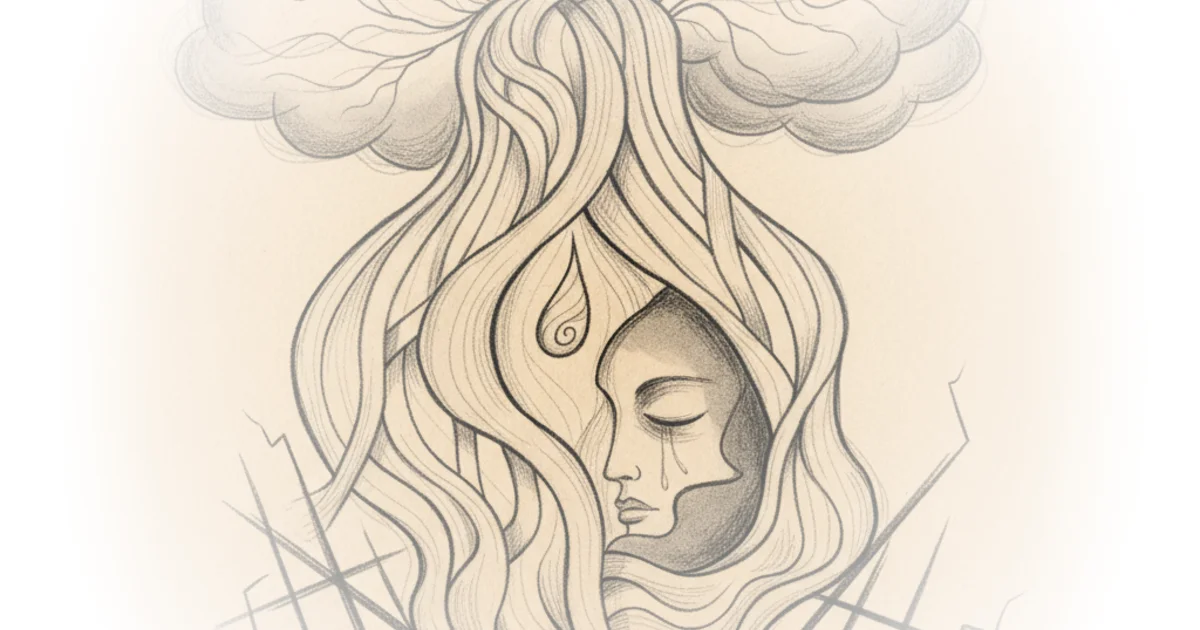
It's because it's soft. And in the world we live with so many hard things that we touch and live in, we're crying for softness. We're yearning and migrating toward softness.
This is Hicks at her most persuasive. She is not claiming that fiber art deserves institutional recognition or market parity with painting and sculpture. She is making a more fundamental claim: that human beings need softness, that the hard surfaces of modern life — steel, glass, concrete, screens — starve something essential in us, and that textiles answer a hunger that no other material can.
From the time you're born till you die, you're enveloped in textiles. So why not the best? And why not the ones you like the best and the ones you feel the best in?
There is something almost subversive in this simplicity. In an art world that prizes difficulty, opacity, and theoretical sophistication, Hicks argues for pleasure. For comfort. For the tactile reality of thread against skin. Critics might call this sentimental, but Hicks has earned the right to sentimentality through decades of rigorous formal experimentation. Her monumental installations at the Venice Biennale and the Centre Pompidou are not cozy or domestic. They are overwhelming, disorienting, and structurally ambitious. The softness she advocates is not weakness. It is a material property deployed with architectural force.
Against Pigeonholing
Asked what defines her work, Hicks's answer is immediate and emphatic: she hopes nothing does. This resistance to categorization is consistent with everything else in the interview — the open windows, the unsigned plans, the refusal to theorize. Hicks wants to remain unfinished, perpetually in motion, defined only by the next discovery.
I think it's to be alive is to sort of discover. So quit along the way and you sort of check out. So hang in there because you never know what the next discovery might be.
At her age, this is not a platitude. It is evidence. Sheila Hicks has spent more than sixty years demonstrating that the accidental path, taken with openness and material intelligence, can produce work of extraordinary power and beauty.
Bottom Line
Sheila Hicks offers a compelling counter-narrative to the mythology of the artist as visionary genius. Her story is one of responsiveness rather than ambition, of material thinking rather than conceptual grandstanding. The interview's most lasting contribution is her argument for softness — not as sentimentality but as a fundamental human need that textile art is uniquely positioned to meet. In a cultural moment obsessed with screens and hard surfaces, Hicks's insistence on the primacy of touch feels less like nostalgia and more like prophecy.