What if everything you thought you knew about left-handed guitar playing was wrong? Eric Gales plays left-handed, but not the way most people expect—and his technique is absolutely bonkers.
A Family Legacy in Blues
Eric Gales comes from a lineage that stretches back to the roots of blues music. His grandfather on his mother's side was an evangelist who played guitar in church and jammed with legends like Muddy Waters and Howlin' Wolf before any of them hit records. That musical seed was planted long before Eric was even conceived.
His mother was the only girl among six brothers, and she raised five sons—each one a musician. There's a 17-year gap between Gales and his oldest brother Eugene, who was a two-time Golden Glove boxing champion. Another brother, Little Jimmy King, went on to tour with Albert King and took his name from Jimi Hendrix and Albert King.
The Four-Year-Old Revelation
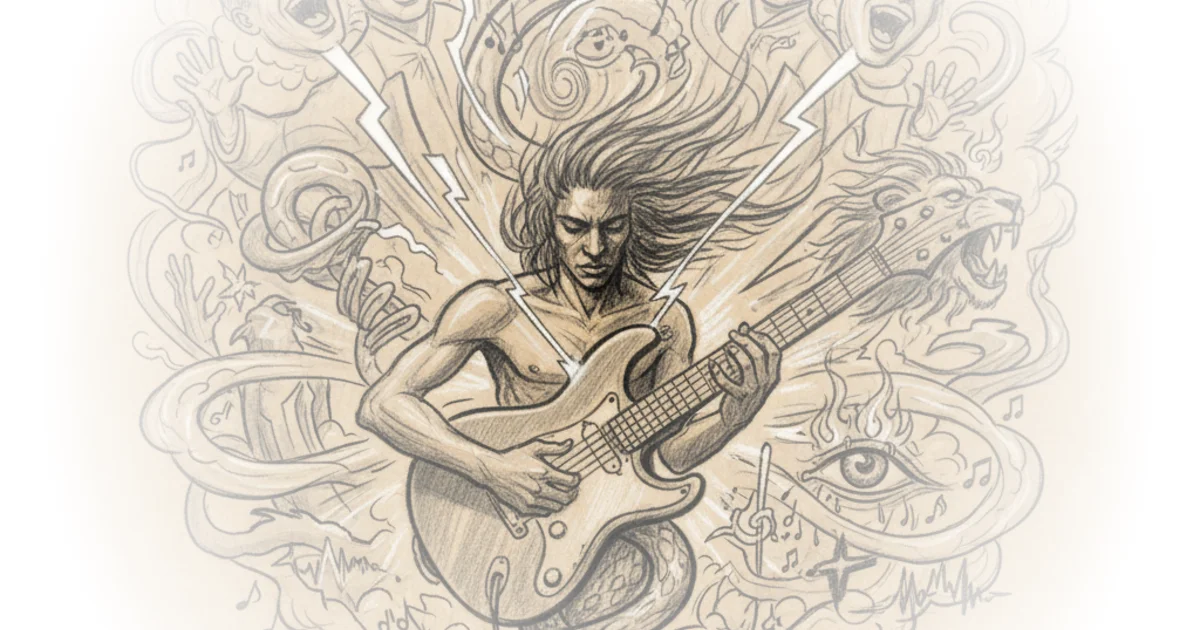
When Eric picked up a guitar at age four, he didn't know the rules. He simply held it the way that felt natural—and that happened to be upside down, in the Albert King style. What he played at four years old still stays with him today: a simple blues pattern.
His brother Eugene found this hilarious. While playing Blue Chear, Rainbow, and Clapton around the house, young Eric would mimic drums on the floor with knives and forks, keeping rhythm until one day he picked up Eugene's guitar and accidentally broke a string.
Instead of getting beaten up—as he feared—Eugene taught him how to put it back on. More importantly, he recognized his little brother was serious. He began mentoring Eric, challenging him to learn Albert King's "Blues" or "Overall Junction" by the next day. If Eric learned it, he'd take him to the ice cream shop.
At five or six years old, Eric played these complex blues passages with 12-gauge strings—pushing them like Albert King. Eugene told him to stay true to how he first picked up the guitar and not to switch to the standard left-handed style. That advice stuck. Critics might note that this unorthodox approach could have limited Eric's technical development, but he argues the power of overwhelming inspiration carried him forward.
The Unique Technique
When asked about advantages of playing upside down like Albert King, Eric admits he doesn't know the other way well enough to compare. But he can hit an E major second position without other chords in the way—a move he's mastered through his thumb technique.
The smaller gauge strings require pulling rather than pushing for right-handers, and Eric has had to adapt accordingly. He believes there are some advantages, but also disadvantages that he's figured out how to overcome through sheer determination.
When you get into that world of inspiration, practicing doesn't feel like homework.
That kind of inspiration was powerful enough to keep him from sleeping, eating, or talking to anyone until he learned what he needed to learn. His mother supported him endlessly, even as she grew frustrated hearing the same records rewound repeatedly.
Bottom Line
Gales makes a compelling case that the most important thing isn't how you're supposed to play—it's how inspiration moves you. His technique may be unorthodox, but his drive was undeniable. The biggest vulnerability: he doesn't actually name many specific songs or artists in detail, relying heavily on general descriptions of what influenced him. Still, his core argument—that raw inspiration matters more than conventional technique—is undeniably compelling.