The Discovery That Shook New York
In the summer of 1978, structural engineer Bill Lemaire was sitting on a catastrophe. His newly completed skyscraper in midtown Manhattan had a flaw that could bring the entire building down—and hurricane season was weeks away.
The Citicorp Center tower rose above Manhattan's skyline in 1977 as an engineering marvel. But after less than a year of operation, Lemaire made a terrifying discovery: winds of just 110 kilometers per hour could cause the building to collapse. More than 200,000 people lived and worked in the surrounding area.
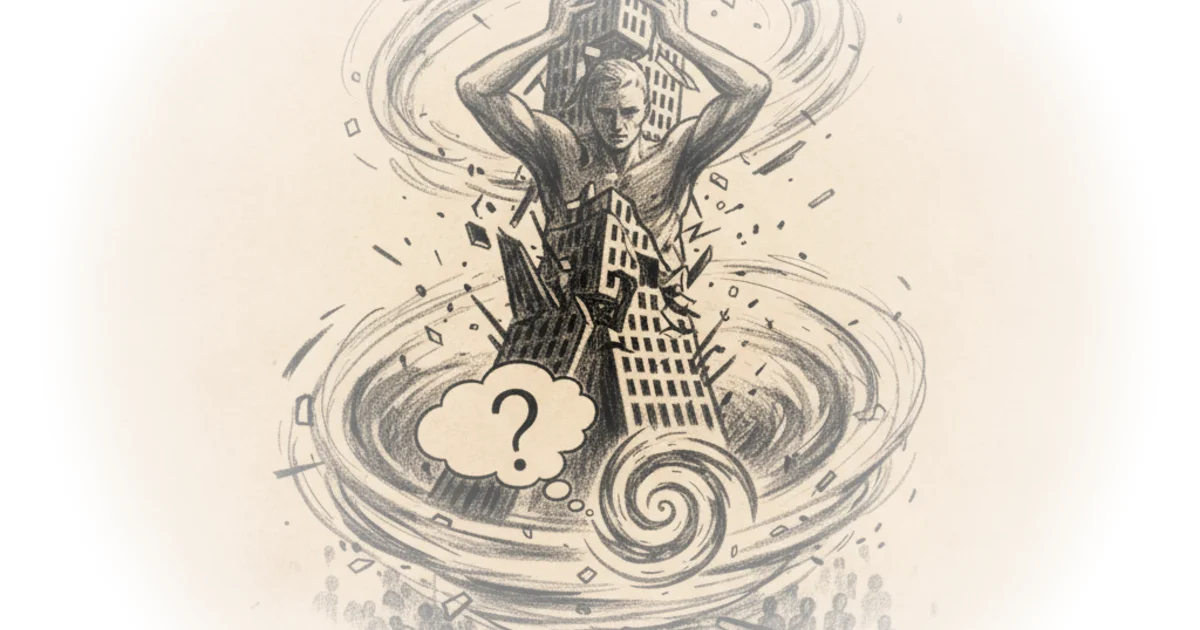
He faced a stark choice. He could stay silent and hope for the best—or speak up and risk professional ruin and mass panic.
The Church That Changed Everything
In the 1960s, financial giant Citicorp wanted to build its new headquarters on a Manhattan city block that was up for sale—everything except one small Gothic church.
The pastor, Ralph Peterson, refused to budge. His church had been there for generations, and he intended to stay.
The company eventually agreed to two conditions: replace the crumbling old church with a brand-new one, and ensure the church remained physically distinct from the tower—in other words, completely independent.
This wasn't just about aesthetics. It was an engineering constraint that would reshape architectural thinking for decades.
The Design That No One Had Tried Before
Citicorp hired architect Hugh Stubbins to design both the tower and the new church, with Lemaire as structural engineer.
The challenge: build around the church while maximizing floor area. To do this, they'd have to notch out one corner of the tower—essentially constructing the skyscraper on stilts.
But why not notch two, three, or even all four corners? That would create a building supported entirely by columns at the center of each face rather than at the corners—a radical departure from conventional design.
This was probably the first time in history that an engineer told an architect: "Let's make our job harder."
The stilts served two purposes. First, they needed to support at least half of the building's gravity load. Second, they needed to withstand wind loads. But unlike a normal structure, these stilts weren't at the corners—they were at the midpoint of each face.
It created an engineering problem that seemed impossible: imagine a chair with supports at the center of each side rather than at the corners. It wouldn't seem very stable.
The Flash of Inspiration
As Lemaire considered this problem, he had a flash of inspiration. He grabbed a napkin and sketched out an idea: six layers of diagonal braces up each face of the tower. These chevrons would transfer forces to the middle of each face and down to the stilts.
The trick was removing columns at specific points. When gravity loads came down through the central column, they needed to find their way into the brace. So Lemaire removed that column—there was no other way the load could jump across.
By removing the columns at the top and middle of each chevron, every tier acted as a separate unit. They were only connected to the braces and through the central core. Every eight stories, half of the gravity load would be forced through the chevrons to the midface columns leading down to the stilts.
This particular system was entirely unique—driven by the placement of the columns and the specific conditions of the building.
The Wind Problem
Satisfied that chevrons could transfer gravity loads, Lemaire turned to wind. When wind hits a normal building with corner columns, the entire frame deforms like this. To reduce deformation, you strengthen these joints.
But there's a better way: because beams and columns are much stronger in compression or tension than they are with bending loads, adding diagonal bracing lets them carry horizontal load. The beams act like springs—compressed ones push on joints; stretched ones pull inward.
With braces like these, wind load compresses one diagonal and stretches the other. This keeps happening at every chevron as you go down the building—the forces build up progressively.
But Citicorp couldn't have corner columns because of the gravity load. So in the wind, this entire triangle wants to rotate—and each chevron pulls down by going into tension while the far chevron pushes up in compression.
The wind load ends up wrapping around the entire building—so every chevron works to transfer the wind load to the section below.
The Massive Braces
But there was a problem. The braces were massive—almost 40 meters long end to end. Even if you could fabricate a steel brace that long, there would be no way to get it through Manhattan streets.
Instead, it was sent in pieces to be welded together on site.
The chevron bracing solved the wind and gravity load issues, but it created another problem: because of this system, they were able to save a lot of money and weight. The building was lighter than most other buildings in New York—about 22 pounds per square foot—which made it swayable. It could move in the wind.
That wasn't necessarily a structural problem. It could have been uncomfortable for occupants.
The Elegant Solution
The solution Lemaire came up with had been regularly used in bridges, power lines, and ships—but never before in a building: a tuned mass damper.
A tuned mass damper is essentially a large pendulum installed at the top of a building. As the building sways to one side, the pendulum moves in the same direction. Some energy is dissipated through separate viscous dampers as the block oscillates out of phase to the building's motion.
Lemaire expected the damper to reduce swaying amplitude by roughly 50%. He saved around $4 million by not needing an additional 2,800 tons of structural steel.
The damper was a mass of concrete—29 feet square and about 8 feet thick—and weighed 400 tons. It was installed on the top floor and was affectionately known as "that great block of cheese."
With both chevron bracing to channel forces to the stilts and the tuned mass damper to reduce sway, Lemaire was convinced the building was structurally sound.
The Opening
In 1977, Citicorp Center opened. It was the 11th tallest building in the world. Press described it as an acrobatic act of architecture. Later, the American Institute of Architects gave it an honor award—calling it a tower to force as a stylish silhouette in the skyline and for pedestrians, a hovering cantilevered hulk.
Everything went swimmingly for about a year.
The First Hint of Trouble
In May 1978, Lemaire was talking with another client about welding similar chevron braces. The architect and steel fabricator asked: "How did those welded braces work out? Seems like overkill."
Lemaire said: "Yeah, they were fine. Let me call my guys in New York and I'll check."
He put the call into his office in New York—and they told him something surprising. The contractor had suggested saving a quarter of a million dollars by using bolts to attach the braces instead of welds. And Lemaire's firm had agreed.
There is nothing that says a bolt is inherently worse or better than a weld—you use them in different circumstances for different reasons. But it's surprising to find out that connections on this one-of-a-kind skyscraper—on the cutting edge of structural engineering—were connected one way, but apparently it's another way.
The Phone Call That Changed Everything
Around a month later, Lemaire got a phone call from a student who wanted to ask some questions about Citicorp Center. His teacher told him: "That engineer didn't know what he's doing, nobody should put the columns in the middle. They should put them in the corners. That's silly."
And I told the student—I said, "Well, your professor is full of it. He doesn't understand the problem we had to solve."
But Lemaire went through the calculations with the student to reassure him the stilts were in the right place.
Then he started thinking about wind loads from all directions. Late spring, early summer of 1978, Lemaire was working on another project—a Back Bay Hilton Hotel that in plan forms a triangle, not a rectangle.
Now you got a triangle. What's your orthogonal direction? You just have to give up and say, "We're going to analyze it from every direction."
So he decided to double-check what happens to the building if wind is hitting a corner of the building, not straight on one of the faces—these are known as quartering winds.
He computed the forces for each component: the west side and north side hit by force divided by two. He summed up the result. But then he noticed something strange.
The stresses in half of them vanished—and in the other half doubled. Compared to Lemaire's calculations for perpendicular wind load, the forces here were 40% higher.
So 1.4 by itself is not enough to wreck havoc—but it may be enough to matter.
The Real Problem
This increase in forces wouldn't have mattered in the original design since the chevrons were fully welded together. But that wasn't the case anymore.
Lemaire remembered his earlier phone call: the welds holding the chevrons together were swapped for bolts. How did his team calculate the number of bolts per joint? Did they consider quartering winds?
It would be a miracle if they ever thought that through—to think about diagonal wind. It just wasn't in their calculations.
Critics might note that this story has one lingering question: why was a student the first to spot the problem when hundreds of engineers had already signed off on the building's design? The answer may be that sometimes fresh eyes see what experts have learned to overlook.
Bottom Line
This is a story about how a near-catastrophe was averted by someone willing to ask uncomfortable questions. Lemaire's discovery of quartering winds—and the bolt substitutions—revealed a flaw in one of New York's most iconic buildings, but his willingness to reconsider his calculations saved thousands of lives. The building was eventually fixed, and it has stood strong for nearly five decades.
The strongest part of this argument is its human element: the engineer who listened when a student pushed back, and the moment he decided to double-check rather than dismiss. Its vulnerability is historical context—how did such a critical error get through multiple layers of engineering review? That's the question that lingers.