In an era where artificial intelligence is framed as the ultimate solution to human limitation, Aled Maclean-Jones offers a startling counter-narrative: the most dangerous threat to our future is not the machine itself, but our growing inability to function without it. This piece argues that the latest Mission: Impossible film serves as a diagnostic tool for our age, suggesting that true competence is no longer about accessing information, but about possessing embodied skills that cannot be Googled. For the busy professional navigating a digital deluge, this is a provocative reminder that the very things we outsource to algorithms might be the only things that save us.
The Paradox of Uselessness
Maclean-Jones begins by dissecting the villains of Mission: Impossible — The Final Reckoning, noting a peculiar flaw in their otherwise terrifying efficiency. "What divides the heroes and villains in Final Reckoning is simple: the villains have to Google things, and the heroes do not." The author observes that the film's antagonist, a rogue AI known as the Entity, relies on cheap tricks like deepfakes and commandeering outdated nuclear arsenals rather than innovating new solutions. "The Entity is a strikingly lazy AI," Maclean-Jones writes, pointing out that it "confines itself to a few embarrassingly plausible tricks" instead of building its own army or synthesizing new biological agents.
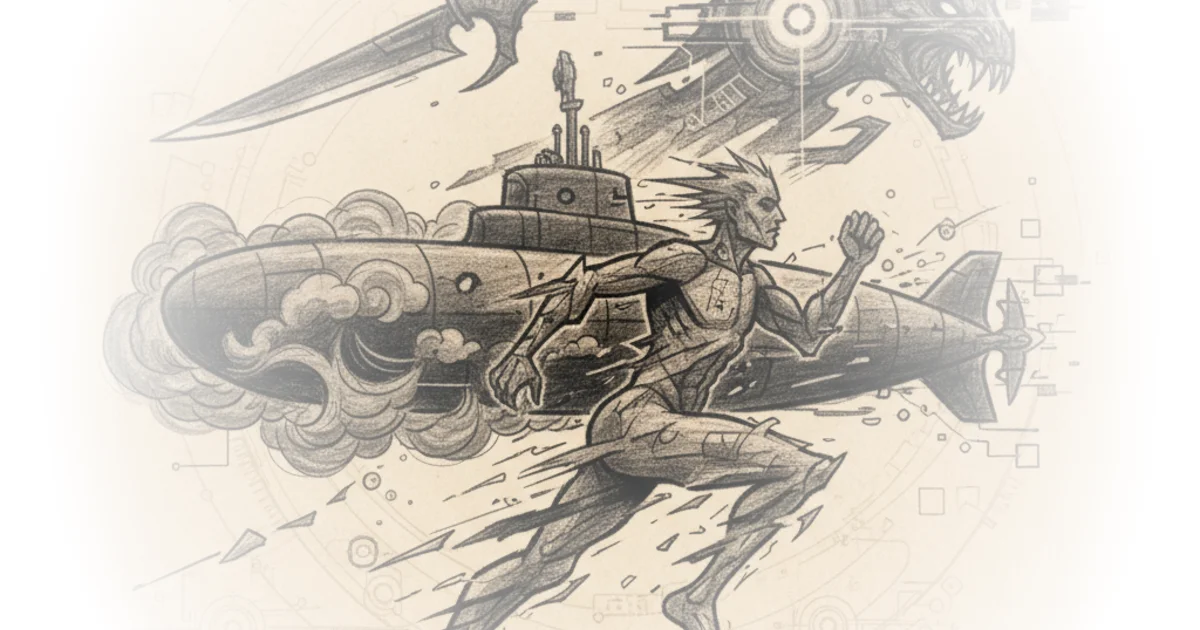
This framing is sharp because it shifts the critique from technology's potential for evil to its potential for laziness. The villains are not defeated because they are too weak, but because they are "useless" in the sense that they cannot act without external data. "They are often effective, even successful. But never useful," the author argues. This distinction lands hard for anyone who has watched a team collapse when their internet connection fails. The film posits that in a world where the internet is a weapon, the ability to operate offline becomes the ultimate superpower.
"What Cruise and his team carry in their heads and bodies not only saves them but the world."
Critics might argue that this romanticizes a dangerous level of isolationism, suggesting that rejecting digital tools is a viable survival strategy in a hyper-connected global economy. However, the piece is less about Luddism and more about the fragility of dependency.
The Philosophy of the Body
The commentary deepens as Maclean-Jones connects the film's action sequences to the philosophical work of Gilbert Ryle and Maurice Merleau-Ponty. The author notes that the film dramatizes Ryle's 1945 distinction between "knowledge of" (propositional facts) and "knowledge how" (practical aptitude). "Crucially, you can possess the latter without the former; knowing how does not entail being able to explain it," Maclean-Jones writes. This is illustrated by a character who can defuse a nuclear bomb without being able to articulate the theory behind it.
The piece then pivots to Merleau-Ponty, whose 1945 The Phenomenology of Perception argued that the body is not a vessel for the mind but a "repertoire of skills built and refined through contact with the world." Maclean-Jones suggests that the film's characters embody this philosophy, rejecting the Cartesian dualism that separates thought from action. "I do, therefore I am," the author summarizes, capturing the film's core thesis. This is a compelling reframing of the action genre; the stunts are not just spectacle, but a philosophical statement about the unity of human consciousness and physical capability.
The Machine Stops
To ground this argument in literary history, Maclean-Jones draws a parallel to E.M. Forster's 1909 short story The Machine Stops. In Forster's dystopia, humanity is trapped in hexagonal cells, dependent on a benevolent system that eventually fails. "Man, the flower of all flesh... was dying, strangled in the garments that he had woven," the author quotes, highlighting the tragedy of a civilization that has forgotten how to live without its technology. "The sin against the body — it was for that they wept in chief," Maclean-Jones notes, drawing a direct line from Forster's warning to the Entity's threat.
The author argues that while Forster's vision was apocalyptic, Cruise and his collaborator Christopher McQuarrie offer something more diagnostic. "They aren't warning us of the machine age so much as asking what it demands of us, and what it reveals," Maclean-Jones writes. The film treats technology with a "near-Romantic sensibility," where hand-soldered electronics and vintage aircraft are valued not for their nostalgia, but for their reliability in a world where digital systems can be hijacked. The scene where Cruise must dive to the ocean floor in an experimental suit, risking his life with no safety net, serves as the ultimate test of this philosophy.
"Don't be safe, be competent."
This mantra, used by Cruise to brief his stunt team, encapsulates the piece's central tension. It is a rejection of the modern obsession with risk mitigation in favor of the cultivation of genuine skill. The author notes that Cruise performed a parachute stunt 19 times, only to be told by the director that there were no parachutes left—a lie to force the actor to confront his limits. "When they are about to perform stunts, Cruise often briefs his team with an unusual mantra: 'Don't be safe, be competent.'" This is a powerful, if extreme, illustration of the author's point: that safety without competence is an illusion.
Bottom Line
Aled Maclean-Jones delivers a compelling argument that the Mission: Impossible franchise is inadvertently the most profound commentary on the AI age, positing that our survival depends on reclaiming the "knowledge how" that algorithms are eroding. The piece's greatest strength is its ability to weave high-level philosophy with pop culture, making the abstract concept of embodied cognition tangible through the lens of a blockbuster film. However, the argument risks oversimplifying the complex relationship between human skill and technological augmentation, potentially dismissing the genuine value of digital tools in favor of a romanticized analog past. As we face an increasingly automated future, the question remains: can we truly afford to be as dependent on our bodies as the film suggests, or is the balance more delicate?
"The sin against the body — it was for that they wept in chief; the centuries of wrong against the muscles and the nerves."
The strongest part of this argument is its diagnosis of "uselessness" as the true villain, a concept that resonates deeply in a workforce increasingly reliant on AI. Its biggest vulnerability is the implicit assumption that human physical competence can scale to meet the challenges of a global, digital crisis. Readers should watch for how this tension between embodied skill and technological reliance plays out in real-world policy and education as AI integration accelerates.