Anarchierkegaard delivers a blistering critique of modern faith, arguing that Christianity has been reduced to a form of intellectual entertainment that prioritizes cleverness over the terrifying demand of actual obedience. The piece is notable not for its theological novelty, but for its aggressive rejection of the "safe" Christianity that appeals to the modern, educated mind, insisting instead that true faith is a disruptive force that cannot be contained by logic or social media discourse.
The Trap of the Intellectual Pulpit
The author begins by dismantling the idea that the Christian role is to be a teacher or an authority figure. Anarchierkegaard writes, "The teacher—or, rather, the one who allows himself to be mistaken for a teacher—is a particular individual with a particular responsibility now." This framing is crucial because it shifts the burden from the audience's reception to the speaker's integrity. The argument suggests that the moment a believer seeks to be understood or praised, they have already failed the test of faith.
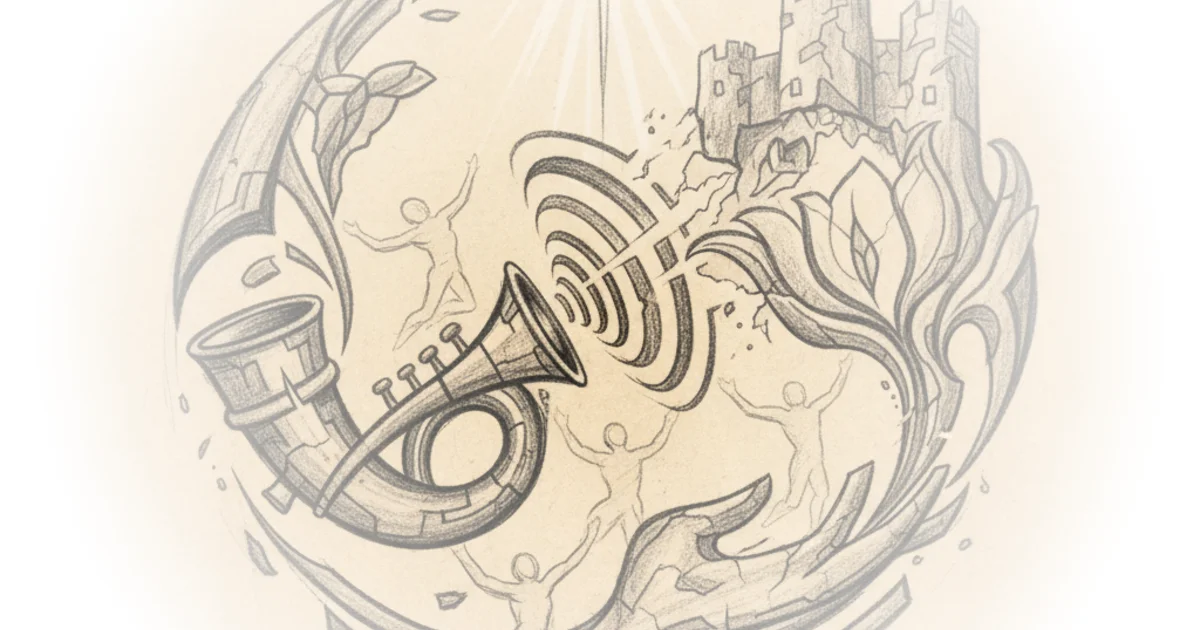
This is a sharp, necessary correction to the current landscape of online theology, where complex ideas are often packaged for consumption. Anarchierkegaard observes that "Christian commentary can often be deeply self-indulgent, overly reflective, and ready to dismiss the very principles that it takes to be admirable." The author argues that this "faux-Christianity" treats faith like a mathematical proof, a dangerous reduction that appeals to platforms like Reddit and YouTube. "They chop up the meat of what is, essentially, 'living life'... and yet, they attempt it," the author notes, highlighting the absurdity of trying to solve the human condition with a treatise.
Critics might argue that this stance dismisses the value of theological education and intellectual rigor entirely, potentially leaving believers without the tools to navigate complex ethical dilemmas. However, the author's point is not against thought, but against the substitution of thought for action. The danger lies in believing that understanding the concept of love is the same as loving one's neighbor.
"In a world which has entirely become 'fabulously textual', where everything is funneled through the gluttonous maw of consumerism, it is now a time for the reinvention of kerygmatic theology that doesn't abandon the body."
Beyond the Defense of God
The commentary then pivots to a historical critique, specifically targeting the legacy of Rudolf Bultmann and the liberal theological tradition. Anarchierkegaard challenges the very premise of "defending" the faith, calling it a "pagan notion" that implies God needs human protection. "The idea that the omniscient and omnipotent Lord Who brings reality into existence merely through speech... apparently still fears the sword or a pithily worded and philosophically suspect aphorisms... all this should be rejected out of hand," the author asserts.
This is a provocative move that reframes the relationship between the divine and the human. Instead of a battle of wits, the author presents faith as a specific, singular event where the individual is addressed directly. Quoting Bultmann, Anarchierkegaard notes that "human life is lived out in time and space, man's encounter with God can only be a specific event here and now." The author uses this to argue that modern theology has lost its way by trying to make the gospel fit into "allowed categories" of secularism.
The piece suggests that the failure of liberal theology isn't just an academic error, but a spiritual one that leads to a "twist on Pelagianism," where humanity believes it can engineer its own salvation through intellectual systems. "We have also figured out the mode by which we shall asserted the totality of this great commission that we seemingly intentionally fail!" Anarchierkegaard writes, exposing the irony of a faith that claims to be radical but is actually a comfortable social performance.
The Necessity of Ash, Not Words
In the final section, the author calls for a return to the raw, unpolished reality of existence, rejecting the "witticisms and intellectual subversions" of modern philosophy. The argument is that life cannot be abstracted into propositions without losing its essence. "They need ash on the forehead —a sign of having done something, a sign that life has been lived!—not more empty inversions on empty inversions!" Anarchierkegaard writes, demanding a faith that is felt and enacted rather than debated.
This section serves as a stark warning against the "journalistic" approach to human concerns, where the writer stands above the subject rather than within it. The author insists that "there is an unidentified smudging of the unknowability of the human agent... that means we could never provide a philosophical argument for how we ought to act—instead, we can only ever yoke ourselves to the actual." This is a call to abandon the safety of theory and embrace the risk of the "moment" of faith.
Critics might find this dismissal of systematic theology too extreme, potentially leaving the believer without a coherent framework for community or doctrine. Yet, the author's urgency suggests that the current frameworks are not just insufficient, but actively deceptive, masking the true cost of discipleship behind a veil of intellectual elegance.
Bottom Line
Anarchierkegaard's strongest argument is the exposure of faith as a consumer product, a critique that resonates deeply in an age of algorithmic spirituality. The piece's biggest vulnerability is its potential to alienate those who find genuine meaning in the intellectual tradition of the church, risking a binary choice between thought and action. Readers should watch for how this call for "kerygmatic" reality translates into practical community life, as the author offers a diagnosis of the problem but leaves the cure to the individual's immediate, terrifying choice.
"The Christian is found only inasmuch as it provokes a witness to witness."
The ultimate verdict is that this piece is a necessary shock to the system, forcing the reader to confront whether their faith is a comfortable identity or a disruptive reality.