This isn't a story about artificial intelligence hitting a software wall; it is a stark warning that our physical infrastructure cannot keep pace with digital ambition. Works in Progress delivers a crucial, often overlooked reality check: the most expensive projects in history are stalling not because of code, but because of copper and concrete. The piece argues that while we obsess over model parameters, the real constraint is the ability to plug these massive data centers into a grid designed for a bygone era.
The Physical Limit of Digital Growth
The editors anchor their argument in the sheer scale of new demand, pointing to the Stargate project in Abilene, Texas. This joint venture between OpenAI and Softbank is expected to cost over $40 billion, yet its success hinges on a single metric: electricity. Works in Progress reports that "Stargate is expected to draw 1.2 gigawatts, as much as 313,000 median American family homes, at peak load." This comparison instantly contextualizes the abstract concept of "compute power" into something tangible for any reader familiar with household energy bills.
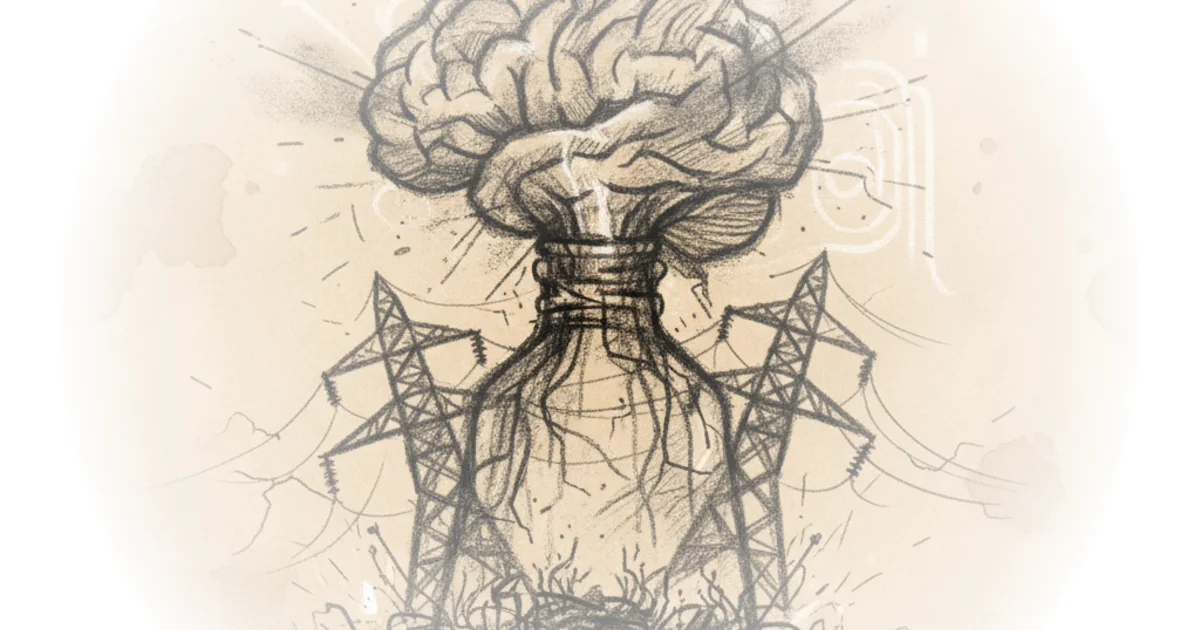
The article makes a compelling case that this is not an isolated incident but a systemic trend. It notes that total AI computing power could reach 100 gigawatts worldwide by 2030 if current growth rates hold. The bottleneck, the piece insists, is not a lack of generation capacity but the inability to connect it. "The primary bottleneck to this growth is the availability of electricity," the editors state, clarifying immediately that "this doesn't mean there is an energy shortage." Instead, the constraint is the interconnection queue.
This framing is vital because it shifts the debate from ideological battles over nuclear versus solar to the mundane, bureaucratic reality of grid management. The median wait time for a new power plant to connect jumped from less than 20 months in 2005 to 55 months by 2023. This delay creates a perverse incentive structure where speculative projects clog the line, preventing high-value infrastructure from coming online.
"The abundance of [AI] will be limited by the abundance of energy."
The Grid's Broken Queue
Works in Progress dissects the mechanical failure of the current system with surgical precision. The interconnection process was designed for a time when electricity use grew steadily and predictably, not for an explosion of demand from data centers and battery plants. The editors note that grids currently use an "inflexible first-come, first-served queue that leaves some of the most valuable projects stuck behind less important ones."
This rigidity has led to a situation where 72 percent of connection requests submitted since 2000 were ultimately withdrawn. The system is so clogged with phantom projects and duplicative applications that it paralyzes genuine development. The piece highlights that in ERCOT, the grid covering most of Texas, there are 143.5 gigawatts of data centers seeking to connect against a peak demand of only 85.9 gigawatts. This backlog is not just an administrative nuisance; it is a direct threat to economic growth.
The consequence of this delay is already visible in the market. Because grid power is unavailable or too slow to access, developers are turning to off-grid solutions. The article cites xAI's Memphis data center, which "operated partially off-grid for months" by installing 422 megawatts of on-site gas turbines because it could only draw eight megawatts from the grid initially. This is a temporary fix that increases costs and reduces reliability, yet it is becoming the norm. The editors warn that "62 percent of data centers are considering off-grid solutions," signaling a potential fragmentation of our energy infrastructure.
Critics might argue that focusing on interconnection delays ignores the broader need for massive new transmission lines, which face their own permitting nightmares. However, Works in Progress correctly identifies that even if we build the lines tomorrow, the current queue process will still prevent them from being utilized efficiently. The administrative bottleneck is a prerequisite to solving the physical one.
Market Signals vs. Regulatory Reality
The piece offers a nuanced look at how electricity markets are supposed to work versus how they actually function. In theory, prices should signal where new capacity is needed. "Market prices signal to power plant developers about levels of supply and demand," the article explains. When solar output increases, prices drop during sunny hours, signaling a need for storage. This mechanism has successfully driven battery deployment in places like ERCOT and California.
However, the editors point out that these signals are increasingly distorted by regulation. "Grid infrastructure... is generally planned by the grid operator, and the cost is passed on to consumers at a price approved by state and federal regulators." This disconnect means that while market forces encourage new generation, regulatory caps on wholesale prices can make those generators unprofitable. The result is a reliance on "must-run agreements" where utilities pay plants to stay online simply to maintain reliability, bypassing the competitive market entirely.
Furthermore, policy interventions like tax credits for renewables have created paradoxical pricing. The article notes that some wind farms offer power at negative prices because they receive subsidies regardless of demand. While this encourages green energy adoption, it complicates the market signal for other types of generation needed to ensure stability during peak loads or when the sun isn't shining.
The core argument here is that "arguing about the best power generation method is overrated." The editors assert that well-designed markets would automatically determine the optimal mix of gas, nuclear, and renewables based on cost and reliability. The real failure lies in the inability to connect these diverse sources to the grid efficiently. "Far more fundamental is ensuring power can be efficiently delivered where needed," they write, dismissing the technology wars as a distraction from the infrastructure crisis.
"We need capacity – a lot of capacity."
Bottom Line
The strongest part of this argument is its refusal to get bogged down in the culture war over energy sources; instead, it exposes the bureaucratic inertia that threatens to stall the entire AI revolution and broader electrification. The piece's biggest vulnerability is that while it clearly identifies the interconnection queue as the primary blocker, it offers fewer concrete solutions for how to reform a system deeply entrenched in state-level regulations and legacy utility models. Readers should watch for whether grid operators can successfully implement the proposed reforms to prioritize high-value projects over speculative ones before the backlog becomes irreversible.