This piece from Reason offers a startling reframing of the modern gambling landscape: the mob didn't lose its grip on sports betting because morality won; it lost because corporate efficiency and state desperation created a more lucrative, yet equally predatory, alternative. By tracing the arc from a football club in Stoke City to the legislative halls of Illinois, the article argues that we haven't solved the ethical dilemma of gambling—we've merely outsourced it from street-corner bookies to billion-dollar public companies backed by government tax revenue.
The Coates Paradox: Community Savior or Addiction Architect?
The narrative begins not with a policy paper, but with a football club on the brink of collapse. Reason sets the stage in 1995 Stoke City, where Chairman Peter Coates faced angry fans demanding investment he couldn't provide. "Whenever a club is seen not to be doing well there always has to be someone to blame," Coates noted at the time, citing a lack of resources compared to wealthy rivals. The piece uses this local drama to introduce a global shift: the transition from brick-and-mortar shops to digital dominance led by his daughter, Denise.
The article highlights how Denise Coates mortgaged physical assets to launch bet365.com in 2001, betting on the internet when few others did. The result was a financial explosion that allowed her family to buy back their beloved club and transform it into an English Premier League contender. "Denise Coates had used gambling money to give her community what they had always wanted: a world-class football club." This is the central tension of the piece: the very industry that funds local prosperity also fuels personal ruin.
Reason doesn't shy away from the human cost, noting that while bet365 became the largest employer in Stoke and a massive taxpayer, its "in-play" betting features were widely criticized as gateways to addiction. The editors quote an anonymous employee who captured the moral ambiguity perfectly: "The success [of bet365] presents an ethical quandary: do the taxes, the charity, the healthy salaries, and employee benefits balance out the massive harm that gambling causes?" This question is the engine of the entire article, forcing readers to weigh tangible community benefits against abstract social harms.
Critics might argue that framing this as a simple trade-off ignores the power asymmetry; the "community" benefiting from the jobs is often distinct from the individuals losing their livelihoods to addiction within the same town. The piece acknowledges this but suggests the dilemma remains unresolved regardless of who wins or loses in the short term.
The moral duality of the company wasn't lost on at least one employee, who asked whether charity and taxes could ever truly balance out the massive harm gambling causes.
From Uncle Mick to the Boardroom: The Illinois Pivot
The commentary then pivots to the United States, examining how American states grappled with this same quandary after the Supreme Court struck down the federal ban on sports betting (PASPA). Reason uses Illinois as a case study for how economic desperation often overrides ethical caution. When Governor J.B. Pritzker took office facing a massive budget deficit, he viewed legalized gambling not through a moral lens but an economic one. "Every day we argue about who's in and who's out is money that goes to other states and to the black market," Pritzker said.
The piece details the intricate dance of lobbyists: casinos wanting protection, sports leagues demanding integrity fees, and tech giants like DraftKings and FanDuel leveraging their capital. The result was a compromise where the state prioritized revenue over robust addiction safeguards. "Unlike in some other states, there was no agreed-upon percentage of revenue set aside for gambling addiction treatment." This reactive strategy—summarized by an industry executive as "Legalize, Launch, Learn"—suggests that policymakers are willing to let the public bear the cost of experimentation.
The article's most striking historical parallel involves the fall of a local bookie named Vincent Del Giudice, known as "Uncle Mick." Just before Illinois launched its legal market, federal charges were brought against an offshore ring run by Del Giudice and linked to mob ties. Reason argues this timing was politically fortuitous: it provided a clear villain for opponents of legalization to point at. "Sure, legalized sports betting brought some negatives but did the great people of Illinois really want the industry to be controlled by the mob and guys named Uncle Mick?"
This framing is effective because it simplifies a complex policy issue into a binary choice: regulated corporate gambling or unregulated criminal enterprise. However, this overlooks the fact that modern digital operators employ aggressive marketing tactics that some critics argue are just as predatory as street-level bookies, even if they lack the physical violence of the mob era.
The Corporate Takeover of Sports Culture
The final section explores how quickly American sports institutions embraced their former "evil." Reason contrasts MLB Commissioner Bud Selig's 2012 declaration that gambling was "the deadliest of all things" with his successor Rob Manfred's strategic pivot to embrace betting partnerships just years later. The shift is stark: from banning the activity to inviting it into stadiums like Wrigley Field.
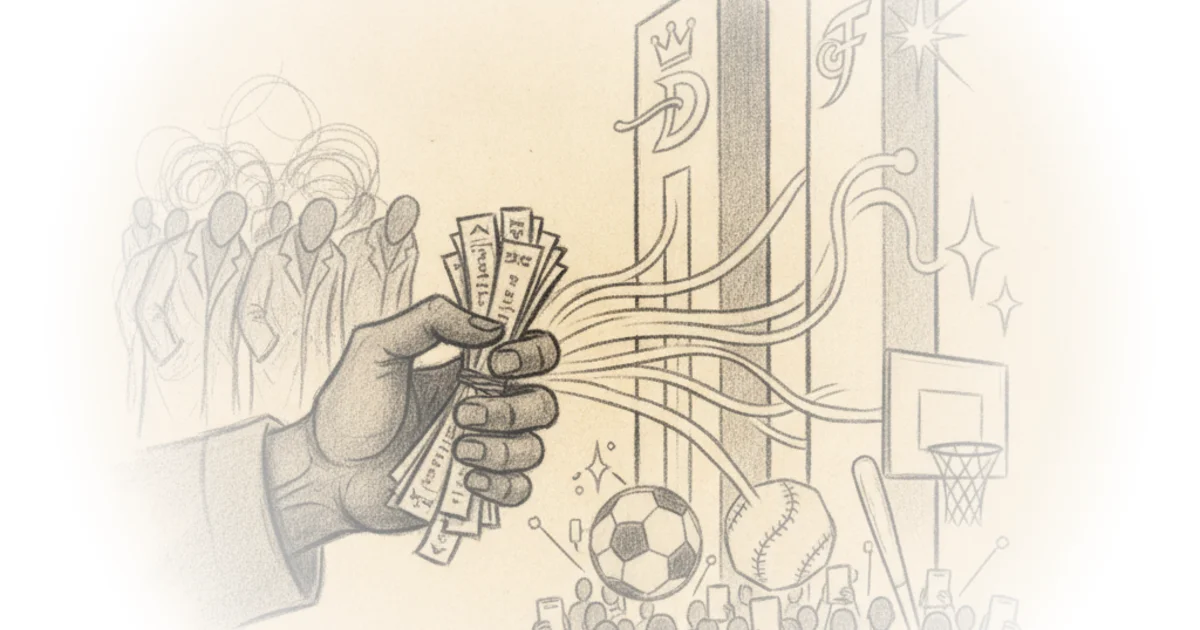
The piece notes that while the mob used to run sports betting, now companies like DraftKings and FanDuel do. "With little product differentiation among competitors, companies started giving away deposit bonuses to anybody who simply opened an account." This tactic has normalized gambling for a quarter of all Americans, turning fandom into a revenue stream for leagues and media companies. The article points out that while proponents argue this improves monitoring of game-fixing, critics contend that more betting simply creates more opportunities for corruption.
The coverage draws a subtle but important line to historical precedents of organized crime in sports. Much like the football hooliganism seen in the United Kingdom or the offshore gaming operators in the Philippines, the current landscape is defined by a struggle between local control and global capital. The mob's physical presence has been replaced by algorithms and deposit bonuses, but the core dynamic—extracting wealth from the vulnerable to enrich the powerful—remains eerily similar.
Critics might note that the piece underestimates the potential for digital regulation to actually protect consumers better than the unregulated past, yet it offers little evidence of such protections being implemented effectively in states like Illinois. The "Legalize, Launch, Learn" approach remains a gamble with public health as the stake.
In 2012, bet365 became Stoke City's primary jersey sponsor, and by 2014, the company was taking in $25 billion worth of bets from 7 million customers across 200 countries.
Bottom Line
Reason's strongest argument is its refusal to romanticize the "good old days" of unregulated gambling while simultaneously exposing the hollow promise that corporate regulation will solve addiction. The piece effectively demonstrates that we have traded the mob for a boardroom, but the ethical cost remains the same: a system designed to extract wealth from those who can least afford it. Readers should watch for whether states eventually move beyond "Learn" and begin to implement the proactive safeguards they initially skipped in favor of quick tax revenue.