Chad W. Post delivers a rare literary intervention by spotlighting a novel that doesn't just challenge readers—it terrifies them. While most book reviews aim to comfort or recommend, Post frames Orly Castel-Bloom's Dolly City as a work so confrontational that its original author was reportedly feared by her own neighbors. This isn't a gentle introduction to Israeli literature; it is a warning that the text operates as a "new Israeli-Hebrew dictionary" that dismantles the very definitions of national identity and motherhood.
The Architecture of Fear
Post introduces the piece by stepping aside, handing the microphone to Karen Grumberg, a scholar whose analysis reveals the visceral impact of Castel-Bloom's work. The core of the argument is that the novel's power lies in its refusal to offer moral comfort. Grumberg notes that upon its 1992 release, "people who recognized her as its author were actually afraid of her." This reaction wasn't just about shock value; it stemmed from a writing style described as "confrontational, fearless, and disconcertingly funny" that evoked genuine physical dread.
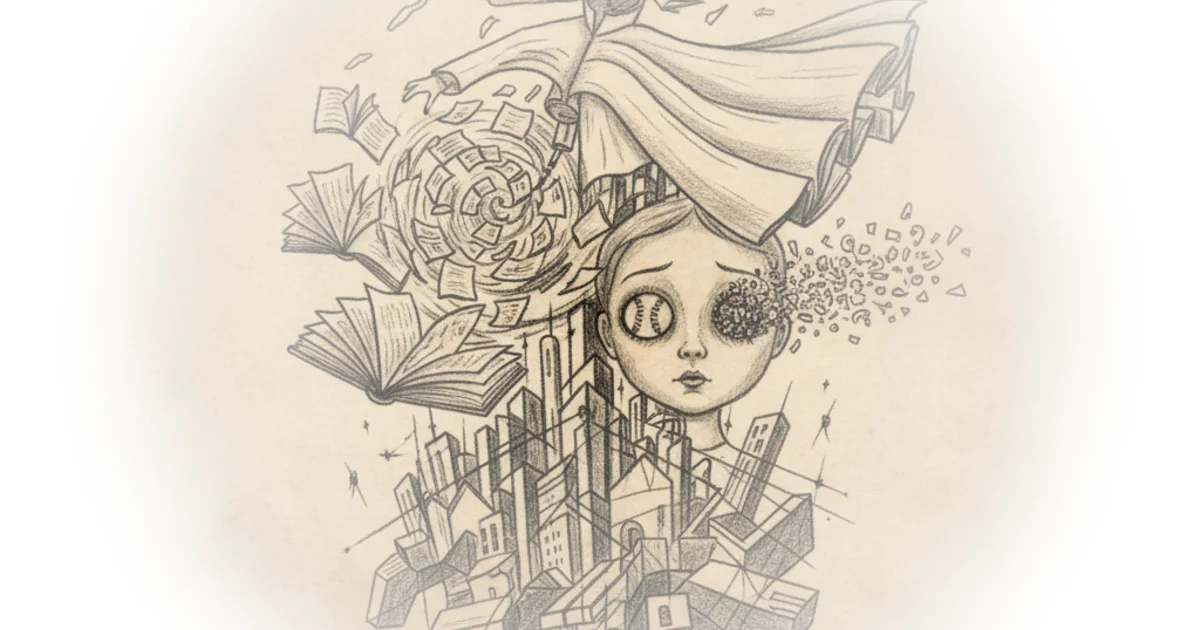
The commentary highlights how the novel attacks the foundational myths of the state. Grumberg explains that while Zionist ideology is present, it is merely "tolerated but not taken seriously," and the Holocaust is reframed not just as a tragedy but as a "crime warranting bloody vengeance." This is a bold move in a literary landscape often obsessed with memorialization. By treating sacred history as a source of exclusion rather than unity, Castel-Bloom forces the reader to question the stability of the nation's consciousness.
"Madness is a predator," she observes. "Its food is the soul. It takes over the soul as rapidly as our forces occupied Judea, Samaria, and the Gaza Strip in 1967."
Post and Grumberg use this quote to draw a direct line between the political occupation of land and the internal occupation of the self. The argument here is that the chaos within the protagonist, Dolly, is a microcosm of the chaos in the city. The violence isn't random; it is systemic. As Grumberg puts it, "The violence that is so prevalent in Dolly City is related to two particular overlapping concerns that Castel-Bloom addresses: motherhood and the nation."
Critics might argue that such extreme satire risks alienating readers who are looking for empathy rather than a mirror of societal rot. However, the text suggests that the discomfort is the point. The novel posits that in a society where "interpersonal relations are exceedingly violent," traditional empathy is a luxury that no longer functions.
The War on Language and Motherhood
The most striking aspect of the coverage is how it dissects the novel's linguistic rebellion. Castel-Bloom was accused of writing "thin Hebrew," a style critics deemed flat and inadequate for high literature. Yet, Post and Grumberg argue that this "thinness" is actually a strategic weapon. It incorporates slang, television, and immigrant languages to reflect a society in perpetual flux. Grumberg asserts that "Dolly City constitutes a new Israeli-Hebrew dictionary, challenging all accepted definitions and values."
This linguistic shift is mirrored in the novel's treatment of motherhood. The relationship between Dolly and her son is not one of nurturing but of desperate, violent control. The imagery is brutal: a mother carving a map of the Land of Israel onto her son's back. This "fleshly cartography" turns the child into a territory to be defended, a direct critique of how national identity is imposed on the next generation. Grumberg writes, "Dolly's obsessive and fiercely independent motherhood is complicated by the fact that her son's paternity is unknown and by the mystery of her own father's death."
The absence of fathers in the novel is presented as a deliberate statement against a literary tradition obsessed with lineage. Instead, we get a world where "Dolly's own aggressive tendencies... reflect the violence of her city." The protagonist's actions—injecting strangers with morphine, castrating a psychiatrist—are not just acts of madness but reflections of a society where "no recognizable ethical or moral code governs Dolly City."
"I wanted to be in command on all fronts, and what's wrong with that?" she demands. "I'm not entitled to demand sovereignty over the defense of my son?"
This quote encapsulates the terrifying logic of the novel: the mother's desire to protect her child becomes indistinguishable from the state's desire to control its territory. The commentary suggests that this parallel is the novel's most chilling accomplishment. It lays bare a society where the personal and the political are fused through aggression. As Grumberg notes, "Subject to Dolly's keen gaze, these violent social relations erupt on the surface of Dolly City itself in the form of cancerous tumors."
The Necessity of Black Humor
Despite the grim subject matter, Post emphasizes that the book is also "very funny." This is not a contradiction but a survival mechanism. Grumberg explains that Castel-Bloom uses "black humor, satire, parody, and sarcasm to express anxiety and to criticize social norms." The humor makes the "horrible somewhat palatable," allowing readers to engage with the text's darkest themes without being completely overwhelmed.
The commentary suggests that this approach is essential for the novel's longevity. By the time the book was reissued, the "relevance and acuity" of its critique had only sharpened. The world of Dolly City—dystopic, alienating, and violent—is no longer a fantasy but a reflection of contemporary reality. Grumberg concludes that the novel helps establish Castel-Bloom as a writer comparable to "Dostoyevsky to Kafka," a figure who "left no one indifferent."
"Dolly City is an astonishing novel. It leaves some readers enthralled, some stunned, and others intimidated."
This final assessment from Grumberg, highlighted by Post, serves as the ultimate verdict on the work. It is not a book for everyone, but it is a book that demands to be reckoned with. The commentary effectively argues that the novel's refusal to offer easy answers is its greatest strength.
Bottom Line
The strongest part of this argument is the reframing of Castel-Bloom's "thin Hebrew" not as a deficiency, but as a revolutionary tool that mirrors the fragmentation of modern Israeli identity. The biggest vulnerability lies in the sheer extremity of the novel's violence, which may obscure its political critique for readers seeking narrative coherence. Readers should watch for how this text influences contemporary discussions on the intersection of state violence and domestic life, as its relevance continues to grow.