Doomberg delivers a jarring diagnosis of American naval power, arguing that the U.S. fleet is not merely aging but actively being hollowed out by a decade of failed procurement and a collapsed domestic industrial base. The piece's most provocative claim is that the administration's aggressive tariff strategy to revive shipbuilding is not just a trade negotiation, but a constitutional gamble that could either save the fleet or trigger a legal crisis.
The Cost of Failure
The author begins by dismantling the narrative of modern naval innovation, pointing to a twenty-five-year history of wasted capital. Doomberg writes, "Over the past 25 years, the US Navy has wasted gobs of money trying to build new ships for shallow and coastal waters." This framing is effective because it shifts the blame from budget constraints to strategic incoherence. The Littoral Combat Ship program, once sold as a flexible, low-cost solution, is described as a "nightmare of delays, cost overruns, and malfunctioning ships." Doomberg cites a ProPublica investigation to ground this critique, noting the program's probable lifetime cost has ballooned to "a cool $100 billion." The author's use of the nickname "Little Crappy Ship" serves as a blunt, memorable shorthand for a project that failed to meet its core mission requirements.
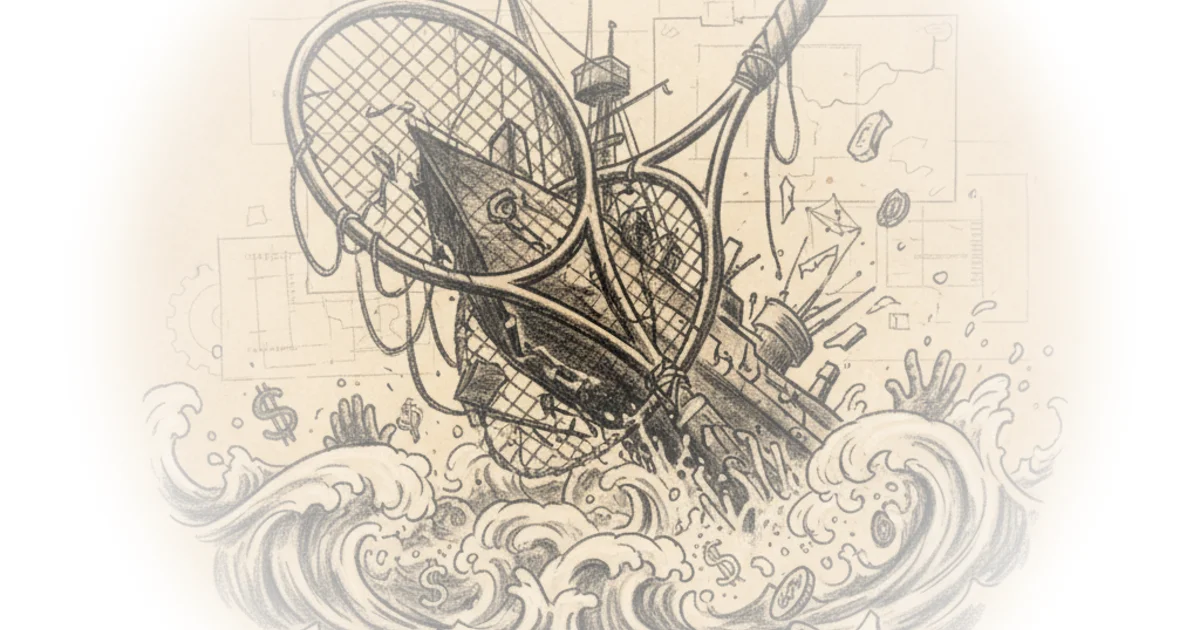
The failure extends to the Navy's current flagship project, the Constellation-class frigate. Doomberg argues that the strategy of adapting a proven foreign design has backfired due to excessive American modifications. "The Constellation-class frigate, sold as a mid-tier escort to bridge the gap between Littoral Combat Ships and destroyers, is now falling behind by 36 months," Doomberg notes. The author highlights a critical irony: the very act of insisting on U.S. systems and additional armor has destroyed the "plug-and-play" efficiency the project was supposed to offer. This design bloat has caused the ship's weight to increase by 13 percent before it even enters service, undermining the vessel's intended performance.
The story of the Navy's successor program is no more glorious than the one that preceded it.
The Industrial Collapse
Beyond specific projects, Doomberg identifies a systemic rot in the American shipbuilding sector. The author presents a stark comparison: the United States "barely builds as much seagoing tonnage as Iran and sits below Indonesia on the global leaderboard." This statistic is the piece's most alarming data point, suggesting a vulnerability that goes beyond policy failures to a fundamental loss of industrial capacity. Critics might note that comparing U.S. commercial tonnage to military needs is apples-to-oranges, as the U.S. relies heavily on allies for commercial logistics while maintaining a distinct military industrial complex. However, Doomberg's point stands that the domestic base for constructing complex warships is dangerously thin.
The commentary then pivots to the administration's response, framing it as a high-stakes negotiation rather than a standard trade dispute. Doomberg observes that the executive branch is "using threats of stiff tariffs to negotiate trade deals with partner countries, directing them to invest huge sums of money to revitalize American manufacturing." The author suggests this approach is yielding results, particularly with nations hosting U.S. military bases. "If the signed deal manifests as intended, Trump is going to build a navy, and South Korea is going to pay for it," Doomberg writes. This reframing of foreign investment as a direct subsidy for U.S. defense readiness is a bold interpretation of recent diplomatic deals.
The Constitutional Gamble
The piece concludes by warning that this aggressive strategy faces a formidable legal hurdle. Doomberg argues that the tariff mechanism used to force these investments is likely unconstitutional. "On Wednesday, the question was put to the US Supreme Court, and how the nine justices rule could either validate Trump's approach or effectively wreck his presidency," the author states. This is the most dramatic turn in the argument, elevating a trade policy dispute to an existential threat for the administration's agenda. The stakes are framed not just in dollars, but in the separation of powers.
A counterargument worth considering is that the administration has long-standing statutory authority to impose tariffs for national security reasons, and the Supreme Court has historically been deferential to the executive branch on trade matters. Doomberg's assertion that the ruling could "wreck" the presidency may overstate the immediate political impact, even if the legal precedent is significant. Nevertheless, the uncertainty creates a volatile environment for long-term naval planning.
Levying tariffs in this way is likely unconstitutional, and the Supreme Court's ruling could effectively wreck the administration's entire strategy.
Bottom Line
Doomberg's strongest asset is the unflinching connection between a broken procurement process and a hollowed-out industrial base, forcing readers to confront the reality that the U.S. cannot simply buy its way out of a manufacturing crisis. The piece's greatest vulnerability lies in its optimistic assessment of foreign nations willingly funding U.S. naval expansion as a substitute for domestic investment. The reader should watch for the Supreme Court's upcoming decision, as it will determine whether this high-risk strategy is a viable path forward or a legal dead end.