Stark Realities delivers a scathing indictment of public health orthodoxy by tracing a modern epidemic not to a virus or environmental toxin, but to a decades-long campaign of medical malpractice. The piece argues that the explosion of peanut allergies in the United States was not an inevitable biological shift, but a direct consequence of experts ignoring immunological principles to follow a flawed, foreign policy. For busy readers navigating a world where institutional trust is fragile, this account of how "expert-inflicted mass suffering" became policy offers a chilling case study in the dangers of bureaucratic certainty.
The Anatomy of a Panic
The article opens by dismantling the timeline of the crisis. In the 1980s, peanut allergies were virtually non-existent; today, the U.S. has one of the highest rates globally. Stark Realities reports, "This epidemic was precipitated by institutions that exist to promote public health." The narrative arc is clear: fear drove policy, not data. By the mid-1990s, media coverage of hospitalized children created a "Great Parental Peanut Panic," pressuring the American Academy of Pediatrics (AAP) to act despite a lack of evidence.
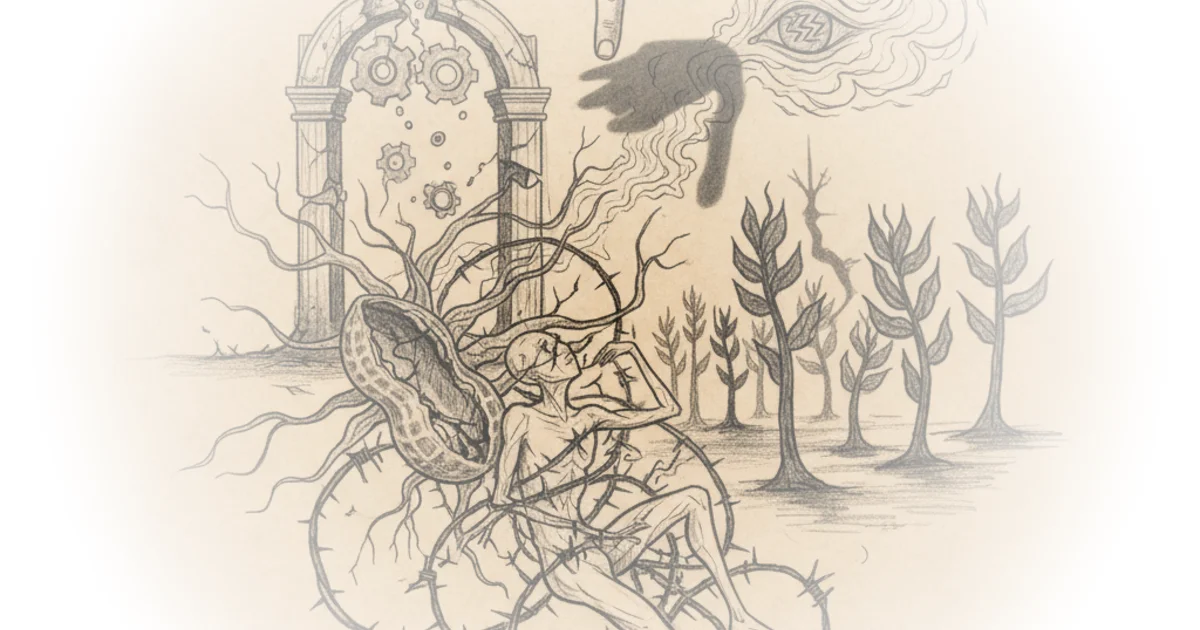
The core failure was an admission of ignorance disguised as authority. As the piece notes, citing FDA Commissioner Marty Makary, "There was just one problem: They didn't know what precautions, if any, parents should take." Yet, in 2000, the AAP issued definitive instructions to avoid peanuts for high-risk children until age three. This decision was not based on new American science but was a "parroting" of a 1998 UK Department of Health guideline. When Makary investigated the UK's source—a 1996 study by Professor Jonathan Hourihane—he found the data showed no correlation between maternal peanut consumption and child allergies. Hourihane himself called the policy "ridiculous," stating, "It's not what I wanted people to believe."
This section effectively highlights how a lack of humility can cascade into catastrophe. The argument gains depth when contextualized against the "hygiene hypothesis," a concept gaining traction in the 1990s suggesting that early exposure to microbes and allergens trains the immune system. By shielding children from peanuts, the AAP and the National Institute of Allergy and Infectious Diseases (NIAID) inadvertently prevented the development of oral tolerance, the very mechanism that prevents allergies.
The experts weren't erring on the side of caution, they were erring on the side of catastrophe.
Critics might argue that in the face of potential anaphylaxis, a precautionary approach is ethically defensible. However, the piece dismantles this by showing that the precaution was not just ineffective, but actively harmful, creating a feedback loop where rising allergy rates prompted even stricter avoidance measures.
The Cost of Dogma
The human and societal toll described is staggering. By 2003, self-reported peanut allergies had doubled since 1998, and the severity of reactions increased dramatically. Stark Realities describes the emergence of "ultra-allergies" where even a rinsed ice cream scooper could send a child to the emergency room. The piece argues that the establishment's refusal to pivot prolonged the suffering: "Instead of re-examining the rationale for the peanut-avoidance instruction, the public health establishment only became more emphatic in pushing its bad medicine."
It took the work of dissident London allergist Gideon Lack to break the deadlock. His 2015 randomized controlled trial demonstrated that infants exposed to peanuts had 86% fewer allergies than those who were shielded. Despite this proof, the AAP and NIAID held their ground for two more years. The article captures the frustration of this delay, noting that the reversal in 2017 came with the blunt headline: "Peanut Allergy: Everything They Told You Was Wrong."
The consequences extend beyond the clinic. Families face the daily terror of accidental exposure, the financial burden of expensive EpiPens with expiration dates, and the social isolation of peanut-free zones in schools and airlines. The piece poignantly observes the emotional weight on parents: "There's the guilt, regret and resentment that hangs heavy on parents who heeded bad advice to the detriment of their children's health."
The Bureaucratic Shield
Perhaps the most damning part of the coverage is its examination of accountability. The article scrutinizes the behavior of Anthony Fauci, who led the NIAID during the entire 17-year span of the error and its reversal. Stark Realities recounts a 2019 interview where Fauci laughed while disclaiming responsibility, stating, "I didn't make the recommendation, that's for sure!!" The piece frames this not as a simple bureaucratic deflection, but as a pattern of behavior: "Fauci has always been the slippery, turf-guarding bureaucrat in a lab coat."
The commentary draws a sharp parallel between the peanut allergy crisis and the later management of the pandemic. In both instances, the piece argues, public health officials disregarded existing knowledge, followed bad examples from other nations, blamed noncompliant citizens, and marginalized dissenting voices. Regarding the peanut crisis, the article notes, "Testing the hypothesis was seen as unethical because it seemed preposterous," echoing the treatment of critics during the pandemic lockdown debates.
The argument here is potent because it moves beyond a single policy failure to a systemic critique of how public health institutions protect their reputations over correcting errors. The piece suggests that the refusal to admit fault—Fauci calling the error a "judgement call" rather than a mistake—undermines the very science these officials claim to champion.
Bottom Line
Stark Realities constructs a compelling, evidence-rich narrative that exposes how institutional arrogance can manufacture a public health crisis. The strongest element is the detailed reconstruction of the flawed logic chain, from the misinterpreted UK study to the dismissal of Gideon Lack's data. The piece's vulnerability lies in its broad strokes regarding the pandemic comparison, which, while thematically consistent, risks oversimplifying the distinct complexities of viral transmission versus immunological tolerance. Ultimately, the article serves as a vital reminder that when stakes are high, the most dangerous voice in the room is often the one that refuses to listen to dissent.