This piece cuts through the noise of crypto hype to ask a terrifyingly practical question: what happens when the world's central banks decide the US dollar is no longer the safest place to park their wealth? Joeri Schasfoort doesn't just track price charts; he dissects the institutional logic driving a historic pivot toward gold and, tentatively, Bitcoin, framing it not as an investment trend but as a geopolitical survival strategy.
The Three Pillars of Reserve Assets
Schasfoort begins by stripping away the complexity of central banking to reveal a simple triad of needs: safety, liquidity, and yield. He argues that for decades, the US dollar has dominated because it excels at all three, but the calculus is shifting. "Reserve assets are assets That central banks use to defend the value of their own currency," Schasfoort writes, grounding the entire discussion in crisis management rather than speculation. This is a crucial distinction; these institutions are not looking for the next moonshot, but for a shield against hyperinflation and debt crises.
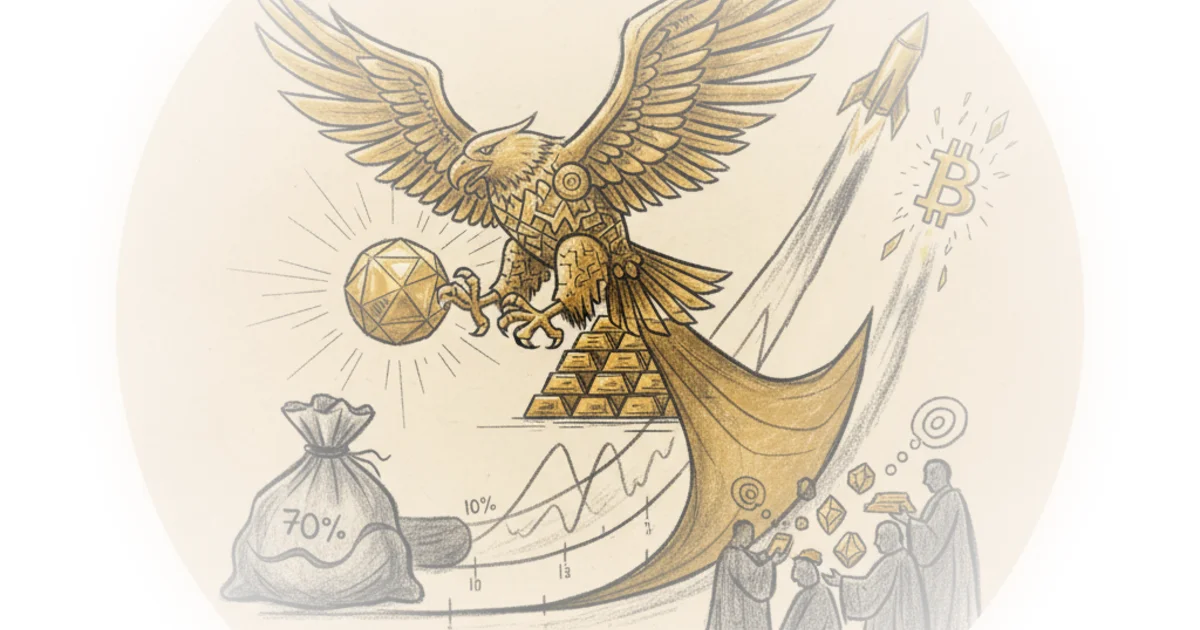
The author breaks down the "yield" argument with refreshing clarity. While US Treasury bonds offer a reliable 4.4% interest, gold carries a negative yield due to storage costs, and Bitcoin offers nothing. "Gold is just a piece of metal therefore it costs money to store it," he notes, highlighting the immediate financial disadvantage of non-yielding assets. Yet, he quickly pivots to the real driver: capital appreciation. The core of the argument is that potential price surges in gold and Bitcoin might outweigh the lost interest, a point underscored by the Czech Central Bank Governor's proposal to add Bitcoin to reserves. This reframing is effective because it acknowledges that while central banks are risk-averse, they are not immune to the erosion of purchasing power.
"Unlike Fiat currencies which governments can create in large quantities the quantity of gold and especially Bitcoin is finite sure central banks can always buy it but buying a lot of it makes it more expensive that's great for investors but not great for poor countries."
The Liquidity Trap and the Sanctions Shock
The piece's most compelling section addresses liquidity, which Schasfoort defines in two directions: the ability to sell without crashing the price, and the ability to buy without spiking the cost. He argues that Bitcoin currently fails the first test for major players. "Bitcoin not suitable for most major Cal Banks right now as they would crash the Bitcoin Market just by selling the massive quantities that they would in a crisis," he writes. This is a sobering reality check for those hoping for an immediate crypto reserve revolution. The market simply isn't deep enough to absorb a sovereign sell-off without catastrophic price dislocation.
However, the narrative shifts dramatically when discussing the "safety" pillar, specifically the risk of asset seizure. Schasfoort points to a pivotal change in the global order: the weaponization of the financial system. Citing IMF research, he notes that "both the volume and value of gold reserves increases with the imposition of sanctions from the US UK Euro area and Japan." This is the smoking gun. Central banks in Russia and elsewhere are not buying gold because it pays better; they are buying it because it cannot be frozen by a foreign government. "For some Central Bankers like those in Russia gold that is kept locally now looks more safe than dollars and Euros," Schasfoort observes. This argument lands hard because it moves the debate from economics to sovereignty.
Critics might note that gold's physical nature creates its own vulnerabilities—storage costs and transport risks are non-trivial for nations under siege. Schasfoort acknowledges this, suggesting Bitcoin could theoretically solve the transport issue as a "digital alternative to Gold that is easier to transfer across borders in large quantities." Yet, he remains skeptical of its current viability, citing World Bank findings that central bankers still view Bitcoin as "way too volatile and not liquid enough."
The Long Road to a New Reserve Currency
Despite the surge in gold buying, Schasfoort pushes back against the narrative of an imminent dollar collapse. He emphasizes the inertia of the global financial system, noting that "Reserve currencies typically only change slowly due to network effects." He draws a historical parallel to the transition from the British pound to the dollar, which took over 60 years despite the US economy surpassing the UK much earlier. "I don't expect a big move away from the dollar anytime soon," he concludes, arguing that the dollar's liquidity and safety advantages remain insurmountable for the foreseeable future.
The author suggests that the future is not a binary switch but a fragmentation. While the dollar remains dominant, the trend of diversification into gold is likely to accelerate as geopolitical trust erodes. "In this increasingly fragmenting Global Order I do expect that the gold buying Trend will continue," Schasfoort writes. He leaves the door slightly ajar for Bitcoin, predicting it may eventually earn a "small place in Central Bankers portfolio" if it matures enough to reduce volatility. This nuanced stance avoids the binary trap of "dollar death" or "crypto utopia," offering a more realistic view of a multipolar financial world.
"The dominance of the US dollar today and the decline of gold and non-acceptance of Bitcoin can for a large part be explained by the these factors gold was less profitable than dollars for years but more importantly dollar markets were far more liquid as the American economy grew and finally gold was less safe to hold mainly due to its inherently higher volatility."
Bottom Line
Schasfoort's strongest contribution is reframing the gold rush not as an investment fad but as a defensive reaction to the weaponization of the US dollar, a move that fundamentally alters the risk calculus for sovereign nations. The argument's biggest vulnerability lies in its reliance on Bitcoin's future maturation; without a massive increase in liquidity and a reduction in volatility, it remains a theoretical solution rather than a practical reserve asset. Readers should watch for the volume of gold purchases by emerging markets in the coming quarters, as this will be the truest barometer of whether the world is merely hedging or actively preparing for a post-dollar era.