In an era where cinema is often reduced to algorithmic content or disposable entertainment, this piece makes a startling claim: that the greatest films function not as stories to be consumed, but as spiritual exercises that prepare the human soul for its ultimate end. Tom van der Linden argues that the Russian master Andrei Tarkovsky did not merely direct movies; he engaged in a form of prayer, using the unique ability of film to manipulate time to reveal the invisible architecture of human consciousness. This is not a standard film critique, but a philosophical excavation of why we watch, offering a counter-narrative to the modern obsession with plot efficiency and visual spectacle.
The Architecture of Time and Memory
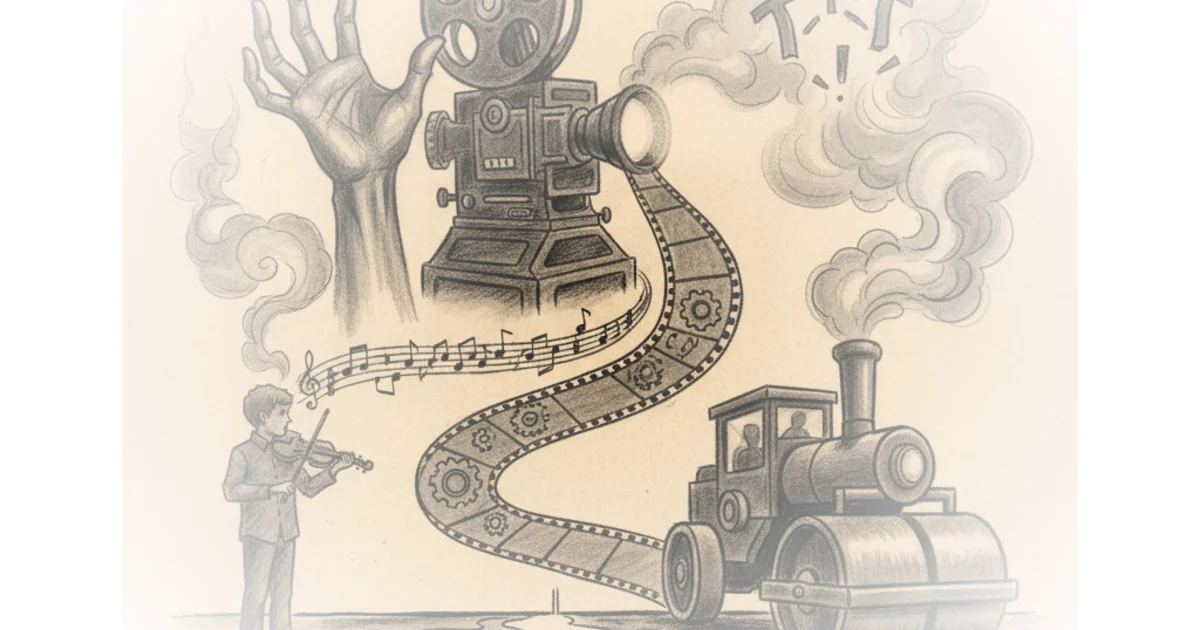
Van der Linden begins by dismantling the conventional understanding of narrative. He suggests that Tarkovsky's early works, from The Steamroller and the Violin to Ivan's Childhood, were not just coming-of-age stories but tests of whether cinema could serve as a vessel for the ineffable. The author writes, "there's an intangible quality to being human, a potential for deep emotional experiences which cannot be grasped through logic or reason... which can be felt intuitively, intimately." This framing is crucial because it shifts the reader's focus from what happens on screen to how the viewer feels internally. The argument holds significant weight here: it posits that the value of art lies in its ability to bypass the intellect and speak directly to the soul.
The commentary explores how Tarkovsky viewed the past not as a linear sequence of events, but as a living, breathing entity that shapes the present. Van der Linden notes that for Tarkovsky, "the past is the bearer of all that is constant in the reality of the present... the present slips and vanishes like sand between fingers, acquiring material reality only in its recollection." This is a profound observation on the nature of memory. By treating time as a fluid substance that can be sculpted, Tarkovsky allowed audiences to experience their own histories not as dead facts, but as active, emotional forces. Critics might argue that this approach renders film inaccessible to those who prefer clear, linear storytelling, but Van der Linden suggests that this very difficulty is the point—it forces the viewer to engage in the hard work of introspection.
The allotted function of art is not as is often assumed to put across ideas to propagate thoughts to serve as example. The aim of art is to prepare a person for death, to plow and harrow his soul, rendering it capable of turning to good.
The Mirror of the Inner World
Moving from the mechanics of time to the content of the human mind, the piece examines how Tarkovsky used the camera to visualize the interior landscape. The author highlights Solaris and Mirror as prime examples where the external world is merely a projection of internal turmoil. Van der Linden writes, "we wouldn't see our experiences as a linear sequence of events captured objectively and logically into what could be called a plot. Instead, we would see a complex web of thoughts, memories, and emotions." This distinction is vital. It challenges the dominant Hollywood model where character is revealed through action, suggesting instead that true character is revealed through the chaotic, non-linear flow of consciousness.
The piece argues that Tarkovsky's reliance on personal memory and instinct was not a limitation, but a strength. By trusting his own heart, he created images that resonated universally because they were so deeply specific. As Van der Linden puts it, "if something resonated with them on a personal level, it is something that left an impression... it will do the same for others." This is a compelling defense of the autobiographical impulse in art. It suggests that the more honest an artist is about their own fragility and history, the more they connect with the shared human condition. However, one might counter that this approach risks becoming solipsistic, where the artist's personal obsessions fail to translate to a broader audience. Yet, Tarkovsky's enduring legacy suggests that his intuition was correct: the specific is often the most universal.
Spirituality in a Material World
The final and perhaps most urgent section of the commentary addresses the spiritual crisis of modern society. Van der Linden argues that Tarkovsky's later works, particularly Andrei Rublev and Stalker, serve as warnings against a world that prioritizes material progress over spiritual depth. The author observes that in a society where "the material eclipses the spiritual," artists and believers alike are rendered purposeless. This is a stark critique of the modern condition, where technology and efficiency are often mistaken for progress.
Van der Linden writes, "we are heading toward certain doom... but just as we see the spiritual... being tested and defeated, so too is it yet reignited again not because of a miracle or an act of God but more so because of others." This is the piece's most hopeful note. It suggests that the antidote to spiritual decay is not a divine intervention, but the shared experience of art. The argument is that cinema, at its best, restores our capacity to hope and to see the infinite within the finite. While some might view this as overly idealistic in a cynical age, the piece effectively argues that the alternative—a world without art—is a world without meaning. The author concludes that Tarkovsky's work is a testament to the resilience of the human spirit, proving that even in the darkest times, the drive to create and connect remains unquenchable.
Bottom Line
Tom van der Linden's analysis succeeds by reframing Tarkovsky not just as a filmmaker, but as a philosopher who used the medium of cinema to answer the most profound questions of existence. The argument's greatest strength is its insistence that art's purpose is transformative rather than informative, challenging the reader to reconsider their own relationship with the screen. Its only vulnerability lies in its potential alienation of those who view film strictly as entertainment, but that is precisely the point: Tarkovsky's cinema demands a different kind of engagement, one that requires patience, vulnerability, and a willingness to confront the mystery of being alive.