In a landscape often dominated by algorithmic trends and high-gloss marketing, Kathy Gerstorff offers a grounded, human-centric manifesto for the independent author, arguing that sustainable success is less about viral moments and more about the quiet, cumulative work of community building. She reframes the writing life not as a solitary sprint, but as a seasonal cycle of "planting, pruning, and patience," a metaphor that immediately grounds the frantic energy of the publishing industry in something more organic and enduring.
The Architecture of Community
Gerstorff opens by anchoring her perspective in the tangible reality of local life, noting that "success as an indie author is like September—its arrival often appears after a long season of planting, pruning, and patience." This seasonal framing is her first strategic move: it counters the industry's obsession with instant gratification by suggesting that meaningful results require a long-term horizon. She illustrates this by weaving together personal grief with professional ambition, sharing her plan to sell her late mother's belongings to secure a headstone while simultaneously planning a new brick-and-mortar bookstore with local peers.
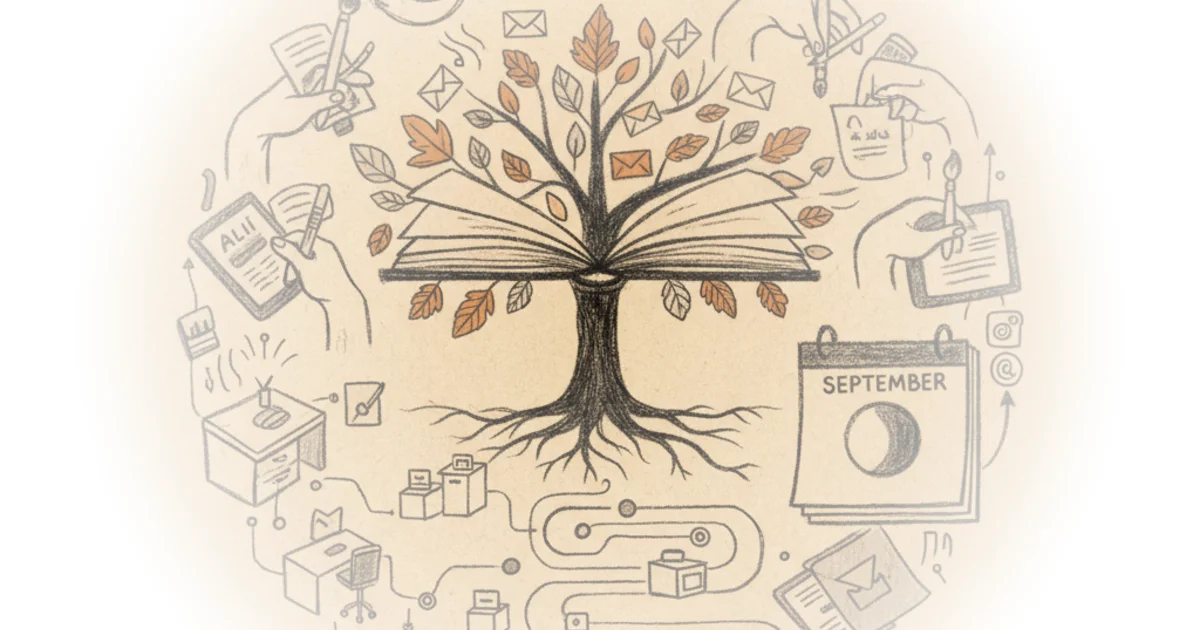
The emotional weight of this section is significant. Gerstorff writes, "Mother was my biggest fan. She showed up to all my events and supported my crazy ideas. I miss her so much!" By placing this personal vulnerability alongside business logistics, she humanizes the indie author experience in a way that pure business advice cannot. Critics might argue that relying on local, physical events is an outdated strategy in a digital-first world, yet Gerstorff's integration of these events with digital promotion suggests a hybrid model that is more resilient than either approach alone.
She highlights the importance of physical spaces, mentioning local gatherings like the "James Dean Festival" and the "Jonesboro River Rally" as opportunities for connection. Her observation that "we are having our second planning meeting this month" regarding a new bookstore underscores a shift from individual hustle to collective infrastructure. This is a crucial distinction; the argument here is that the most effective marketing for independent creators is often the community itself, not a paid advertisement.
"Indie publishing is hard, but it’s so rewarding! For all the authors out there, my advice is keep going and keep writing. The world needs your story!"
The Mechanics of the Craft
The piece then pivots to a detailed feature on Marissa Malson, using her journey to deconstruct the myth of the "overnight success." Gerstorff presents Malson not just as a novelist, but as a case study in the necessity of education and team building. Malson's admission that self-publishing was her choice due to her marketing background, yet she still faced steep learning curves, validates the complexity of the modern publishing landscape.
Malson notes, "Self-publishing was always my first choice... But the most challenging part was all of the learning involved." She details the hours spent researching editors, platforms like Amazon KDP and IngramSpark, and building an Advance Reader Copy (ARC) team. Gerstorff uses this to argue that the barrier to entry for indie authors is no longer access to a publisher, but the sheer volume of administrative and technical knowledge required to navigate the ecosystem. This is a vital insight for busy readers: the "indie" label does not mean "easy" or "unregulated," but rather "self-managed."
The commentary on Malson's creative process further reinforces the value of persistence. Malson explains that the idea for her debut novel, The Not So Average Life of Average Jane, came after yoga when "I heard this voice in my head, which was the prologue of the book, and it would not leave me alone." Gerstorff frames this as the spark, but emphasizes that the fire was built through discipline, including a certificate program in Editing and Publishing from UCLA Extension.
A counterargument worth considering is whether the sheer volume of resources required—editors, designers, marketing teams—creates an uneven playing field where only those with significant capital can succeed. However, Malson's emphasis on building a "trusted team" rather than hiring expensive agencies suggests a more accessible path. She advises, "Whether you are pursuing traditional or indie publishing I would say it’s so important to build your own team... give yourself wayyyyy more time than you think you need."
Gerstorff also highlights the practical value of Malson's work, noting that she created a guide to help others avoid the same pitfalls. This reciprocal exchange of knowledge is presented as a cornerstone of the indie ecosystem. As Malson puts it, "The most valuable lesson I’ve learned is the importance of having a trusted team around you... your editor and your designer are your most important teammates."
Beyond the Book: New Voices and Ethical Frontiers
The coverage expands beyond fiction to include non-fiction releases that address leadership, habits, and the ethical implications of artificial intelligence. Gerstorff introduces Mel Rosenthal's Curious Leadership and her upcoming work on dementia, framing the latter as a deeply personal exploration of loss: "The truth is, that’s hard to answer... It’s a book about missing a parent who is still alive." This reframing of the narrative around dementia from a medical condition to a relational experience is a powerful editorial choice that elevates the book's significance.
Similarly, the inclusion of Karen Smiley's Everyday Ethical AI addresses a topic of immense contemporary relevance. Gerstorff positions Smiley not as a technocrat, but as a guide for the non-expert, noting that the book "cuts through the hype and shows how AI affects our daily lives." This is a critical intervention in a field often dominated by jargon and fear-mongering. Smiley's mission to make AI "understandable (and safe) for the rest of us" is presented as a necessary democratization of technology.
The piece also touches on the intersection of creativity and technology, with a lighthearted anecdote about using AI to create "proffee" (protein powder and coffee). While seemingly trivial, this moment serves to normalize the use of AI tools for mundane tasks, suggesting that the technology is most effective when it supports, rather than replaces, human creativity. Gerstorff's inclusion of this detail balances the heavier themes of grief and ethical responsibility, reminding the reader that the creative process is also about play and experimentation.
"You can write!"
This quote, attributed to Erma Bombeck and cited by Malson, serves as the emotional anchor of the entire piece. It is a simple affirmation that Gerstorff uses to tie together the disparate threads of the newsletter: the grief of loss, the struggle of learning, and the joy of creation. It is a reminder that the most complex systems of publishing and marketing ultimately rest on the fundamental belief in the writer's voice.
Bottom Line
Kathy Gerstorff's commentary succeeds by stripping away the hype of the publishing industry to reveal the human machinery underneath: the grief, the learning curves, and the essential need for community. Its greatest strength lies in its refusal to treat indie authorship as a solitary grind, instead presenting it as a collaborative, seasonal endeavor. The piece's vulnerability is its heavy reliance on local, physical events, which may feel less scalable to a purely digital audience, yet this very limitation underscores the piece's core thesis: that connection, not just content, is the currency of success. Readers should watch for how these local models of community building evolve as the digital landscape shifts, particularly as AI tools become more integrated into the creative workflow.