Cory Doctorow introduces a biological metaphor to explain why every major technology platform is converging on the same predatory model, regardless of their original mission or leadership. The piece argues that market incentives and weak regulation are forcing companies into a single, oppressive shape—a process he dubs 'technocarcinization'—making the distinction between 'privacy-focused' and 'open' tech increasingly irrelevant.
The Crab Trap
Doctorow begins by defining carcinisation, the biological phenomenon where unrelated species independently evolve into crabs because that body plan offers a distinct survival advantage. He then applies this to the digital economy, observing that "every tech company turns into Facebook." For years, analysts categorized platforms on a grid measuring 'control freakishness' against 'surveillance.' Google was once the surveillance-heavy but low-control option, while Apple prided itself on control without spying. Doctorow notes that this framework is collapsing as both giants migrate toward maximum intrusion and restriction.
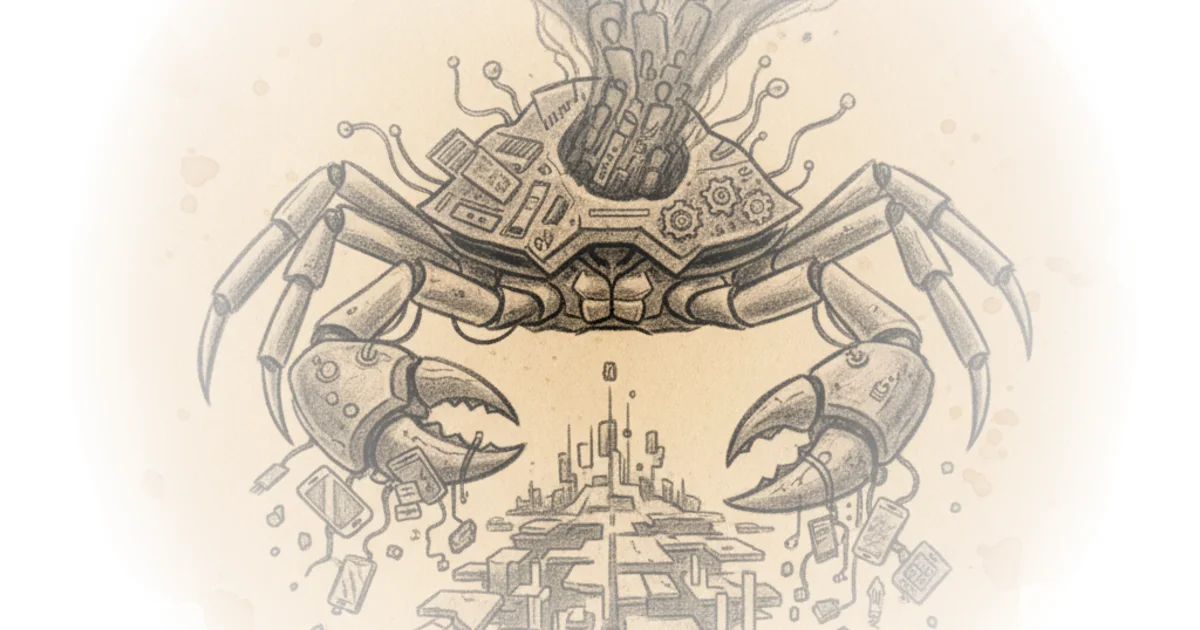
The author points to specific policy shifts to prove the convergence. He writes, "Apple is no longer the company that protects you from surveillance – they're the company that spies on you," citing their implementation of ad-targeting systems previously reserved for open platforms. Even more jarring, he highlights how Apple's strict control mechanisms have blocked apps designed to protect vulnerable populations, such as ICE Block, which warned users of immigration enforcement raids. "Apple declared ICE mercenaries to be a 'protected class'," Doctorow observes, illustrating how platform governance can actively shield state violence under the guise of terms-of-service enforcement.
Pay, don't pay: companies will productize anyone they can.
Google's trajectory mirrors this descent. Once a gateway to the open web, the company is now building walls around search results and attempting to disable user-installed privacy tools like ad-blockers through secure hardware protocols. Doctorow describes their new strategy as "harvesting the open web and then eating the seed corn," effectively trapping users inside their own ecosystem. Critics might argue that these changes are driven by legitimate security concerns or user experience improvements, but the evidence suggests they primarily serve to eliminate competition and increase data extraction.
The Policy of Predation
The core of Doctorow's argument is that this shift is not a result of bad leadership, but rather a rational response to an "enshittogenic policy environment." He contrasts Mark Zuckerberg, whose personal whims drive Facebook, with the "bloodless business sociopaths" running Apple and Google. Despite their different management styles, all three companies are adopting identical anti-consumer practices because the regulatory landscape rewards such behavior.
He explains that control allows platforms to block competing products and extract junk fees, while surveillance enables wage suppression and predatory pricing. The result is a system where "the most fit organism for a landscape without consequences is a zuckerbergian techno-crab." This framing effectively shifts blame from individual CEOs to the structural incentives of the market. If regulations punished enshittification rather than rewarding it, these companies would not need to evolve into crabs to survive.
Doctorow suggests that free and open-source software remains the only viable alternative, as it operates in a quadrant of low surveillance and low control. He urges readers to consider reviving older hardware with Linux, noting that "with RAM and storage prices through the ceiling and OSes growing ever-more bloated with AI and spyware," the cost of switching is lower than ever.
Bottom Line
Doctorow's strongest contribution is reframing corporate malfeasance as an evolutionary inevitability driven by policy failures rather than moral failings. The argument's vulnerability lies in its reliance on open-source adoption as a mass-market solution, which may overlook the usability barriers for average consumers. However, the diagnosis of the problem—that without structural change, all platforms will inevitably converge on maximum extraction—is a compelling warning for anyone navigating the modern digital landscape.