The AI boom promises a revolution in computation, but Energy Bad Boys warns that the energy grid is facing a potentially catastrophic miscalculation. The piece argues that we are witnessing a repeat of history's most expensive forecasting errors, where utilities build power plants for demand that never arrives, leaving ordinary households to foot the bill for "stranded assets."
The Illusion of Certainty
The core tension in this analysis is between the explosive rhetoric surrounding artificial intelligence and the gritty reality of grid planning. Energy Bad Boys reports that while narratives suggest data centers will "devour gigawatts of power," the actual materialization of these projects is far from guaranteed. The editors highlight a dangerous incentive structure: utilities have historically been motivated to overestimate load growth to justify massive buildouts, only to leave behind unused infrastructure when reality sets in.
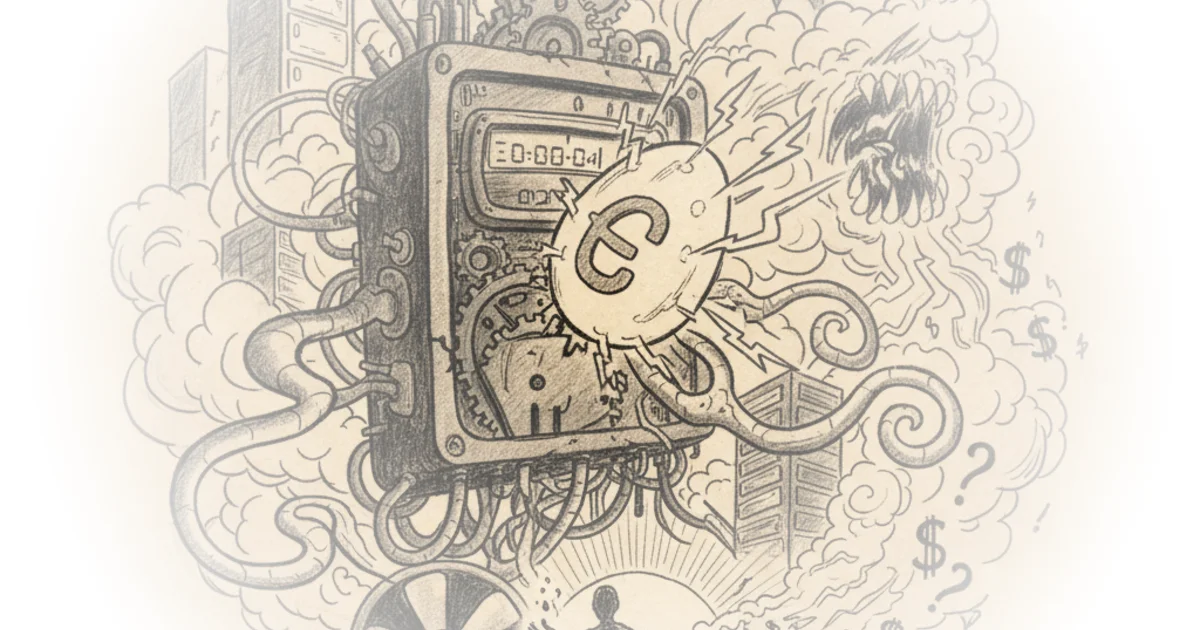
The stakes are incredibly high. If planners bet on the hype and lose, the financial fallout is severe. As Energy Bad Boys notes, "Overestimating growth can lead to overbuilding and stranded costs; while underestimating it can cause reliability shortfalls and congestion." This dilemma forces a choice between two expensive errors, yet the current trend leans heavily toward the former. The piece points out that load growth forecasts for 2025 are now dominated by data centers, with some projections suggesting electricity usage could increase at an annual rate of "5.7% per year over the next five years." That figure would shatter historical norms going back to the 1970s.
However, the argument gains strength when it pivots from theory to recent data corrections. The editors note that Georgia Power recently cut its projected load additions by 6 gigawatts in a single quarter, with staff observing that projects were "primarily underperforming expectations due to a mixture of lower materialization rates, project cancellations, and delays." This isn't just a theoretical risk; it is already happening.
A request for power is not the same thing as a future megawatt. And when utilities build ahead of load that never shows up, ratepayers are often left paying for the mismatch.
Critics might argue that the sheer momentum of AI development makes these cancellations temporary blips rather than structural failures. Yet, the evidence suggests otherwise. Local opposition, permitting hurdles, and new regulatory tariffs in places like Ohio have already caused interconnection requests to plummet from 30 gigawatts to 13 gigawatts in a single year.
The Load Factor Trap
Beyond whether data centers get built is the question of how much power they actually use once operational. This is where the concept of "load factor"—the ratio of actual energy used to maximum possible usage—becomes critical. Energy Bad Boys explains that utilities often plan for these massive facilities to operate at an 80% to 90% load factor, a figure that dwarfs the national grid average of roughly 55%.
The piece argues this assumption is dangerously optimistic. Citing analysis from E3, the editors note that "less than half of all data centers in the country reach an 80 percent load factor, and only two reached above 90 percent." When you apply a lower, more realistic usage rate to utility projections, the gap between planned capacity and actual need widens dramatically. For instance, if Duke Energy's projected large-load customers operate at 67% instead of 90%, the required firm load drops by over 1,300 megawatts in that region alone.
This discrepancy echoes a painful chapter in energy history. Energy Bad Boys draws a parallel to the 1970s and 80s, when utilities projected 7% annual growth based on "assumption drag" that failed to account for rising prices and industrial restructuring. The result was billions in wasted capital and plants abandoned mid-construction. As the editors state, "Utilities committed billions toward new generating resources before the reality of diminishing load growth caught up... Economic losses totaled in the hundreds of billions."
If data center projections miss badly, we could be in for a repeat.
The historical context here is vital. Just as the industry once failed to adjust to the efficiency gains and economic shifts of the late 20th century, it now risks failing to adjust to the volatility of AI project pipelines. The editors suggest that without "verified baselines" and "adaptive mechanisms," the grid is vulnerable to a new wave of stranded assets where ratepayers are forced to cover the costs of unused capacity.
A Path Forward
The article concludes by questioning whether the current regulatory model can handle this volatility. If the public perceives data centers as a net-negative that drives up bills without delivering local benefits, political support for grid expansion will erode. Energy Bad Boys points to a proposed solution: Consumer-Regulated Electricity (CRE). This framework would allow privately financed, off-grid utilities to serve new industrial customers under voluntary contracts, effectively "resolving a central tension in today's electricity policy: how to welcome new industrial investment without socializing its costs."
While this approach offers a way to insulate the broader public from speculative risk, it raises questions about equity and grid stability. Could fragmenting the grid lead to reliability issues for those left on the traditional system? The piece doesn't fully resolve these concerns but correctly identifies that the status quo—where everyone pays for potential booms that might never happen—is unsustainable.
Bottom Line
Energy Bad Boys delivers a necessary corrective to the AI energy hype, grounding speculative projections in hard data about project cancellations and historical forecasting failures. The argument's greatest strength is its insistence that "a request for power is not the same thing as a future megawatt," a distinction that could save ratepayers billions if regulators finally prioritize verified baselines over optimistic narratives.