Brandon Taylor challenges a comfortable hypocrisy at the heart of modern pop culture: we cheer for fictional rebels destroying an evil empire while refusing to apply that same moral framework to real-world resistance movements. By juxtaposing the May 4th celebration of Star Wars with the Nakba and the ongoing catastrophe in Gaza, Taylor exposes a selective empathy that allows audiences to enjoy "revolution" only when it is sanitized by distance and fantasy. This is not a review of a movie; it is an indictment of a political imagination that has forgotten its own stories.
The Cycle of Empire
Taylor begins by dismantling the notion that Star Wars is merely escapist fun, pointing out the deliberate structural parallels between the franchise and historical cycles of democracy turning into dictatorship. He notes that the narrative is not a straight line of victory but a tragic loop: "a macrocosmic democracy exists, an empire rises to power in the face of war, a plucky rebellion defeats the oppressors, the rebellion evolves into a galaxy-wide power structure, and the cycle repeats." This observation reframes the entire saga from a simple good-versus-evil battle into a cynical commentary on the inevitability of institutional corruption.
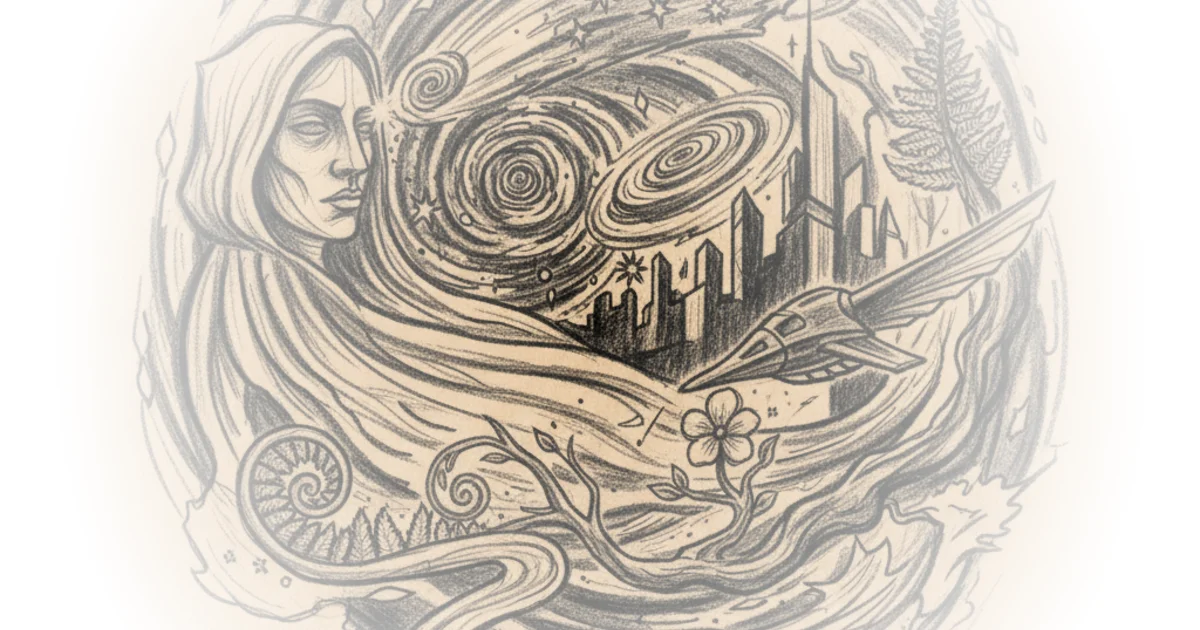
The author anchors this analysis in the real-world trajectory of the franchise's creator, George Lucas. Taylor writes, "What I was trying to do was stay independent so that I could make the movies I wanted to make. But now I've found myself being the head of a corporation. . . . I have become the very thing that I was trying to avoid." This irony is not just a footnote about Hollywood; it serves as a meta-narrative warning about how revolutionary movements can calcify into the very power structures they sought to dismantle. While some might argue that applying such heavy political weight to a children's franchise is a stretch, Taylor insists that the art demands it, noting that "all art is political" and that if a story feels apolitical, it is likely because it reinforces the status quo.
All art is political in that it is either revolutionary or it is functioning to reinforce the political status quo.
The Vietnam Shadow
The piece's most potent argument lies in its recovery of the Star Wars franchise's origins as an allegory for the Vietnam War. Taylor reminds readers that the "plucky rebellion" was explicitly modeled on the idea of "a tiny nation could overcome the largest military power on Earth," a direct reference to the conflict in Southeast Asia. He cites Lucas's own admission that the Emperor was modeled on Richard Nixon, a politician who "subverted the senate and finally took over and became an imperial guy."
This historical context makes the current refusal to connect these dots even more jarring. Taylor argues that while fans readily accept the World War II parallels—the "Stormtrooper's modified UK Sterling submachine guns" and the "tall fascist in the black gas mask"—they recoil from the Vietnam or Palestinian connections because those narratives implicate American foreign policy. "It's much harder to divorce any thematic connections to Vietnam and Palestine from criticism of the United States empire," Taylor observes. He suggests that the discomfort stems from a reluctance to see the United States cast as the "evil empire" in a story, a role the franchise was originally designed to play. Critics might argue that Star Wars has evolved beyond its 1970s origins, but Taylor counters that the core DNA of the story remains tied to the anti-imperialist sentiments of that era.
The Hypocrisy of Resistance
The emotional core of the commentary arrives when Taylor confronts the dissonance between fictional and real-world resistance. He asks the uncomfortable question: "Why do we applaud the destruction of the Death Star, a literal Imperial machine, but decry Palestinian resistance against Israeli oppression?" He points to the character of Cassian Andor, who admits, "We've all done terrible things on behalf of the Rebellion. Spies, saboteurs, assassins," yet remains a moral hero in the narrative.
Taylor argues that this narrative permission is denied to real people fighting against occupation. He highlights the human cost of this disconnect, noting that "nearly half of Palestine's population is children, kids who should be watching fun movies and not fighting to survive." The author suggests that the refusal to believe in the morality of real-world resistance is a failure of empathy, not a failure of logic. "Do we only believe art when it's romanticizing the past (or the future) and not when it applies to the present?" he asks. This framing forces the reader to confront whether their moral compass is broken or simply selective.
Do we just watch Star Wars because it looks cool? I refuse to let the art I consume remain static in the aesthetic.
The piece concludes by drawing a line from the fictional galaxy to the current student encampments across the United States, suggesting that the "reminiscence of current protests to those in Kent State 54 years ago" is undeniable. Taylor posits that the "imperialists" of today are no different from the "large technological empire" of the films, and the "resisting people" are the diverse, marginalized groups fighting for survival.
Bottom Line
Brandon Taylor's argument is a necessary, if uncomfortable, correction to the way we consume political fiction, forcing a confrontation with the reality that our favorite stories were built on the very conflicts we now refuse to acknowledge. The piece's greatest strength is its refusal to let the reader off the hook with the excuse that "it's just a movie," while its vulnerability lies in the risk of alienating fans who feel their enjoyment is being weaponized. Ultimately, the question remains: if we cannot believe in the rebellion of the galaxy far, far away, can we truly believe in the resistance of our own world?