Laura Rozen captures a rare cultural moment where a major literary voice refuses to treat digital addiction as a personal failing, reframing it instead as a structural assault on human consciousness. By anchoring her analysis in a conversation between Zadie Smith and David Remnick, Rozen highlights a provocative thesis: the modern internet is not a neutral tool but a sophisticated mechanism of "mind control" that has rendered six hours of daily screen time for children a form of radicalization. This is not just a critique of social media; it is a call to recognize that our attention has been colonized by economic interests that profit from our inability to look away.
The Illusion of Neutrality
Rozen draws our attention to Smith's insistence that the digital landscape was never the neutral playing field it claimed to be. "Something that is colonizing your attention, manipulating the way it's directed, is not neutral," Smith asserts, dismantling the comforting myth that technology is merely a passive vessel for our choices. Rozen notes how Smith contrasts the "crayons on paper" propaganda of the 1930s with the terrifyingly advanced capabilities of modern billionaires, specifically noting that Nazi tools were primitive compared to "what a man like Elon Musk now has at his disposal." This comparison is jarring, yet it serves to elevate the conversation from mere annoyance with algorithms to a serious inquiry into authoritarianism.
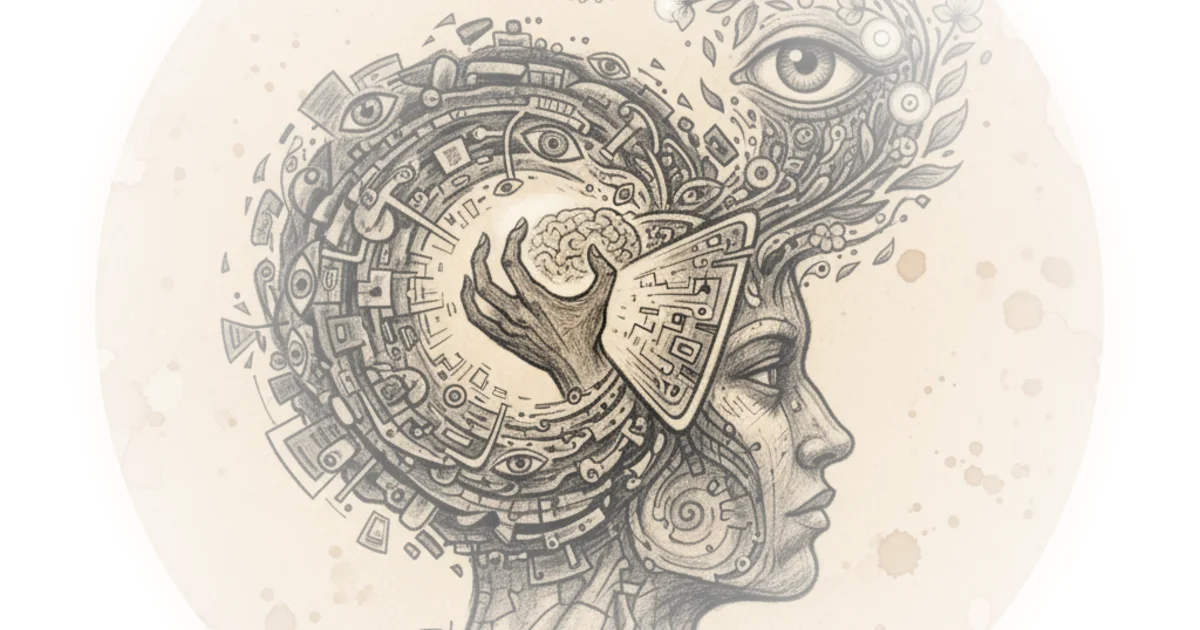
The author's framing is particularly effective because it shifts the blame from the individual to the architect. Smith argues that people are "absolutely natural and normal" to be offended by the idea of manipulation, yet we have spent years "trying to bat away that idea, calling it a moral panic." Rozen highlights how this deflection allows the structural context to remain invisible. By treating attention as a moral failing rather than a resource being extracted, society ignores the "enormous economic advantage" gained by those who design the traps. Critics might argue that this view underestimates human agency and the genuine utility of digital connection, but Smith's point remains that the scale of manipulation has outpaced our ability to resist it individually.
"If you now find it normal for your child, for example, to look at a screen for up to six hours a day, you have been radicalized. You've been radicalized in the idea of what is normal and sane and healthy for a human consciousness to be occupied with."
The Slow Food Movement of Writing
Rozen also explores Smith's personal strategy for resistance: a deliberate withdrawal from the "daily diet of constant information." Smith describes herself as "basically living in 2003" regarding her media diet, a choice that allows her to function as "the slow food movement of writing." This section of the commentary is vital because it offers a tangible alternative to the doom-scrolling that defines so much of modern political discourse. Smith explains that she does not feel obliged to "respond to the political outrage of the moment," not because she lacks outrage, but because she is considering "individual human capacities and what a human brain is designed to take in."
This approach challenges the assumption that constant engagement equals civic virtue. Rozen points out that Smith's refusal to participate in the immediate cycle of outrage is not an escape from reality, but a method to preserve the cognitive space necessary for deep thought. The argument suggests that the speed of the digital age is incompatible with the slowness required for genuine understanding. While some might view this withdrawal as a privilege unavailable to those whose livelihoods depend on real-time reaction, Smith's stance forces a re-evaluation of what constitutes a healthy relationship with information.
A Path to Freedom
The piece concludes with Rozen highlighting a surprising note of optimism from Smith, who believes that the tide is turning. Smith suggests that to "seriously damage the billionaire empires that have been built on your attention," the most powerful tool available to young people is simply to "look away." Rozen captures the essence of this argument: the solution lies not in better algorithms or more regulations alone, but in a collective withdrawal of consent. Smith predicts that people will eventually demand regulations because "people want to go towards joy and freedom, and I don't think that is joy or freedom."
This final pivot from diagnosis to hope is the piece's strongest element. It moves beyond the paralysis of realizing we are being manipulated to the empowerment of realizing we can stop the machine by starving it of our attention. The argument holds that the current state of affairs is not inevitable, but a choice that can be unmade.
Bottom Line
Rozen's commentary on Smith's insights delivers a powerful verdict: the crisis of attention is a political and economic issue, not a personal one, and the path to freedom requires a collective reclamation of our cognitive autonomy. The argument's greatest strength is its refusal to let individuals bear the full weight of a systemic design flaw, though it risks underestimating the difficulty of breaking addiction in an environment engineered to prevent it. Readers should watch for how this cultural shift toward "looking away" translates into tangible policy changes regarding digital regulation and child safety.