Matt Stoller delivers a piercing diagnosis of a political party that has lost its way, arguing that the Democratic establishment is dangerously out of sync with a public that is furious about corporate extraction. While most political analysis focuses on personality clashes or election strategy, Stoller identifies a structural blindness: the party's elite machinery refuses to see corporate power as the root of the affordability crisis, even as voters are screaming for it to be addressed.
The Anger Gap
The piece opens with a stark reality check on the American mood. Stoller notes that "Americans are extremely angry about corporate power," citing polling that shows views of big business at a 15-year low. He points to the visceral nature of this rage, noting that "people increasingly feel that too many aspects of their lives are out of their control and that they are helpless to address the issues confronting them." This isn't abstract dissatisfaction; it is a reaction to tangible economic pain. Stoller highlights that "corporate profit margins are at a record high" while costs for essentials like veterinary care and youth sports have skyrocketed. The argument here is that the economic model has shifted from innovation to extraction, a point that resonates with the historical context of the Gilded Age, where similar concentrations of wealth led to the original antitrust movements.
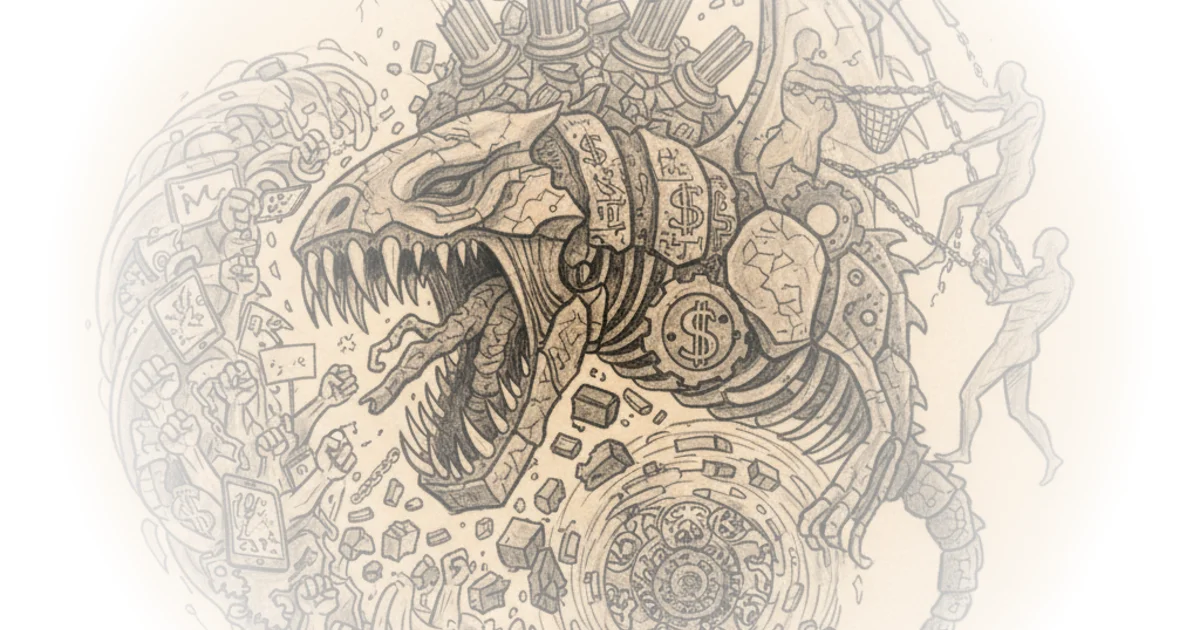
What makes Stoller's framing particularly effective is his ability to connect disparate political events into a single narrative of voter alienation. He describes how local candidates like Zohran Mamdani in New York and Graham Platner in Maine are surging by focusing directly on high prices and anti-merger sentiment. Stoller writes, "There's a reason for this populist rage," linking it to a two-decade pattern where voters have repeatedly "thrown the bums out" when leaders fail to address economic insecurity. This historical continuity suggests that the current moment is not a fluke but a structural correction.
"Corporate power just isn't there" in the minds of much of the Democratic Party leadership, despite it being the central issue for their voters.
The Progressive Break
Stoller identifies a crucial fracture within the party, separating a progressive faction that is finally waking up from an entrenched elite that remains asleep. He celebrates the shift among figures like Senator Elizabeth Warren, who called a potential Netflix-Warner merger an "anti-monopoly nightmare," and Bernie Sanders, who argued it shows "oligarch control is getting even worse." Stoller observes that "the progressive faction of the party, after a long period of loose alignment with corporate America on social questions, is breaking with the oligarchs." This is a significant departure from the post-Obama era, where progressives often prioritized cultural alignment with tech and media giants over economic regulation.
However, Stoller is quick to temper this optimism with a sobering look at the party's infrastructure. He argues that the "bureaucratic machinery of the party" remains deeply divided, with many leaders actively ignoring the problem. He points to the appointment of Silicon Valley-friendly Democrats to a new AI task force and the embrace of slogans like "strong floor no ceiling"—a phrase championed by venture capitalist Oliver Libby. Stoller critiques this slogan sharply, noting that "the term 'no ceiling' is about ensuring that America has billionaires." This reveals a fundamental ideological clash: the leadership believes unlimited wealth creation is a public good, while the base sees it as the source of their suffering.
Critics might argue that the party's hesitation stems from a pragmatic fear that attacking corporate power alienates moderate swing voters who still view big tech as a source of innovation. Stoller counters this by pointing out that the public's view of tech has fundamentally shifted. "Tech titans used to make cool stuff, but you can only replace the iPhone with something virtually identical so many times before you lose the innovation brand," he writes. The era of the benevolent billionaire is over; the public now sees them as extractors.
The Institutional Blind Spot
The most damning part of Stoller's analysis is his comparison of the current moment to the Iraq War era. He draws a parallel between the Democratic leadership's denial of public opposition to the war and their current denial of public opposition to corporate consolidation. "I've only seen this kind of jarring distance between elected political leaders and voters one other time, during the war in Iraq," Stoller writes. He notes that just as Joe Lieberman lost his primary for being out of step on the war, the party now risks losing its soul by ignoring the affordability crisis. The leadership, he suggests, operates on outdated assumptions. "Chuck Schumer still imagines America as it was in 1980, when he first became a Congressman," Stoller asserts, highlighting how the party's institutional memory is stuck in a pre-crisis era.
Stoller attributes this blindness to a deeper ideological issue within modern liberalism. He argues that the party has developed a "cult of powerlessness," where the idea of using the state to structure the economy is viewed as "grubby or venal." Instead, they venerate experts and elites, believing that market forces are more legitimate than democratic action. This ideological framework prevents them from seeing the obvious solution to the affordability crisis: breaking up monopolies and regulating corporate power. As Stoller puts it, "Modern liberalism comes out of the 1970s consumer and environmental rights movements, and it is based on anti-politics, or the idea that working together through the state to structure the rules of our economy is itself an immoral act."
"The opposition party is split into two factions, one of which makes a case for a different kind of politics, and one of which seems to ignore everything of substance."
Bottom Line
Stoller's strongest contribution is his unflinching identification of the Democratic Party's ideological paralysis regarding corporate power, framing it not as a tactical error but as a fundamental disconnect from the electorate's lived reality. The argument's greatest vulnerability lies in its potential underestimation of the political capital required to dismantle entrenched corporate interests, even with a populist mandate. Readers should watch whether the progressive faction can successfully translate this rhetorical break into concrete legislative victories before the 2026 midterms, or if the institutional inertia will once again drown out the public's demand for change.