In an era where digital footprints are treated as inevitable byproducts of modern life, this piece makes a radical claim: total digital erasure is not only possible but accessible to anyone with a USB drive. The Hated One argues that for those facing physical seizure or sophisticated surveillance, standard encryption is merely a delay tactic, not a solution. This is not a generic privacy guide; it is a manual for operational invisibility, treating the computer itself as a hostile environment that must be wiped clean after every use.
The Philosophy of Amnesia
The core of the argument rests on the concept of "amnesia." The Hated One writes, "regular operating systems are designed to store trowels of sensitive data on the hardware of your machine even with full device encryption." This framing is crucial because it shifts the reader's focus from protecting data to eliminating the very existence of data. The author posits that for high-risk users, the assumption of physical compromise is not paranoia but a necessary baseline for security.
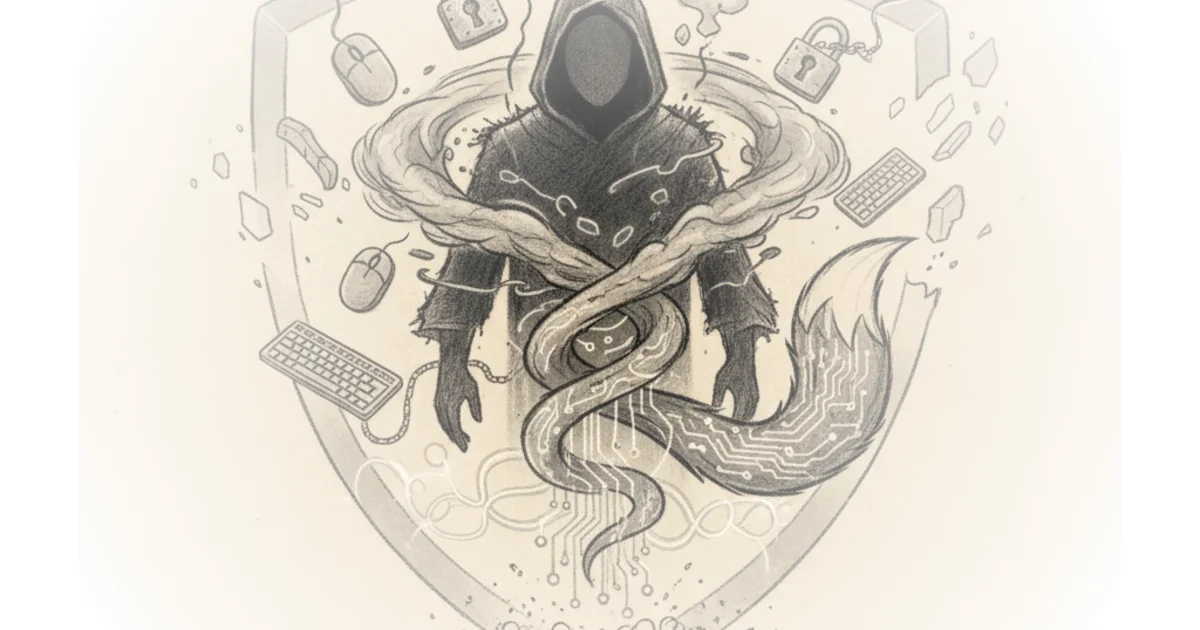
The piece introduces Tails, the Amnesic Incognito Live System, as the answer to this threat model. As The Hated One puts it, "a system that doesn't remember anything about itself a system that forensically wipes all evidence of its use immediately after a user ends their session." This is a powerful distinction. Most security tools focus on locking the door; Tails focuses on burning the house down after you leave, ensuring that even if an adversary holds the physical drive, they find nothing but a blank slate.
"Forensic eraser leaves no files on the whole system whatsoever."
The author emphasizes that this system is designed to be identical for every user, creating a "fingerprint" that matches perfectly across the globe. This uniformity is a defensive feature, making it impossible to distinguish one user from another based on software configuration. Critics might note that this "one-size-fits-all" approach can sometimes limit customization for advanced users who need specific kernel modules or hardware drivers, but the trade-off for mass anonymity is clearly intentional.
The Mechanics of Verification
Moving from theory to practice, the commentary shifts to the critical importance of verification. The Hated One stresses that the tool is useless if the installation itself is compromised. "Choose your own method but don't skip verification completely otherwise you have to blindly trust your tails isn't compromised," the author warns. This is a vital lesson in operational security: trust is the enemy of security.
The piece details several methods, from simple JavaScript checks to complex OpenPGP signature verification. The Hated One notes that while JavaScript verification is user-friendly, "an attacker would have to perform a manual middle attack or compromise tells website or servers corporately." For those facing advanced adversaries, the author recommends the more rigorous OpenPGP method, explaining that it involves importing signing keys and checking for a "good signature from tails developer." This section is dense but necessary, as it demystifies the cryptographic processes that usually intimidate non-technical users.
The author also addresses the practical hurdles of hardware compatibility, acknowledging that "linux in general is not the best friends with wi-fi cards." This honesty about technical friction adds credibility to the guide. Rather than promising a seamless experience, the author prepares the reader for potential connectivity issues and suggests workarounds like Ethernet cables or specific USB adapters. This pragmatic approach ensures that users are not caught off guard when their hardware doesn't cooperate.
Operational Security and Persistence
The final section of the piece tackles the delicate balance between convenience and security, specifically regarding persistent storage. The Hated One explains that while users can create an encrypted partition to save files, "an adversary holding your usb drive wouldn't be able to read your data but it will see there is an encrypted partition and might force you to reveal your password." This is a sobering reminder that encryption protects content, not the mere existence of secrets.
The author advises caution, stating that Tails only recommends activating personal data persistence for beginners. This guidance highlights a fundamental truth of security: the more you save, the more you risk. The piece concludes by reiterating that Tails is not a daily driver for convenience but a specialized tool for high-stakes scenarios. "This isn't the most convenient daily driver but it definitely ups your base security level significantly," The Hated One writes, summarizing the trade-off perfectly.
"If your life depends on strong anonymity and security you need to acquire education and skills beyond the scope of this video."
This closing caveat is perhaps the most important part of the entire piece. It sets boundaries, acknowledging that a tutorial cannot replace professional security training. It frames the tool as a starting point for education rather than a magic bullet, a distinction that responsible security guides must make.
Bottom Line
The strongest part of this argument is its uncompromising stance on the necessity of total data erasure for high-risk individuals, effectively challenging the notion that encryption alone is sufficient. Its biggest vulnerability lies in the steep learning curve of proper verification and the hardware limitations that can frustrate even diligent users. Readers should watch for updates to the Tails project, as the threat landscape evolves rapidly, but the fundamental principle of "amnesic" computing remains a critical pillar of digital self-defense.