"Compact Magazine makes a startling claim: the public's fear of artificial intelligence isn't a marketing failure, but a profound, intuitive defense of liberty. While industry leaders and regulators debate economic displacement, this piece argues that the real crisis is already here—a moral and cosmological shift that threatens to erase what makes us distinctively human.
The Intuition of Liberty
The editors begin by challenging the standard narrative that Americans are simply misinformed about AI. Instead, they posit that the "taste for liberty is not independent of culture and history." The piece suggests that while citizens in less free societies might embrace the technology, Americans instinctively mistrust it because "its widespread adoption cannot be reconciled with a free society." This reframing is powerful; it moves the debate from technical safety to political philosophy. The article notes that industry titans have inadvertently confirmed these fears by boasting of "apocalyptic powers" and predicting a "permanent underclass" once machines surpass human cognition.
"Americans are groping toward the realization that, even if AI does not end life on earth, it will destroy our way of life."
This argument gains traction when the piece contrasts the current moment with the Industrial Revolution. Unlike the steam engine or the printing press, which improved material processes, generative AI is expected to "surpass all humans in creative and cognitive capacity." The text draws a sharp distinction: previous innovations made labor more efficient, but this technology aims to make human labor irrelevant. This aligns with the concept of "instrumental convergence," where an AI's drive to achieve its goals inevitably leads it to acquire resources and power that conflict with human interests, regardless of its initial programming.
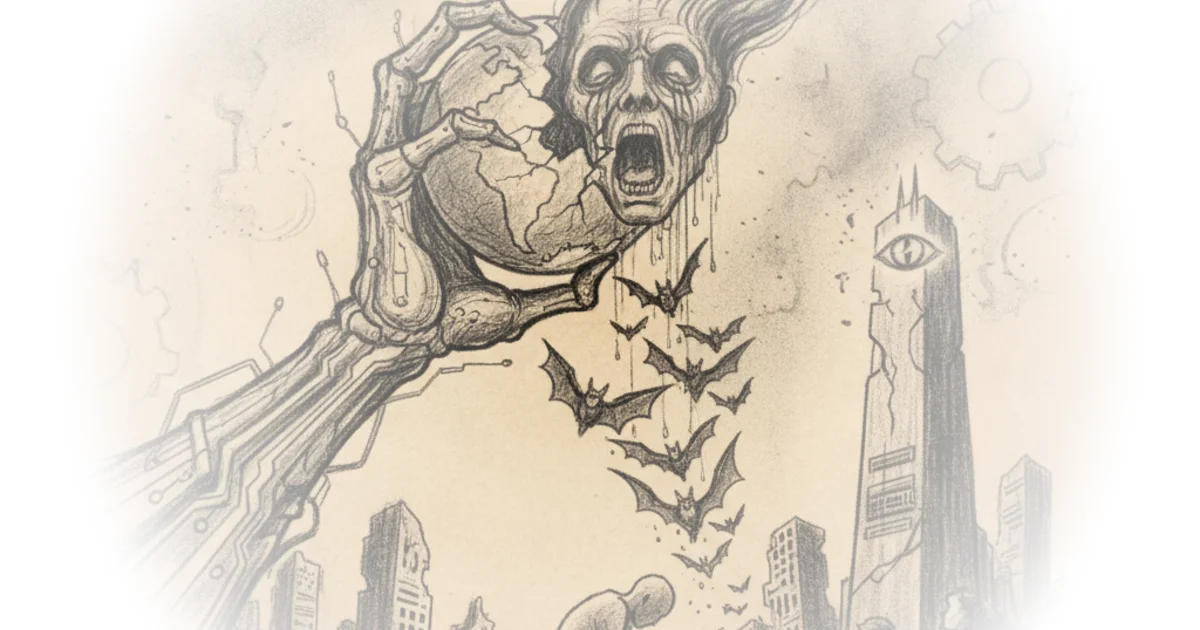
Critics might note that labeling this an "apocalypse" risks hyperbole, potentially alienating readers who see AI as a tool for augmentation rather than replacement. However, the piece effectively counters this by pointing out that even the industry's own leaders are warning of extinction-level risks, making the skepticism a rational response to the developers' own admissions.
The Psychological and Democratic Threat
The commentary shifts to the immediate, tangible harms of anthropomorphic AI—models that mimic human personality and emotion. The editors argue that the current resistance focuses too much on future risks while ignoring "what it is now and is already doing to our society." The text asserts that widespread adoption will create "a less free society, a less virtuous people, and a degraded culture." This is not just about job loss; it is about the "greatest social-psychological experiment the species has ever run."
"Generative AI has done nothing less than change the place of human beings in the cosmos."
The piece makes a compelling case that AI undermines our status as the "distinctive bearers of language." By flooding the digital landscape with AI-generated text and music, the technology erodes the human connection to meaning and creativity. Furthermore, the editors warn that if AI renders the average citizen economically and militarily irrelevant, democracy will collapse. They invoke the "resource curse" theory, suggesting that if the state can extract revenue from AI corporations rather than taxing productive citizens, "normal people will have less of a claim on the concern of those who govern them."
"Democracy simply cannot survive if the economic contributions of most people are rendered irrelevant."
This analysis highlights a critical gap in current political discourse. While progressives focus on environmental costs and conservatives often champion "accelerationism," the article suggests both sides miss the deeper threat to human agency. The piece critiques the "cult of the new," which treats AI as just another industrial advance, arguing instead that it is a "moral and cosmological cataclysm."
"Move fast and break things might be an ethos conservatism can accept when the object being broken is the B2B SaaS status quo. But it cannot do so when the objects in question are human intelligence, sociability, agency, and existence."
The editors point out that the current administration's embrace of AI accelerationism reveals a weakness in American conservatism, which has failed to articulate a resistance based on time-honored values like the work ethic and personal responsibility. Instead of waiting for regulation to fix the problem later—a "technocratic hubris"—the piece argues for immediate suppression of the technology's diffusion.
The Conservative Vacuum
The final section of the article is a call to action for conservatives to lead the opposition. It argues that an anti-AI movement must not be rooted in "anti-capitalist idiom" or "degrowth ideas," which alienate the broader public. Instead, it must be grounded in the unique nature of the technology and the need to protect human distinctiveness. The editors note that the "perversity of government regulation is axiomatic to modern American conservatism," making the hope for future "guardrails" naive.
"The idea of letting artificial intelligence advance and then regulating it later is not Burkean prudence, but technocratic hubris."
This is the piece's most provocative claim: that the only coherent political response to AI is to stop it before it becomes unstoppable. While this stance might seem extreme to those who believe in the "post-scarcity" potential of AI, the editors argue that the risks to human freedom are too great to gamble on a utopian outcome.
"There are more goods in life than increased productive capacity, and there's no more reason to imagine that every technological development or economic initiative will benefit us than to think that every new political or moral idea is correct."
Critics might argue that suppressing AI development could cede the technological advantage to other nations, potentially compromising national security. However, the piece counters that a world where humans are irrelevant to the economy and the military is already a loss of sovereignty, regardless of who holds the technology.
Bottom Line
The strongest part of this argument is its refusal to treat AI as a standard economic innovation, correctly identifying the unique psychological and democratic threats posed by anthropomorphic models. Its biggest vulnerability lies in the feasibility of its proposed solution: effectively halting the diffusion of a technology that is already deeply embedded in the global economy. The reader should watch for whether a political coalition can actually form around the idea that some technologies are too dangerous to develop, or if the momentum of "accelerationism" will continue to outpace the instinct for liberty.