Tim Mak's reporting from The Counteroffensive exposes a startling paradox in modern warfare: the front lines are no longer just defined by trenches and artillery, but by the algorithms of civilian e-commerce. While traditional military analysis focuses on tank divisions and air defense, Mak reveals how a Russian retail giant has become an accidental, yet critical, arm of the war machine, and how Ukraine is now striking at the very heart of that supply chain.
The Commercialization of Conflict
Mak constructs a narrative that challenges the sterile image of state-sponsored logistics. He introduces Issac Luna, a former U.S. Marine officer, to illustrate the stark contrast between American military procurement and the reality on the ground in Ukraine. "I went from being a major in the U.S. Marines to a basic soldier in the Ukrainian army with no pay," Luna tells Mak, highlighting a systemic gap that forces soldiers to become their own quartermasters. This personal anecdote grounds the broader strategic shift Mak is documenting: the erosion of the boundary between the civilian economy and the battlefield.
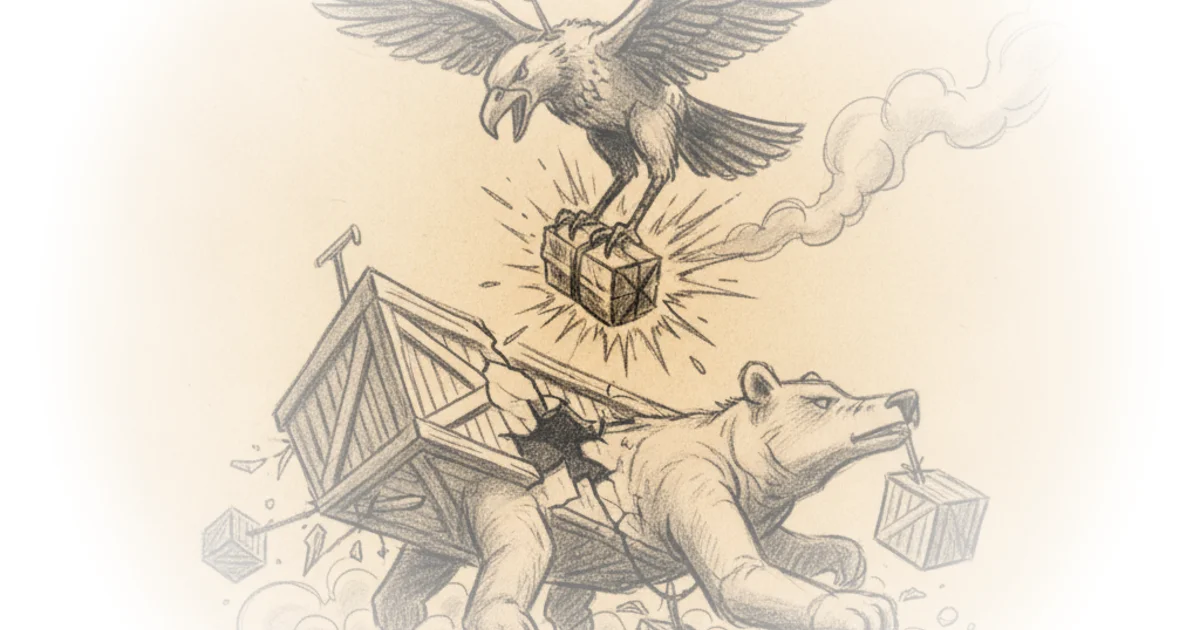
The core of Mak's argument is that Russia's official military apparatus is so inefficient that it has outsourced survival to the private sector. He details how soldiers, dissatisfied with subpar state-issued gear, turned to Wildberries, Russia's largest online marketplace, to buy everything from body armor to drone components. "I noticed that in the early days of the war, the Russians were wearing body armor that was very outdated. And now, what I see them wearing, the footage is more, like, newer and more sophisticated. Most of it is from China," Luna observes. This reliance on commercial platforms created a unique vulnerability that Ukraine has now exploited.
"No more packages — whether it's a drone or a vibrator in a purple box — are making it to Stalingrad anymore."
Mak's reporting is particularly effective in showing how the Kremlin's own propaganda machinery backfired. The platform once featured a dedicated tag labeled 'For the SMO' (the state's euphemism for the war), openly advertising military-grade items to the public. When Ukrainian drones began striking these warehouses, starting with a devastating blow to a facility in Volgograd, the tag vanished, though the inventory simply migrated to other categories. "It signaled they were a 'patriotic' company that supports the invasion," Luna notes. The strikes have hit 11 warehouses in just two weeks, targeting a logistics artery that handles 45 percent of Russia's online retail sales.
Critics might argue that targeting a dual-use commercial platform risks disproportionate harm to the civilian population, a valid concern given the nature of Wildberries' vast customer base. However, Mak counters this by emphasizing the platform's active role in the war effort, noting that the marketplace was not merely a passive victim but an active facilitator of military logistics, selling sanctioned parts and dual-use goods openly.
The Human Cost of Logistics
The report does not shy away from the human toll of these economic disruptions. Mak weaves in the stories of Russian civilians who are suddenly facing financial ruin as their businesses are incinerated in drone strikes. The strikes have caused an estimated 150 to 235 billion rubles in direct financial losses, devastating small and medium-sized enterprises that relied on the platform. "They finally realized their participation in the war had a cost when their warehouses exploded," Luna says, a line that carries a heavy, grim weight.
Mak also highlights the irony of the situation: the very consumers who supported the war through their purchases are now the ones suffering from the economic fallout. "I think it is an extraordinary strategic move for Ukraine," Luna asserts, framing the attacks not just as military necessity but as a psychological blow to the Russian home front. The strikes have reached cities far from the border, including Moscow and St. Petersburg, shattering the illusion of safety for the Russian civilian population.
Yet, the human cost is not limited to financial loss. Mak touches on the broader context of the war's brutality, referencing the ongoing Russian missile attacks on Kyiv where air defense systems failed to intercept the vast majority of incoming ordnance. While Mak focuses on the Ukrainian offensive, the backdrop of civilian suffering in Ukraine remains a constant, sobering presence. The juxtaposition of a gamer receiving a water bottle instead of a graphics card against the reality of burned ambulances in Kyiv underscores the chaotic and cruel nature of this conflict.
Strategic Implications and Future Outlook
Mak's analysis extends beyond the immediate strikes to the broader strategic implications. He suggests that these attacks are part of a larger effort to force the Kremlin to the negotiating table, particularly after unsuccessful diplomatic overtures. The destruction of Wildberries warehouses is not just about disrupting supply; it is about demonstrating that the war has no safe rear area. "For Kyiv, it is a chance to force the Kremlin to the negotiating table," Mak writes, linking the tactical success of the drone strikes to the strategic goal of ending the conflict.
However, the path forward is fraught with uncertainty. As Mak notes, the Russian government has already begun relocating warehouses to Kazakhstan to avoid further strikes, a move that will likely increase costs and disrupt the supply chain further. "Restocking the warehouses will cost up to 60 more billion rubles," he reports, highlighting the immense economic pressure mounting on the Russian state. This economic strain, combined with the military setbacks, could prove decisive in the long run.
"They finally realized their participation in the war had a cost when their warehouses exploded."
Mak's piece is a compelling reminder that in the age of modern warfare, the lines between the front line and the marketplace are increasingly blurred. By focusing on the role of civilian marketplaces, he provides a fresh perspective on how the war is being fought and won. The argument is strong, well-supported by on-the-ground reporting and expert analysis, and it offers a clear look at the evolving nature of conflict in the 21st century.
Bottom Line
Tim Mak's reporting delivers a powerful verdict: the war in Ukraine has evolved into a total conflict where civilian infrastructure and commercial markets are legitimate targets due to their direct integration into military logistics. The strongest part of this argument is the evidence of Wildberries' active role in supplying the Russian military, which justifies the strikes despite the collateral damage to civilians. The biggest vulnerability remains the ethical complexity of targeting dual-use platforms, a tension Mak acknowledges but ultimately resolves by emphasizing the strategic necessity. Readers should watch for how Russia adapts its supply chain and whether these economic blows translate into meaningful political pressure on the Kremlin.