Chris Smaje delivers a startling reframing of the current political upheaval: what looks like a return to ancient, tribal passions is actually a hyper-modern, bureaucratic centralization masquerading as populism. While most observers are busy debating the personality of the leader or the specifics of the policy, Smaje argues we are witnessing the self-destructive climax of the very liberal-managerial state it claims to oppose. This is not a story about a hero's return, but about a system cannibalizing its own foundations to serve a narrow oligarchy.
The Illusion of Strong Gods
Smaje begins by engaging with N.S. Lyons' thesis that the current era marks the end of the "long twentieth century" and the return of "strong gods"—communal identities and faith that were suppressed by the "weak gods" of liberal modernism. Smaje finds much to agree with in the critique of the postwar liberal-managerial state, noting that it was built on a "never again" mentality that often ignored the economic chaos of unbridled capitalism. However, he pushes back against the romanticization of the current political shift. He writes, "Today's populism is more than just a reaction against decades of elite betrayal and terrible governance … it is a deep, suppressed thumotic desire for long-delayed action." This captures the emotional intensity driving the movement, but Smaje warns that the form this desire takes matters more than the intensity itself.
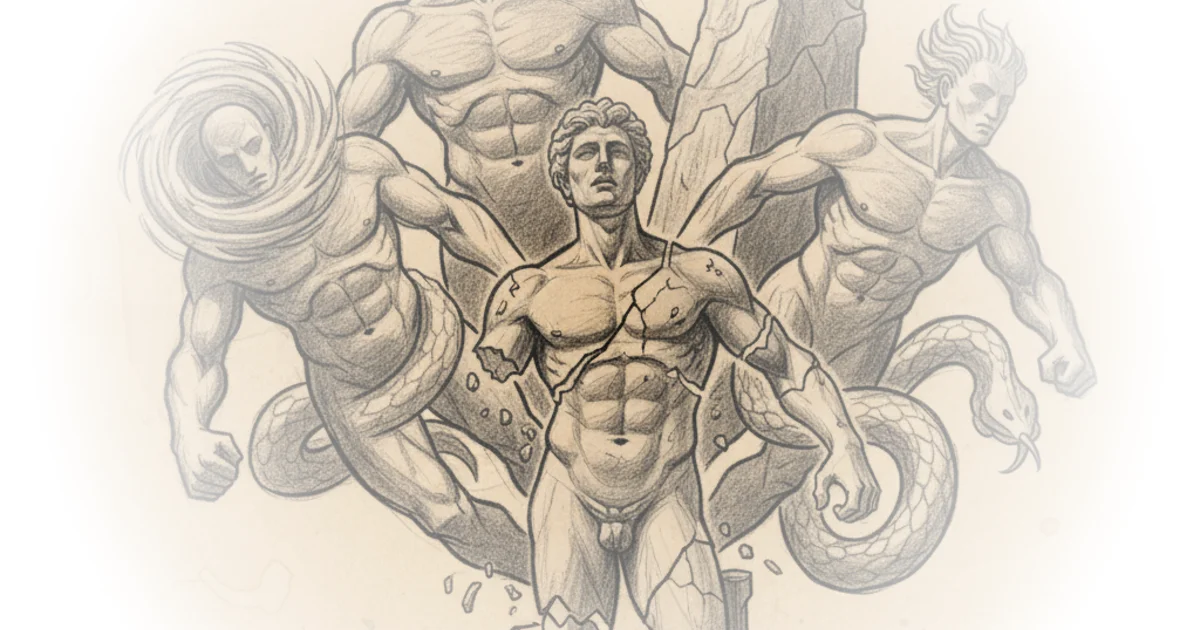
The author draws on Perry Anderson to dissect the mechanics of this populism, noting that right-wing versions succeed because they critique oligarchy, inequality, and immigration, whereas left-wing versions often stop at the first two. Yet, Smaje questions whether the current administration truly fits the populist mold. He argues that while the rhetoric is anti-elite, the substance often reinforces elite power. "I think what emerges from the second half of Lyons' essay is that the direction of travel of Trump's second administration isn't a renewal of the old 'strong gods'. It's something older for sure, but not that old. Really, it's a version of bureaucratic liberal-modernism in its most self-destructive form." This is a provocative claim: that the chaos is not a break from the system, but its most extreme, concentrated expression.
"Democracy involves a lot more than people just ticking a ballot form every few years, and those of us who rail at the dead hand of the proceduralist state should probably be careful what we wish for."
The Bureaucracy of Nationalism and War
Smaje dismantles the idea that nationalism is a natural, ancient tribal passion. Instead, he frames it as a "carefully curated top-down bureaucratic-modernist project of contemporary centralized states." He suggests that the current administration is using the passions generated by this project to push a centralized agenda that often runs counter to the self-interest of ordinary citizens. This is particularly evident in the realm of trade. Smaje points out that the "America first" tariff policies, often sold as a way to protect the worker, are likely to result in ordinary citizens "picking up the tab." He connects this to a broader, darker trajectory: "Trade wars align closely with actual wars." This alignment suggests that the economic nationalism being pursued is not just a policy shift but a precursor to geopolitical conflict, a point that mainstream economists often gloss over in favor of abstract efficiency metrics.
Critics might argue that Smaje underestimates the genuine economic grievances that make protectionism appealing to voters, or that the threat of trade war is being overstated by those who prefer the status quo of globalized supply chains. However, his focus on the human cost of these abstract economic maneuvers remains a crucial counterweight to the technocratic optimism of the establishment.
The piece also tackles the cult of personality surrounding the executive branch. Smaje notes that the administration is affirming "the elected Executive's direct, personal control over the bureaucracy," which Lyons praises as a move away from unaccountable proceduralism. Smaje offers a starker view: "The direct personal control over bureaucracy of an elected Executive is a very thin form of democracy, whereas proceduralism (for example, in the form of an independent judiciary, universities etc.) is thicker." He challenges the notion that we are seeing the return of the "hero, the king, the warrior," asking when the last time a Western leader had "personalist warrior skin in the game." He argues that figures like Elon Musk are not restoring masculine heroism but are merely "a contemporary version of the 19th and 20th century robber-baron capitalists, who stole the dignity of countless men (and women)."
Beyond the False Dichotomy
Smaje concludes by suggesting that the current political trajectory is doomed to fail, much like the fascism of the early 20th century, because it cannot resolve the contradiction between serving capital and serving the people. He writes, "It strikes me that the politics of Trump's present administration, whatever we choose to call it, will fail even more precipitously, in part because it lacks genuine commitment to serving any but a tiny minority of the people." The administration's attempt to reboot the Bretton Woods system through "screw you" nationalism, he argues, ignores the reality that the US is weaker and the world is more multipolar than it was in the mid-20th century.
Instead of the false strong gods of nationalism or the hollow proceduralism of the liberal state, Smaje proposes a different kind of heroism: the farmer or the householder. He advocates for an "agrarian populism" keyed to a sustainable ecological base, arguing that "people of all kinds ... are too easily dismissive of its capacities to humble the power of kings and warriors." This vision is not without its own challenges; Smaje admits that "if our political future is an agrarian populist one, it's hard to see how that can happen without a very nasty bump, at best." The cultural shift required to move away from the dreamlands of economic development and urbanization is immense, and the current political climate often ridicules such localist visions.
"People who don't know the first thing about how to take care of themselves materially and are dependent on others to provide for their needs aren't heroes. They're helpless children."
Bottom Line
Smaje's most compelling insight is the exposure of the current political chaos not as a revolution against the system, but as its most aggressive, self-consuming phase. The argument's greatest vulnerability lies in the practical difficulty of scaling his proposed alternative of local agrarianism in a world dominated by global capital and entrenched urbanization. Readers should watch for how the administration's trade and bureaucratic policies play out in the real economy, as Smaje predicts these moves will collide uncomfortably with the realities of a shifting global balance of power. The true test will be whether the "thumotic desire" for action can be channeled into something other than the hollow theater of imperial decline.