The Affordability Paradox: When the Cure Is the Disease
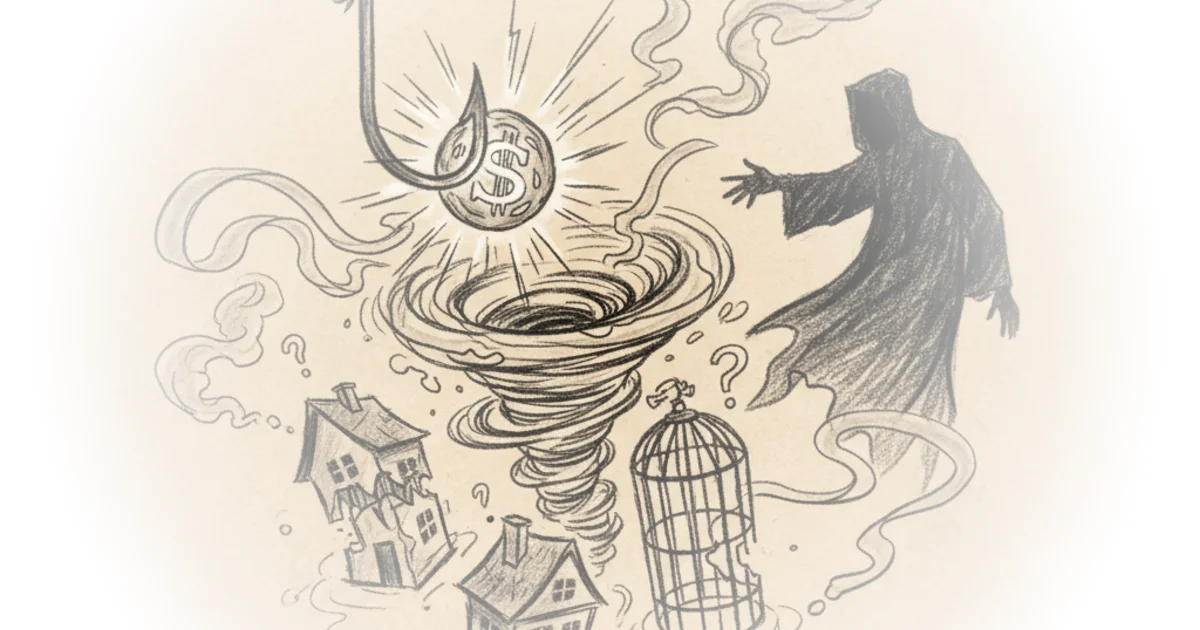
Energy Bad Boys marks its hundredth Substack post with a pointed examination of a pattern emerging in blue-state energy politics: governors who campaign on affordability while pursuing policies that, by the authors' analysis, have historically driven costs upward. The piece zeroes in on newly elected Democratic governors in Virginia and New Jersey, arguing that both are dressing up expensive climate-oriented programs in the language of cost relief.
The framing is unsubtle but effective. The authors contend that energy policy cycles through fashionable buzzwords the way the music industry cycles through genres. Decarbonization gave way to reliability, which yielded to data centers, which has now been supplanted by affordability. The implication is that policymakers are less interested in solving problems than in riding whatever wave of public concern is cresting at the moment.
Virginia and the RGGI Question
The Virginia section of the argument is the more data-driven of the two case studies. Governor Abigail Spanberger announced that Virginia would rejoin the Regional Greenhouse Gas Initiative, a cap-and-trade program that former Governor Glenn Youngkin pulled the state out of in 2024. Her justification, as the authors note, was that leaving RGGI had not lowered energy costs.
Energy Bad Boys pushes back on this claim with specific price data. They point out that overall electricity prices in Virginia dropped slightly after exiting RGGI, from 10.68 cents per kilowatt-hour to 10.62 cents per kilowatt-hour, and that residential price increases decelerated sharply, from an 11.5 percent jump in 2022 and a 6.9 percent increase in 2023 to just 1 percent in 2024. During Virginia's participation in the program, the authors note that $830 million in RGGI-related expenses were passed directly to ratepayers.
The case here is not airtight, and the authors acknowledge as much with the caveat that "many factors may have impacted both the jump in rates and the leveling off." Electricity markets are extraordinarily complex, influenced by natural gas prices, weather patterns, federal policy, and wholesale market dynamics that have nothing to do with state-level cap-and-trade programs. A one-year price change after exiting RGGI cannot be cleanly attributed to the exit itself. Correlation and causation remain distinct.
That said, the authors are on firmer ground when they quote the cap-and-trade critique from Andre Beliveau in RealClear Pennsylvania:
Cap-and-trade schemes are a tax on modern life. They punish consumers, encourage deindustrialization, and arbitrarily manipulate markets in ways that do more harm to our economic environment with no clear positive impacts on our natural environment.
Whether one agrees with that characterization depends heavily on how one values the externalities of carbon emissions. Economists across the political spectrum have long argued that carbon pricing, whether through cap-and-trade or a carbon tax, is the most efficient mechanism for internalizing the costs of climate change. The counterargument is that these programs impose real costs on households right now to address harms that are diffuse, long-term, and unevenly distributed. For families already struggling with utility bills, the distinction between a future environmental benefit and a present financial burden is not abstract.
New Jersey's Capacity Arithmetic
The New Jersey analysis shifts the argument from pricing mechanics to capacity fundamentals. Governor Mikie Sherrill signed executive orders on her first day in office that simultaneously froze electricity rate increases and called for more solar and storage development. The authors see these two goals as contradictory.
Their most compelling data point is the capacity gap. Since 2014, New Jersey has retired over 3,700 megawatts of coal, natural gas, oil, and nuclear capacity while adding only about 800 megawatts of mostly solar. That is a net loss of roughly 2,800 megawatts of generating capacity. The authors argue that this capacity deficit, not data center demand, is the primary driver of reliability and affordability problems in the state.
The piece directly challenges Governor Sherrill's executive order, which attributed the affordability crisis in significant part to data center demand. The authors frame this as myth-making:
How can data center demand growth be a "major driver" of the affordability crisis in New Jersey when prices have been rising since 2018 while total electricity sales have been on the decline since at least 2010?
This is a fair question. New Jersey's residential electricity rates have been among the highest in the PJM territory for years, ranking 11th nationally in 2024 and 12th in 2020, well before the data center boom became a mainstream concern. The structural cost problems in New Jersey predate the current demand narrative.
However, the authors' implied solution, recommitting to fossil fuel generation and canceling renewable portfolio standards, glosses over the fact that some of those retired plants were uneconomic for reasons unrelated to climate policy. Aging coal plants across the country have been shutting down because they cannot compete with cheap natural gas, not because regulators forced them out. The market has been doing its own culling, and pretending that all retirements are policy-driven oversimplifies the picture.
The Deeper Tension
What makes this piece worth reading carefully is the structural argument underneath the partisan framing. The authors contend that America inherited a reliable, affordable grid built over decades by ratepayers, and that policy choices have systematically degraded it:
The truth of the matter is that America had a reliable and affordable grid, built up over many years and paid for by ratepayers, and this grid could've been providing inexpensive electricity for decades to come with minor additions to keep it running efficiently, relative to the massive buildouts we see today.
There is a genuine tension here that transcends partisan politics. The energy transition requires massive capital investment, whether in renewables, storage, transmission, or new nuclear. That investment gets paid for by ratepayers, and in the near term, it raises bills. The question is whether the long-term benefits, reduced carbon emissions, energy independence, fuel cost stability, justify the near-term pain. Reasonable people disagree.
What the authors identify correctly is that politicians on both sides have an incentive to obscure this trade-off. Claiming that new solar and storage will lower bills while simultaneously acknowledging that the transition requires enormous spending is, at best, a timeline mismatch. The savings, if they materialize, come later. The costs come now. Voters paying those costs today deserve honesty about the sequence.
Supporters of aggressive decarbonization would counter that the costs of inaction, more extreme weather, grid failures from climate-driven events, stranded fossil fuel assets, are already showing up in electricity bills and insurance premiums, and that delay only makes the eventual transition more expensive. The debate is not really about whether to spend money but about which risks to prioritize.
Bottom Line
Energy Bad Boys delivers a pointed critique of what they see as political opportunism in energy policy: governors adopting the language of affordability while pursuing the same capital-intensive climate programs that contributed to rising costs. The Virginia RGGI data and New Jersey capacity numbers provide concrete evidence that the affordability rhetoric does not always match the policy substance. The piece would be stronger if it engaged more seriously with the economic case for carbon pricing and the market forces behind plant retirements, rather than treating all cost increases as policy failures. Still, the core challenge stands: if affordability is genuinely the priority, then every policy proposal should be evaluated by whether it actually lowers bills for the households paying them, not by whether it sounds good in a press release.