Phillips P. O'Brien delivers a stark assessment of American strategic failure in the Middle East, arguing that recent events have exposed a military and diplomatic rot far deeper than official narratives admit. The piece is notable not for predicting escalation, but for its chilling conclusion: the United States has lost its leverage to the point where it is effectively paying off adversaries while its most advanced assets are being dismantled by cheap drones. For busy listeners tracking global stability, this analysis cuts through the noise of daily headlines to reveal a structural collapse in US power projection.
The Illusion of Leverage
O'Brien frames the current crisis as a collision between political fantasy and military reality. He argues that the administration's insistence on an imminent deal with Iran is not just optimistic, but dangerously detached from the facts on the ground. "Trump has put the USA in an ever-weakening position, with decreasing leverage and a military performing poorly," O'Brien writes, noting that the executive branch is now desperate to exit a conflict it arguably initiated. This framing forces readers to confront the possibility that what looks like negotiation strategy is actually a cover for retreat.
The author highlights a disturbing report from Israel's KAN news agency suggesting the US may have transferred $3 billion in frozen assets to Tehran as a bribe to halt attacks on Israel. "Iran received assurances that Israel would restrain its military operations in Lebanon," O'Brien notes, emphasizing that this potential payoff stands in stark contrast to public rhetoric about American strength. The argument here is that the administration is prioritizing a quick exit over strategic integrity, effectively rewarding aggression. Critics might note that unconfirmed reports of asset transfers are often used as political leverage by regional actors, yet O'Brien's point remains potent: even if the transfer didn't happen, the perception of US weakness has already taken root.
"The contrast between how Trump is trying to present the power balance between the USA and Iran and the reality was shown even more starkly yesterday when it was reported that Iran, far from backing down to US military force, had actually shot down an advanced US Apache helicopter."
The Cost of Institutional Decay
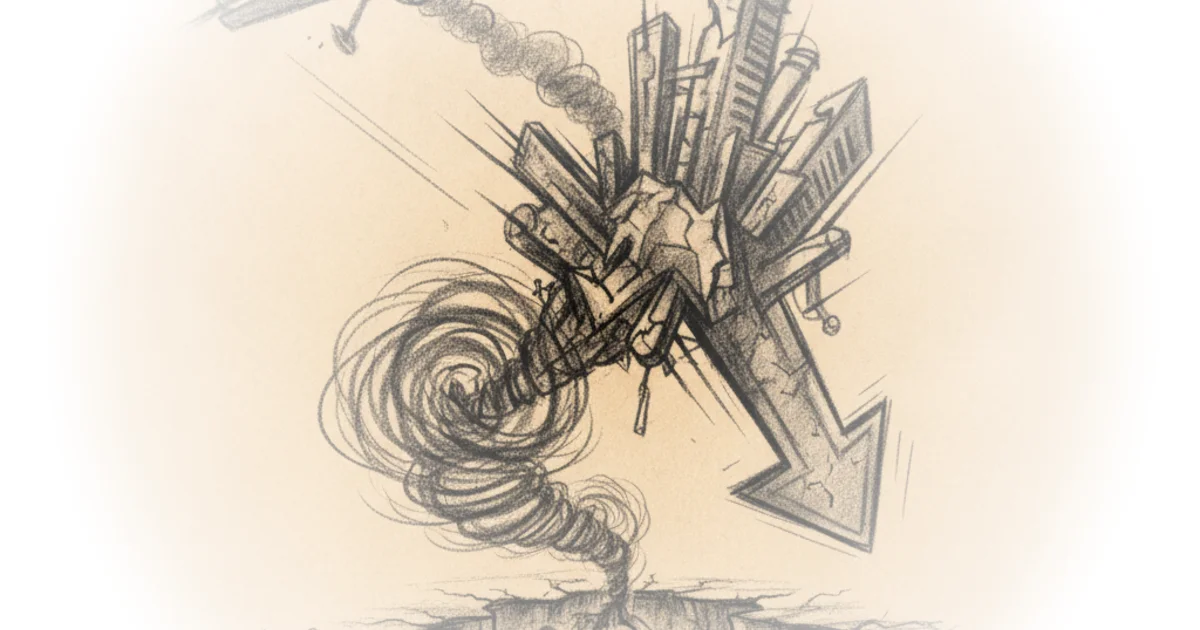
Moving beyond diplomacy, O'Brien turns his attention to the tangible degradation of US military capabilities. He focuses on the loss of a UH-64E Apache Guardian helicopter—an asset worth tens of millions of dollars—to a low-cost Iranian drone. "The shooting down of an AH-64 Apache helicopter by the Iranians (using a cheap UAV) provides even further evidence of the deterioration of efficiency and effectiveness in the US military," he argues. This incident is not treated as an isolated tragedy but as a symptom of a broader systemic failure.
O'Brien draws a parallel to historical vulnerabilities, noting that while the US has long relied on technological superiority, the gap is closing rapidly. He references the specific context of the 2026 Strait of Hormuz campaign scenarios, suggesting that current failures foreshadow future catastrophes in choke points vital to global trade. The core of his argument is that the military is "internally broken," plagued by corruption and a shift away from meritocratic promotion. "Maybe the question above needs to be altered in this case to: 'How Low Can The US Military Go?'" he asks, implying that the ceiling for incompetence has been shattered.
The author suggests that political interference is eroding operational readiness. He points to reports of officers being denied promotions for failing to meet ideological criteria rather than performance standards. "It was ridiculously conceived, shoddily planned, poorly executed and bound to fail," O'Brien writes regarding the broader conflict strategy. This critique challenges the reader to consider whether the military's recent failures are due to enemy ingenuity or internal self-sabotage. A counterargument worth considering is that modern asymmetric warfare inherently favors low-cost drones against high-value platforms regardless of personnel quality, yet O'Brien insists the speed and ease of these losses indicate a deeper rot.
"The US has lost this war—facts must be faced on this."
The Erosion of Alliances
Perhaps the most alarming development O'Brien identifies is the fracturing of the US-Israel alliance. He details how Israeli leadership, specifically Prime Minister Netanyahu, is preparing to act unilaterally because they no longer trust the administration's commitment or competence. "It could be that we'll reach a situation where we have to confront the Iranians alone, without backing from the U.S., with all the costs involved," O'Brien quotes from leaked Cabinet discussions. This signals a potential shift in the regional order where traditional US security guarantees are no longer taken for granted.
The author notes that even Vice President JD Vance has contradicted the administration's optimistic timeline, admitting a deal could take "months" rather than days. This internal dissonance further undermines American credibility. O'Brien argues that the administration's attempt to downplay the Apache loss and label its limited retaliatory strikes as "proportional" only serves to highlight its inability to control the escalation ladder. The narrative of US dominance is crumbling, replaced by a reality where regional actors feel compelled to act without Washington's consent or protection.
"The reconstruction from this whole mess is going to be epic."
Bottom Line
Phillips P. O'Brien's most compelling contribution is his refusal to treat the Apache loss as an anomaly, instead framing it as the inevitable result of a military and political system in rapid decline. While some may argue that the situation remains fluid and that diplomatic backchannels are standard procedure, the sheer volume of contradictory evidence he presents—from asset freezes to unilateral Israeli planning—creates a convincing case for strategic collapse. The reader must now watch whether the administration acknowledges this reality or doubles down on delusion as the region continues to destabilize.