Matt Stoller delivers a startling diagnosis of the American political moment: the real battle isn't between parties, but between a populist surge demanding economic discipline and a corporate establishment that has captured both. While conventional wisdom obsesses over polling numbers and election mechanics, Stoller argues that the underlying crisis is one of monopoly power so entrenched that it has rendered the traditional economy unrecognizable to the average worker. This piece matters because it shifts the lens from who wins the next vote to what happens to the rules of commerce if the balance of power actually tips.
The Illusion of Political Choice
Stoller begins by dismantling the comforting narrative that a simple party switch will fix the economy. He notes that despite the administration's low approval ratings and the opposition's likely electoral gains, "the Democrats themselves are absolutely hated, with just 28% of voters approving of the Democratic Party." The author suggests this disdain isn't accidental but structural, rooted in a decades-long trend where "the main dynamic in American society is... the power of the stock market to block any political action to raise wages, help consumers, or empower the American family." This framing is crucial because it explains why voters feel alienated regardless of which flag they wave; the system itself feels rigged against them.
The evidence Stoller marshals is stark. He points to recent GDP data showing that growth is driven by "ephemeral things like intellectual property and software, that don't require workers," while the "actual real economy outside of financialized sectors looks to be in a recession." This disconnect between stock market performance and the lived reality of the workforce is the engine of current political anger. Critics might argue that focusing solely on corporate concentration ignores other drivers of inflation, such as global supply chain shocks or fiscal policy, but Stoller's data on wage stagnation suggests that market power is a primary, not peripheral, culprit.
A Legislative Counter-Offensive
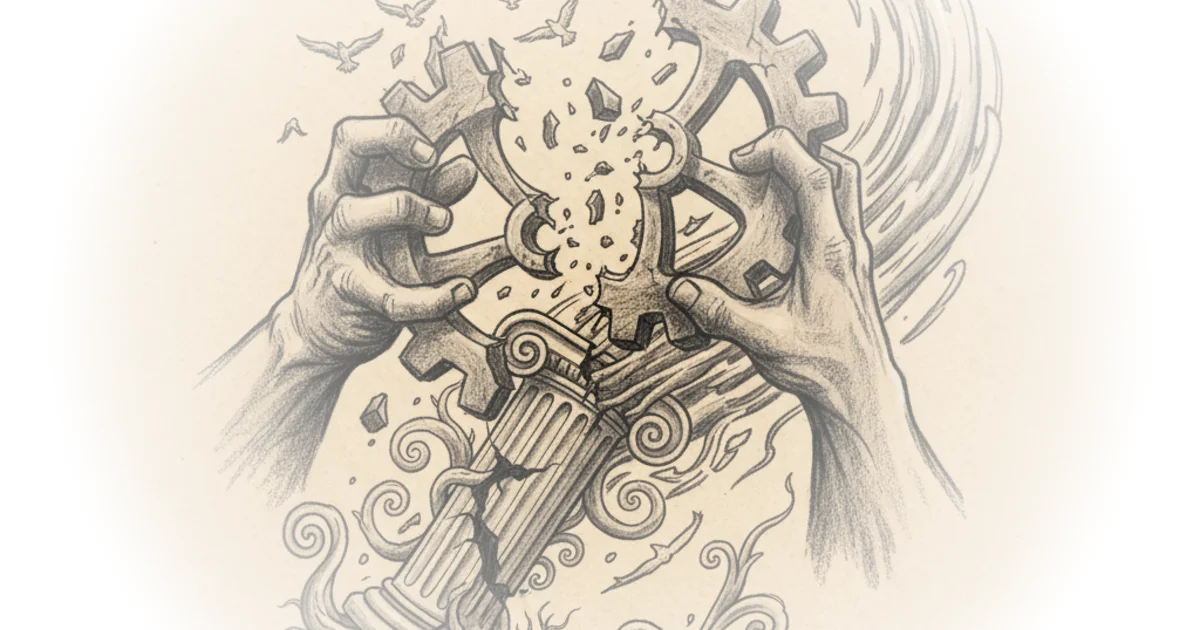
Where many analysts see paralysis, Stoller identifies a surprising, if tentative, legislative rebellion within the Senate. He highlights a new bill introduced by Senators Cory Booker, Elizabeth Warren, and others called the "CLEAN Mergers Act," which would "automatically undo every corporate combination above $10 billion occurring during the Trump administration." This is a radical departure from the standard antitrust playbook, which relies on slow, court-heavy investigations that often fail. Stoller writes, "Reversing the massive number of acquisitions happening illegally under the Trump administration can't happen through the antitrust regime, so it's good that there are laws now in the hopper to make it happen across the economy."
The urgency of this approach is illustrated by the brazen behavior of corporate leaders who now operate with impunity. Stoller cites billionaire Brad Jacobs, who, after acquiring billions in building supply companies, publicly bragged on a podcast about his new dominance: "We will get, because we deserve, a better price from the manufacturers... Bigger customers get bigger discounts, bigger rebates than the smaller ones." Stoller uses this quote to underscore a terrifying reality: CEOs are no longer hiding their anti-competitive intent. The proposed legislation attempts to draw a hard line, warning Wall Street that "anything they do merger-wise in the Trump era could be undone."
The process took more than a decade to break up a single factory acquisition; reversing the massive number of acquisitions happening illegally under the Trump administration can't happen through the antitrust regime.
This legislative strategy aligns with historical precedents like the Clayton Antitrust Act of 1914, which was designed to stop monopolies before they solidified, rather than punishing them after the fact. However, the political reality is messy. Stoller acknowledges that the Democratic party is fractured, with leadership figures like Hakeem Jeffries and fundraising chief Suzan DelBene often aligned with the very tech and finance sectors these bills target. The author notes that "there are some fundamental disagreements within the Democratic apparatus about what is wrong with the American order," creating a bitter intra-party fight that could last until 2028.
The Affordability Agenda
Beyond breaking up mergers, the progressive faction is tackling the mechanics of pricing itself. Stoller details a plan led by Congressman Greg Casar that includes a ban on "surveillance pricing," where algorithms set prices based on individual data. The proposal, the "Stop AI Price Gouging and Wage Fixing Act," seeks to prohibit personalized price setting, a practice that has become increasingly pervasive. Furthermore, the plan advocates for the federal government to manufacture generic medications like insulin, a move Stoller notes has already succeeded in California, producing insulin for $11 per pen.
The ideological underpinning here is a direct challenge to the financialization of the economy. Stoller draws a parallel to the New Deal era, quoting Franklin Delano Roosevelt: "A small group had concentrated into their own hands an almost complete control over other people's property, other people's money, other people's labor—other people's lives." The author argues that just as the Great Depression forced a reckoning with "money barons," today's economic fragility is forcing a similar confrontation. However, the path forward is uncertain. Stoller warns that "if there's a narrow majority, then the House leadership will be able to impose a lot more control," potentially stifling the more radical elements of the agenda.
The historical context provided is sobering. Stoller reminds readers that the 1930 election saw voters return a Republican majority despite the worsening depression, simply because they didn't trust the Democrats. It took a special election in 1931 and a dramatic shift in the 1932 convention for the party to embrace a populist, anti-monopoly platform. "That's how it worked, the people versus organized money," Stoller concludes, suggesting that history does not guarantee a progressive victory, but it does show that such a shift is possible when the system collapses.
Bottom Line
Stoller's most compelling argument is that the era of trusting courts to fix monopoly power is over; only direct legislative action can reverse the tide of consolidation. The piece's greatest vulnerability lies in its optimism about the political will required to pass such sweeping reforms within a deeply divided party. Readers should watch closely to see if the "CLEAN Mergers Act" and the affordability agenda can survive the friction between populist lawmakers and corporate-aligned party leadership. The stakes are not just about election results, but about whether the American economy can be re-ordered to serve the many rather than the few.