In an era defined by digital noise and political polarization, Then & Now offers a startlingly quiet antidote: a 17th-century Dutch philosopher who argues that the key to modern mental health lies in realizing we are not separate from the universe, but part of its singular, lawful fabric. This piece does not merely summarize Baruch Spinoza's life; it weaponizes his metaphysics as a practical operating system for navigating grief, rage, and the illusion of free will. For the busy professional seeking clarity without the fluff, Then & Now presents a radical proposition: that true freedom is not the ability to choose anything, but the power to understand why we choose what we do.
The Architecture of One
Then & Now begins by dismantling the modern obsession with individualism, arguing that our sense of separation is a cognitive error. The author posits that Spinoza's entire system rests on a single, deceptively simple premise: "Being is one." This is not poetic mysticism but a rigorous logical claim that everything from the stars to the laws of physics is a modification of a single substance. Then & Now writes, "The many what that means is actually quite simple everything us the forest animals plants stars the laws of physics and many things that are part of one thing nature." This framing is effective because it bridges the gap between ancient metaphysics and modern ecology, suggesting that our reliance on oxygen, gravity, and each other proves we are not independent entities but interconnected modes of a single whole.
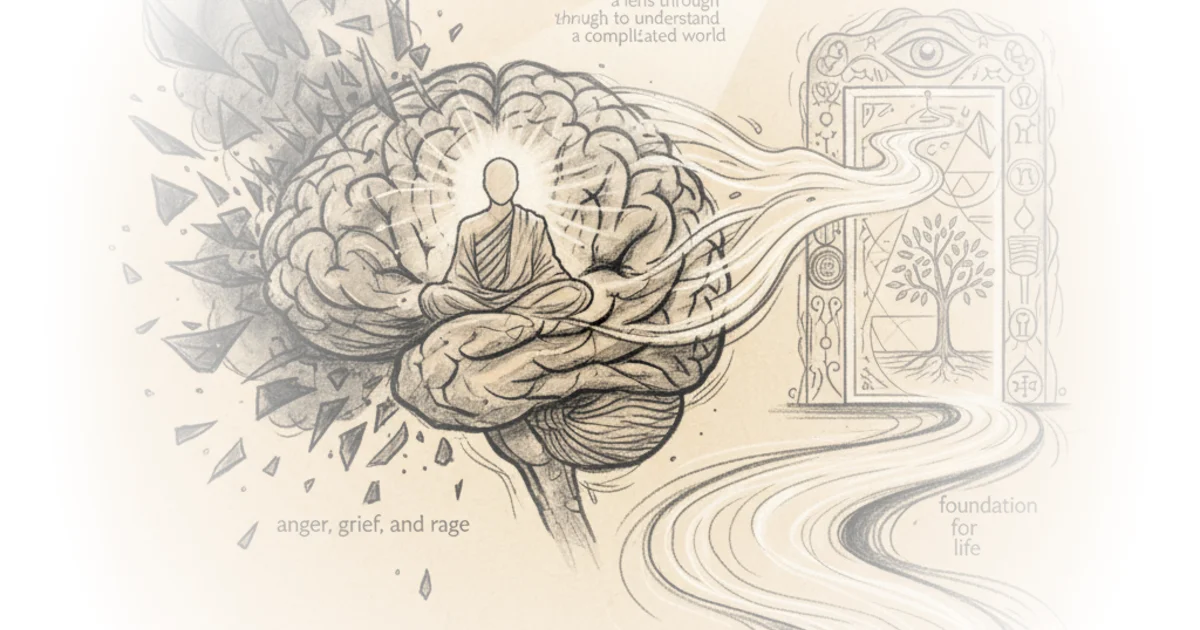
The piece argues that Spinoza was ahead of his time, essentially inventing a scientific worldview before the term "ecosystem" existed. By defining substance as something that exists "in itself" and is "conceived through itself," Spinoza concludes that nothing in our daily experience—no tree, no person, no chair—qualifies as a true substance. They are all dependent on external causes. Then & Now notes, "if we're defining substances strictly it turns out there's only one trees people plants animals there we're all different modes different shapes of of mata." This logical progression forces the reader to confront the fragility of their ego. The author's choice to use the phrase "God or Nature" interchangeably is crucial here, reframing divinity not as a judgmental sky-dweller but as the infinite, impersonal laws of cause and effect. Critics might argue that this pantheistic view strips life of personal meaning or moral agency, but Then & Now counters that it actually grounds us in a reality that is "ordered" and "necessary," removing the anxiety of random chaos.
"The infant thinks that he freely wants the milk the angry child that he freely wants vengeance and the timid one that he freely wants to flee... we only think we're free because our consciousness sits between one of those causes and effect."
The Illusion of Free Will
The commentary then pivots to the most provocative aspect of Spinoza's philosophy: the denial of free will. Then & Now argues that what we perceive as choice is merely a gap in our knowledge of the causal chain. The author paraphrases Spinoza's observation that we are like billiard balls, set in motion by forces we cannot see. "The drunkard thinks it is from a free decision of the mind that he says things which when he sobers up he regrets having said," the text observes, highlighting the disconnect between our internal narrative of choice and the external reality of causation. This is a powerful reframing for anyone struggling with regret or self-blame; if our actions are determined by a chain of prior causes, then judgment is misplaced, and understanding is the only path forward.
The piece suggests that consciousness is not a commander but a witness. Quoting the French philosopher Gilles Deleuze, Then & Now describes consciousness as "a dream with one's eyes open," where we sit atop a waterfall watching mental events flow past. This metaphor is striking because it shifts the burden of responsibility from "willpower" to "understanding." The author writes, "we rarely reflect on the long line of causation that came before all action is caused by something external." This insight is particularly relevant for modern leaders and thinkers who often attribute success or failure solely to individual agency. By recognizing that we are "driven about in many ways by external causes," we can stop fighting the current and start mapping the currents themselves. A counterargument worth considering is that without free will, the concept of moral responsibility collapses, yet Then & Now implies that Spinoza's system replaces moral judgment with a more robust form of ethical reasoning based on cause and effect.
The Geometry of Goodness
Finally, the piece explores how this deterministic universe leads to a new definition of goodness. If everything is relative and defined by its capacity to affect and be affected, then "good" and "bad" are not intrinsic properties of objects but descriptions of our relationship to them. Then & Now explains, "the lion is bad for me so i run from it the berry is good for me so i'm drawn to it." This relational view of value is a radical departure from traditional ethics. The author argues that Spinoza equates goodness with "perfection," which he defines simply as "existing well." A house that stands longer is more perfect; a person who lives longer and healthier is more perfect. "God or nature is more perfect," the text concludes, implying that the ultimate goal of life is to align ourselves with the forces that enhance our capacity to exist.
The commentary suggests that the path to a fulfilled life is to curate our environment to maximize positive affects. "We should want to surround ourselves with perfection we should try and organize our experience of the world so that we encounter things that will affect us positively," Then & Now advises. This is not a call to hedonism but to a strategic, almost scientific approach to living. By understanding what affects us and how, we can move from being passive victims of circumstance to active participants in our own flourishing. The piece ends on a hopeful note, suggesting that this "scientific road map" allows us to see ourselves as "something bigger something infinite and awe inspiring," transforming the fear of death into an appreciation of our place in the eternal whole.
Bottom Line
Then & Now successfully translates Spinoza's dense metaphysics into a compelling guide for modern emotional resilience, arguing that the cure for our anxiety is the realization that we are part of a single, lawful whole. The piece's greatest strength is its reframing of "free will" as an illusion that hinders understanding, replacing it with a liberating focus on causality and relational value. However, the argument glosses over the practical difficulty of applying this deterministic worldview to complex social and political systems where accountability remains a necessary fiction. For the reader seeking a foundation for life that is both rational and deeply human, this is a vital, if challenging, read.