In an era where political discourse often defaults to cynicism or materialist reductionism, this piece from Wayfare makes a startling claim: that the most effective path forward for democracy isn't just better policy, but a return to the 'naive' humanism of personal validation and shared aesthetic experience. It argues that the collapse of faith in our institutions is not merely a political failure, but a spiritual one rooted in our inability to see each other as whole people.
The Architecture of Belonging
The piece opens with a vivid memory of a walk at Mohonk Mountain House on July 8, 2016, using the resort's Victorian grandeur and Quaker history as a backdrop for a father-son conversation that feels like a last stand for a dying worldview. Wayfare reports, "The landscape, at once overwhelming and elevating, mirrored the effect that my father had had on me since I was a boy: of bringing a child who wept in closets out of anxiety and shame into a world of learning, beauty, and public life." This framing is powerful because it grounds abstract political theory in the visceral reality of childhood trauma and healing. The author connects this personal sanctuary to the broader Arts and Crafts movement's ideal—championed by William Morris—that art and labor should unite to create environments where human dignity thrives.
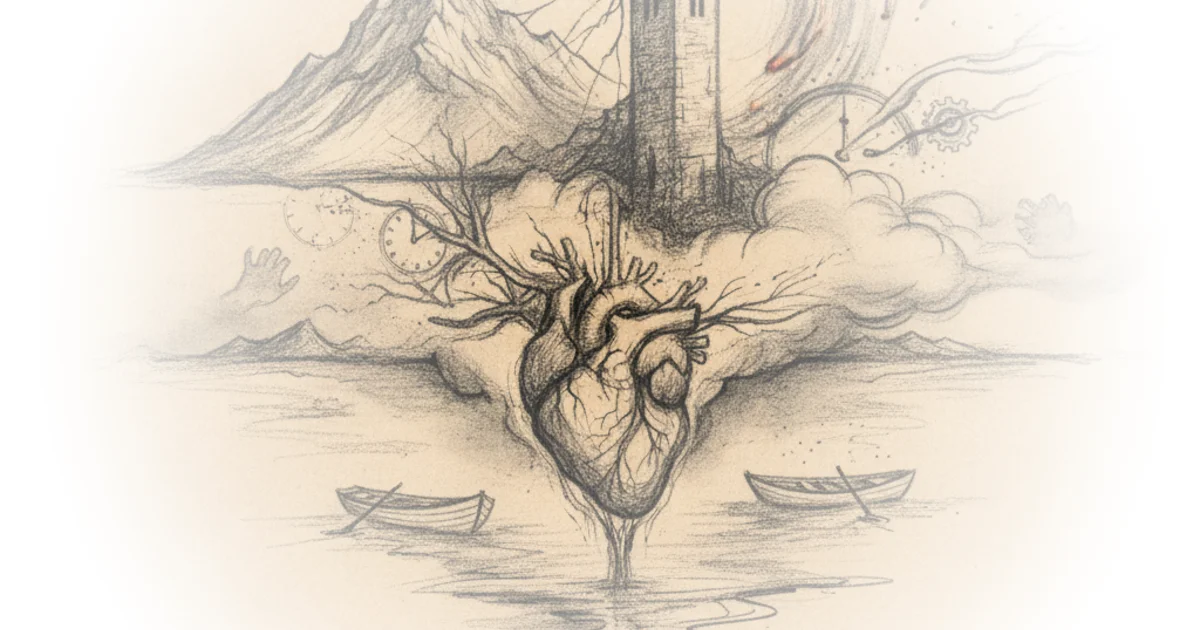
The narrative traces how the father, a man shaped by the harsh realities of Depression-era Brooklyn and Queens, found solace not in isolation but in the "civic romanticism" of New York City. The piece argues that for him, "Here was a metropolis of parks and concert halls... where my father's ebullience and cravings for acceptance could be embraced, echoed, amplified." This is a crucial distinction: the city wasn't just a place to live; it was a machine for generating empathy. However, critics might note that this romanticized view of urban public space often overlooks who was systematically excluded from those very parks and concert halls in the first place.
"A world that denied this respect would deny that person's potential and, by extension, our collective potential."
The Rot Within the System
As the author moves into adulthood and graduate studies, the tone shifts from reverence to a painful disillusionment. Wayfare notes that while external attacks on liberalism were expected, "More troubling was rot within these systems, a rot which seemed to betray the values I had sought to learn within them." The author describes the crushing experience of watching colleagues mock humanism as naive, a sentiment that felt like a personal betrayal: "They are mocking my father."
The piece details how the promise of the Obama era and the Occupy Wall Street movement ultimately failed to materialize into the "Great Community" predicted by thinkers like John Dewey. Instead, public spaces became militarized shopping malls, and political movements were driven less by shared values and more by "the summoning and mobilization of hatreds." The author admits to abandoning this humanistic framework for a harder-edged focus on material interests, joining the Democratic Socialists of America (DSA) and writing about economic solidarity. Yet, even in this shift, the ghost of that earlier faith lingers. The text observes, "I simply could no longer Yawp , full throated, as I did under vault of the New York Public Library." This admission is poignant; it suggests that without a sense of shared beauty and belonging, political action feels hollow.
Reconciling the Real with the Ideal
The climax of the argument arrives after the father's death in 2023 and the subsequent re-election of Donald Trump. The author finds themselves adrift, unable to fully embrace either pure idealism or cold realpolitik. Wayfare writes, "I know, from my research and experience... many of the brutal facts of how desirable political change has taken place. But I also know other facts from my own life: the fact of feeling beloved; the fact of being taken out of my fear through the magic of assembled people in space." The piece does not offer a neat solution but rather a call to build politics upwards from these personal truths.
The author invokes William James, suggesting we must look "forward towards last things, fruits, consequences, facts" rather than getting stuck on abstract principles. The conclusion is that both the brutal mechanics of power and the soft power of human connection are necessary. Wayfare asserts, "I know I need, somehow, to help this happen. And to do this, I must, at the very least, build upwards from the personal but no less real truths... broadcasting those truths, hoping that they find purchase with others." This is a risky proposition in a polarized climate, where vulnerability is often mistaken for weakness.
Bottom Line
The strongest part of this argument is its refusal to let go of the emotional core of democracy: the need to feel seen and valued. Its biggest vulnerability lies in the difficulty of translating that intimate, father-son validation into a scalable political strategy against entrenched systemic forces. Readers should watch for how this humanistic framework might be operationalized beyond personal memoirs, as the gap between feeling beloved and building a movement remains the central challenge of our time.