Duane McMullen uncovers a paradox that defies standard political science: a regime didn't fall because of external pressure or a charismatic dictator's collapse, but because its own middle managers realized the math no longer added up. This isn't just a history lesson about Portugal; it is a masterclass in how organizational reality can shatter political delusion, offering a blueprint for understanding how entrenched systems actually unravel from the inside.
The Architecture of Delusion
McMullen frames the Portuguese dictatorship not as a monolith of evil, but as a fragile technocracy held together by a "reality distortion field." He argues that the regime's fatal flaw was its inability to process bad news from the front lines of its colonial wars. "Hard hitting, honest reports from the field are massaged as they work their way up the hierarchy, so by the time they reach senior levels all is reported as going well with just a little more push required," McMullen writes. This systemic gaslighting created a dangerous gap between the generals in Lisbon and the soldiers in the bush.
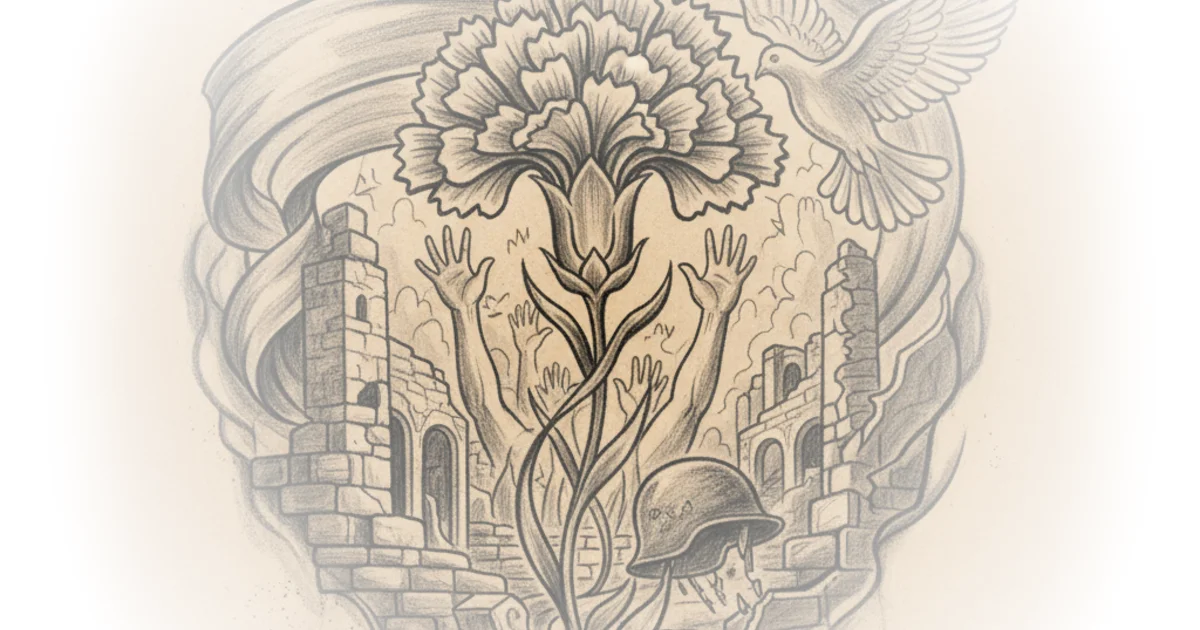
The author's choice to focus on the psychological toll on junior officers is particularly effective. He describes the senior leadership as the "rheumatic brigade," a group so divorced from the actual combat that their orders became nonsensical. This framing shifts the narrative from a simple story of oppression to a complex study of institutional failure. The regime believed it was winning because the data told it was winning, even as the human cost mounted. As McMullen notes, "Insurgencies are wars of junior officers," meaning the Captains were the ones who actually understood the ground truth, while the high command was fighting a war of the past.
"The reality distortion field causes orders and directives from distant high command to be increasingly divorced from reality by the time they make it to the troops facing the insurgencies."
Critics might argue that this focus on bureaucratic dysfunction risks downplaying the sheer brutality of the secret police and the ideological rigidity of the state. However, McMullen's point stands: the regime's collapse was accelerated not just by its cruelty, but by its incompetence in reading its own reality.
The Middle Management Revolution
The most striking insight in the piece is how a group of mid-level officers transformed from frustrated subordinates into a revolutionary force. It wasn't a grand ideological awakening that started the movement; it was a promotion dispute. When the government issued "Ordinance 353/73," threatening to fast-track inexperienced conscripts into senior roles, the Captains realized they had leverage. McMullen highlights the irony: "Incompetent leadership forcing them to fight endless unwinnable wars was one thing, but rules that let some non-volunteer officers with less education and experience get promoted earlier? That is going too far!"
This pivot from political grievance to professional self-interest is a brilliant narrative choice. It humanizes the revolutionaries, showing them not as abstract heroes, but as professionals protecting their careers and their units. The author emphasizes that this was a group of men who had survived multiple combat tours and bonded over shared misery. "For eighteen year old conscripts, their Captains embody superb competence and the key to their survival. Their Captains know how to win and how to keep their soldiers alive while doing it," McMullen observes. This trust became the bedrock of the revolution.
The story of the failed 1973 Congress serves as a turning point. When the government ignored their requests for representation, the Captains didn't just quit; they organized. "The Captains of the Portuguese military have discovered that they not only fundamentally agree about their experience, but that they can quickly organize and act," McMullen writes. This moment of collective agency is where the revolution was truly born, long before the first shot was fired.
"Be careful with the Captains. They are dangerous, given that they are not yet old enough to be bought."
This quote from the dictator Marcelo Caetano is chilling in its accuracy. It reveals that the regime's leadership understood the threat posed by this specific demographic better than they understood the threat of the insurgents. The Captains were dangerous precisely because they were young, idealistic, and had nothing left to lose.
The Human Cost of "Civilizing"
McMullen does not shy away from the human tragedy that fueled the revolution. He describes the "charming naivety" of a regime that sent overseas students to Portuguese universities, only for them to return home as anti-colonial insurgents. The irony is palpable: "Portugal's universities are hotbeds of underground resistance to the regime... returning to their homelands to start, or join, insurgencies and national independence movements."
The author also touches on the disillusionment of the young conscripts. "Eighteen year old Portuguese conscripts are shocked to arrive in theatre and discover a reality on the ground completely unlike the glorious Portugal helping grateful locals that they had been taught in school," McMullen writes. This cognitive dissonance was a powerful force. The insurgents' propaganda made more sense than the state's lies. The war was not just a military failure; it was a moral collapse.
The narrative arc moves from the frustration of the officers to the bloodless coup itself. The image of Captain Salgueiro Maia consoling a cleaning lady—"Don't worry – today, and every year going forward, 25 April will be a national holiday"—is the perfect capstone. It encapsulates the shift from a state of fear to a state of freedom. The revolution was not about seizing power for power's sake; it was about restoring the possibility of a normal life.
"I only know how to shoot people with guns in their hands."
This refusal by Lieutenant Assis Gonçalves to fire on prisoners in 1927 is presented as a precursor to the revolution. It shows that the seeds of insubordination were planted decades earlier, in the individual conscience of soldiers who refused to follow immoral orders. McMullen uses this to argue that history changes course not just through grand strategies, but through individual acts of defiance.
Bottom Line
McMullen's analysis succeeds because it strips away the mythology of the revolution to reveal the gritty, bureaucratic mechanics of how it actually happened. The strongest part of the argument is the demonstration that institutional failure can be more lethal than external opposition, as the regime's own lie about its success became its undoing. The biggest vulnerability is the relative lack of detail on the immediate post-revolution chaos, which suggests the story of the "Carnation Revolution" is more complex than a single day of triumph. Readers should watch for how this model of middle-management resistance applies to other rigid systems today, where the gap between leadership perception and ground reality is widening.