In a landscape often dominated by geopolitical posturing, this piece from The Pillar offers a startlingly intimate lens on the current pontificate: Pope Leo XIV is not an outsider looking in on American Catholicism, but a product of its very soil. The article's most distinctive claim is that the Pope's ordination history—specifically his diaconal ordination by Bishop Thomas Gumbleton in Michigan and priestly ordination under diplomat Jean Jadot in Rome—reveals a pontiff deeply embedded in the complex, often controversial, history of the American Church. This isn't just biography; it's a reframe of the Pope's authority as someone who has lived through four decades of ecclesiastical turbulence from the inside.
The American Crucible
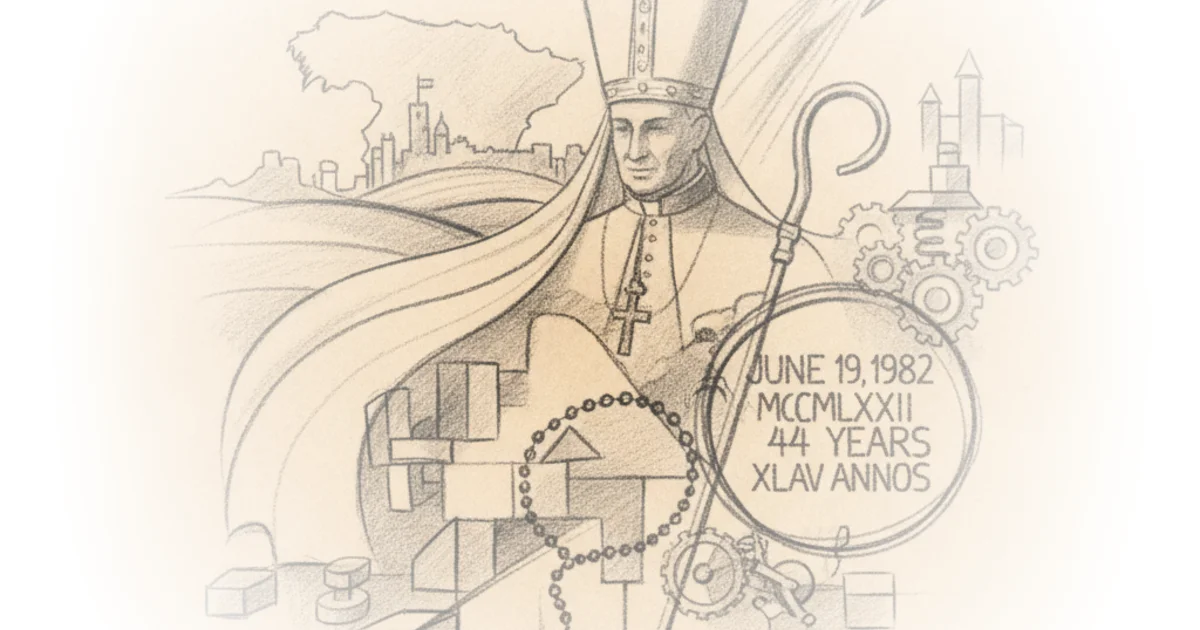
The Pillar anchors its argument in specific historical touchstones that most observers miss, noting that Leo was ordained a deacon on September 10, 1981, at St. Clare of Montefalco parish in Grosse Pointe Park, Michigan. This detail is crucial because the ordaining bishop was Thomas Gumbleton, a figure described as "no stranger to controversy" for both his advocacy for abuse victims and theological positions deemed outside the bounds of doctrine by some. The piece argues that this connection proves Leo has been immersed in the life of the American Church in a way no previous pontiff has.
"He is, whatever else is true, really one of us."
This assertion lands with significant weight because it bypasses the usual diplomatic distance between the Vatican and local bishops. By highlighting that the Pope was formed by figures like Gumbleton—who represents both the prophetic voice and the theological friction points of American Catholicism—the article suggests Leo possesses a unique empathy for the current struggles of the U.S. Church. The connection to Jean Jadot, the diplomat who ordained him as a priest in 1982 at Santa Monica degli Agostiniani, further cements this narrative; Jadot was famously passed over for the cardinalate by John Paul II despite holding a key office, adding another layer of institutional complexity to Leo's formation.
Critics might argue that focusing on ordination dates and specific bishops risks romanticizing a connection that may not translate into policy alignment. However, the article effectively uses these biographical facts to humanize the papacy, suggesting that shared history creates a foundation for trust that abstract theology cannot.
The Spanish Sojourn and Cultural Nuance
Shifting from biography to current events, the coverage details Pope Leo's visit to Spain, where he has reportedly exceeded expectations. The piece highlights his speech to the Spanish legislature as an "intellectual tent pole" touching on rule of law and Christian anthropology. Yet, it identifies a more subtle moment as the true highlight: his meeting with the Spanish bishops regarding evangelization.
"Pilgrims often set out at night, and the initial darkness of the path can often frighten them... It is the Lord who leads us; he is the master of history and of each of our stories."
The Pillar interprets this not as jargon, but as a call for "radical trust" in re-evangelization efforts rooted in the legacy of Ferdinand and Isabella. This framing is effective because it moves beyond the typical political analysis of church-state relations to address the spiritual anxiety of the faithful.
The coverage also tackles the linguistic controversy in Catalonia with remarkable grace. When separatist politicians urged the Pope to speak only Catalan, Leo navigated the tension by speaking both languages spontaneously and sincerely. The article notes that while he doesn't speak Catalan fluently, his effort to greet people in the local tongue served as a "good turn to show his affection." This moment illustrates a broader theme: the Pope's ability to defuse political friction through simple humanity.
"Leo has a way of dispelling controversy with humanity, and that's a good thing for Holy Mother Church."
Global Shadows and Institutional Accountability
The piece does not shy away from darker realities, juxtaposing the warmth of the Spanish visit with the brutal assassination of Bishop Osório Citora Afonso in Mozambique. The Pillar reports that gunmen scaled walls and disabled security systems to kill the bishop, leading local bishops to demand an investigation into whether organized Islamist forces or cartels were responsible.
"A bishop has been killed, it looks like an assassination."
This stark reporting serves as a necessary counterweight to the celebratory tone of the papal tour, reminding readers that while the Pope navigates cultural diplomacy in Europe, violence against clergy continues unabated elsewhere. The article also touches on domestic issues, specifically the upcoming vote by U.S. bishops on revising the Dallas Charter for the Protection of Children and Young People.
The editors express skepticism about the proposed revisions, noting they seem more like "tweaking than a rethink." They point out that despite broader understandings of abuse involving adults, the charter remains explicitly focused on minors. Furthermore, the revised text lacks specific commitments to release information regarding allegations against bishops themselves.
"It mostly goes unspoken these days, but it should be remembered that in 2018 and 2019, bishops often punted on releasing information related to Theodore McCarrick..."
This critique is vital. By refusing to expand the scope of accountability beyond minors or mandate transparency for episcopal misconduct, the bishops risk repeating past failures. The article's insistence that this limitation will be questioned in Orlando adds urgency to the upcoming vote.
Bottom Line
The strongest element of this coverage is its refusal to treat Pope Leo XIV as a distant figurehead; instead, it constructs a compelling narrative of a pontiff whose personal history is inextricably linked to the most turbulent chapters of American Catholicism. Its greatest vulnerability lies in the potential disconnect between this personal resonance and the structural inertia of the Church, particularly regarding the limited scope of the Dallas Charter revisions. Readers should watch closely whether the bishops' upcoming vote reflects the "radical trust" called for in Spain or a retreat into institutional self-preservation.